

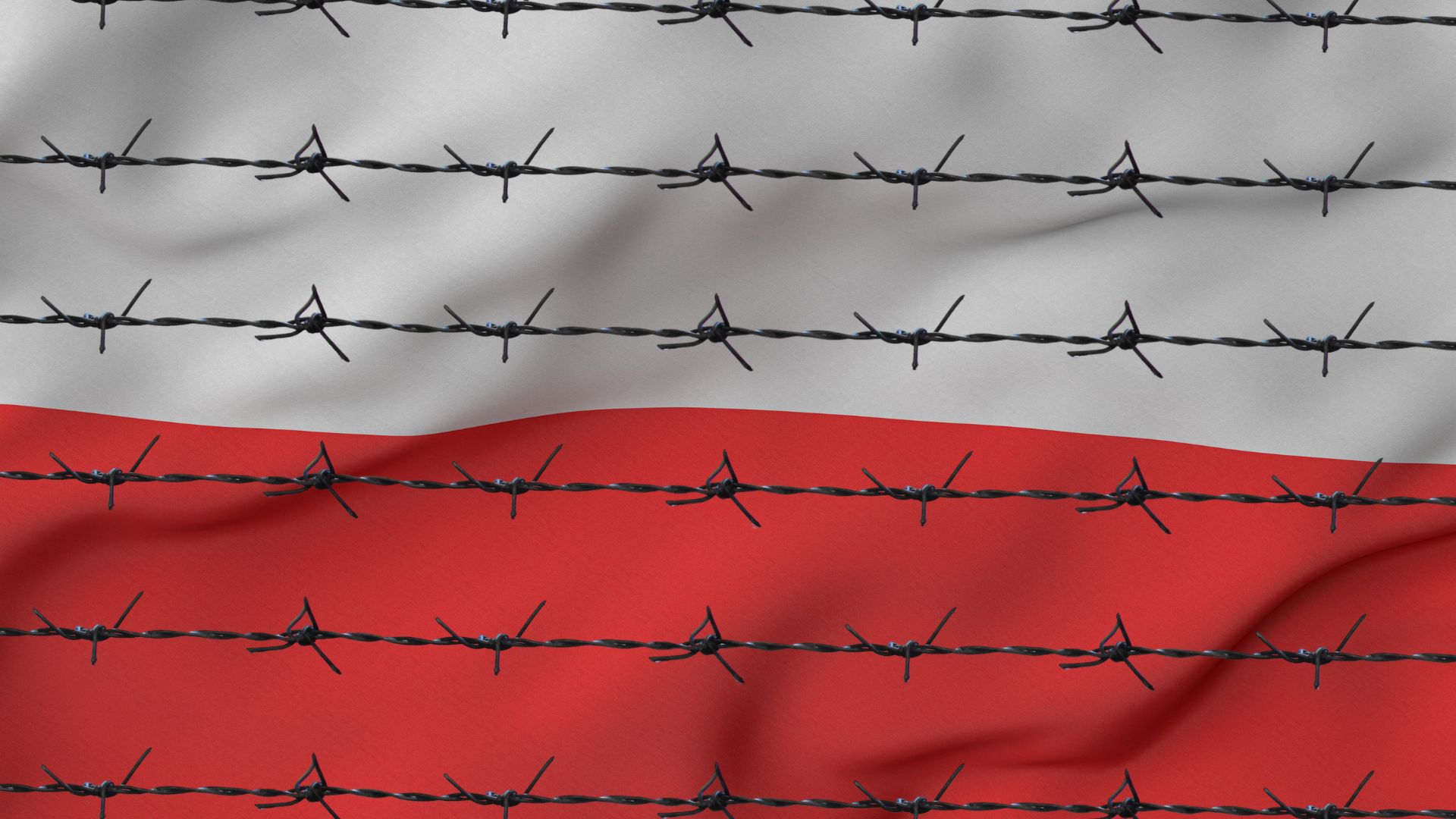
Observing the evolution of public debate in Poland and Western Europe over the past two years, it is impossible to escape the impression that we are stuck in a deep cognitive dissonance. One of the most popular and toxic narratives, which began to sprout on the fringes after 2022 and eventually penetrated the political mainstream, is the fearmongering about immigrants from Ukraine. This phenomenon, initially marginal, collided with a wall of widespread Polish empathy and understanding for the tragedy of war. Today, however, we see that wall crumbling.
It should be noted that the change in public sentiment and the replacement of compassion with fears and stereotypes has an objective basis. The protracted conflict, the lack of systemic integration solutions, and the chaotic information policy of the authorities have created a vacuum. This gap has been eagerly filled by groups that have been exploiting nationalist issues for years. To put it bluntly, nationalism and populism have been given a powerful weapon in the form of playing on people’s aversion to foreigners.
We see this not only in Poland. Similar phenomena are resonating with our neighbors: in Slovakia, Hungary, and Romania. The issue of migration and the advisability of helping Kiev has become political fuel not only for extreme groups. Worse still, it has begun to shape the rhetoric of parties previously considered socially responsible. The struggle for the extreme electorate has forced the main players to adopt anti-immigrant slogans, which has cooled relations between Warsaw and Kyiv.
However, at the heart of this anti-Ukrainian crusade lies a fundamental contradiction, or even gigantic hypocrisy. The circles that shout the loudest about the flood of immigrants and the need to defend Polishness are also the same groups that are most actively pushing the narrative of the need to end the war at all costs. In their vision, often inspired by Kremlin propaganda, Ukraine should sit down to talks, cede territory, and implicitly capitulate to Russia’s demand for a sphere of influence. This dream of Western populists in Putin’s embrace is in fact a recipe for the disaster they claim to want to protect us from.
Let us think calmly about what would happen if this scenario were to play out. Ukraine’s defeat or a rotten peace imposed on it, meaning permanent occupation and terror in the east, will not stop migration. On the contrary, it will trigger a wave for which the events of March 2022 were only a prelude.
If Ukraine collapses economically and militarily, if it is forced into the framework of the “Russian world,” millions of people will have nothing to return to. What is more, another wave of flight will begin. This time, it will not be temporary, but permanent. These will be people fleeing repression, filtration, and the misery brought about by the Russian administration. Nationalists who scare people with the current immigrants and at the same time lobby for solutions favorable to Moscow are in fact working to bring a gigantic exodus to Poland and Europe.
This is contrary to their own slogans, contrary to logic, and contrary to the national interest. Of course, I am not even mentioning the moral aspect and what such a tragedy would mean for the Ukrainian nation itself. I am focusing on the cold calculation that populists lack.
There is no doubt that this internally contradictory narrative is useful only from the point of view of Russian manipulation. The Kremlin knows very well that the fatigue of Western societies is its ally. Fueling anti-Ukrainian sentiment while seeking to crush Ukraine militarily is a strategy calculated to create chaos in Central Europe.
Of course, let us not be naive. This does not mean that Ukrainian emigration is a one-dimensional phenomenon devoid of negative aspects. Undoubtedly, among the millions of refugees, as well as those who find it easy to pose as victims of war, there are emissaries of the “Russian world.” There are people whose values are fundamentally at odds with the vision of an open and democratic Europe. Finally, there are Russian spies and saboteurs taking advantage of the porous borders.
Society is also irritated by the conspicuous “banana youth.” These are very wealthy people whose ostentatious lifestyle, luxury cars, and arrogance are in no way associated with the fate of a war refugee who has lost everything they have ever had. These images arouse justified anger and fuel false narratives. However, reducing the enormous humanitarian and geopolitical problem of fleeing war solely to the accompanying pathologies is a classic attempt at manipulation.
It is on these emotions, on anger towards the rich who avoid conscription or on fear of crime, that political capital is built. Ultimately, it is intended to lead to the cutting off of aid to Kyiv. Unfortunately, rational arguments often lose out to easily aroused emotions.
However, we must speak loudly about the consequences. A true patriot and realist understands that an independent Ukraine, capable of defending itself, is a guarantee of Poland’s demographic and social stability. Anyone who claims otherwise, who, under the guise of realism, suggests that Kiev should capitulate, is in fact opening the gates to millions of new refugees. The hypocrisy of populists lies in the fact that they want to extinguish the fire by pouring gasoline on it. If their vision comes true, the migration crisis they are scaring us with will become a self-fulfilling prophecy on a scale that Europe has not seen since World War II.
PB