
The enthusiastic declarations of 2022 about the “fast track” to integration collided with the brutal political reality of 2025. In European capitals, grand words about shared values have been replaced by cold calculations, and in the corridors of Brussels, Paris, and Berlin, caution is increasingly evident, also in the context of difficult relations with Donald Trump’s administration. This is precisely when the Russian disinformation machine strikes. Its goal is strategic: to convince the Ukrainian public that the pro-European course was a mistake and that the West does not treat Kyiv as a partner, but as an instrument that loses its significance once it has been used up.
In this case, Moscow does not need to create an entirely alternative reality. Its tactic is to highlight sensitive issues or, at times, the overly cautious attitude of the West. The Russian message is based on the thesis that Ukraine is being treated as an instrument. The narrative goes: “We warned you. To them, you are just human resources in the war against Russia, not part of Western civilization.”
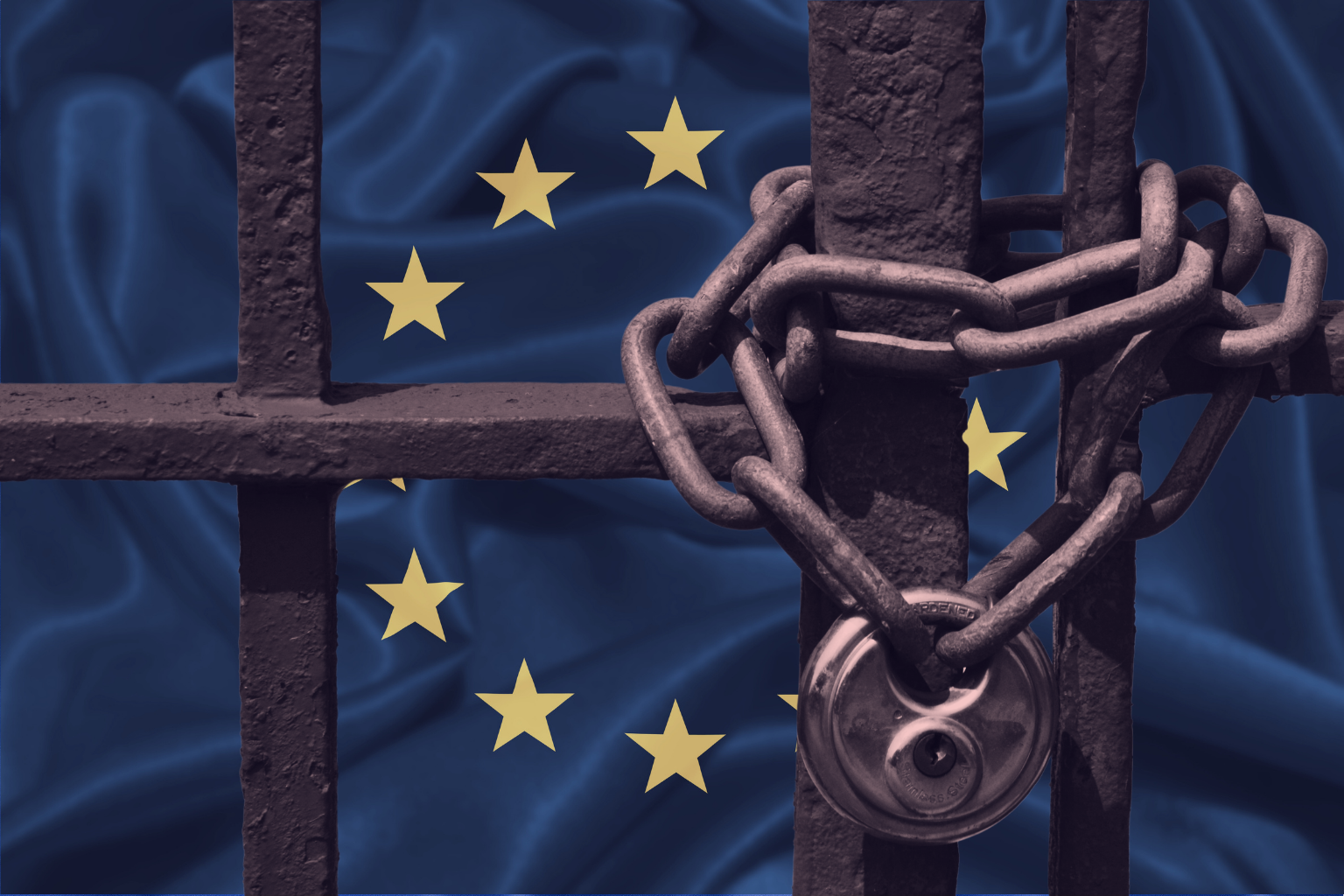
This is the concept of a “closed-door Europe.” The Kremlin (officially or unofficially) points out every bureaucratic evasion by Brussels, every unfavorable voice from member states, every agricultural protest at the borders, and every hesitation by Berlin on the issue of financing reconstruction. These facts are duly highlighted in Russian media and interpreted as definitive proof that the promises of integration were merely rhetorical smoke and mirrors.
The paradox of this situation—and this is what the propaganda feeds on—is that Europe has not actually turned its back. On the contrary, in the face of American volte-faces and agreements with Alaska, it is the Old Continent that is making a gigantic effort to consolidate in order to fill the gap left by the US. However, democratic processes are slow, requiring negotiation and the clash of arguments. Russia presents this democratic debate as a weakness or proof of a lack of willingness to help.
While difficult talks are underway in European capitals on how to finance Ukraine’s defense without Washington’s participation, Russian channels on Telegram interpret this delay unequivocally: “They have abandoned you.” The Kremlin knows full well that the war-weary Ukrainian public expects simple, quick solutions. Every day of delay in deliveries, resulting from EU logistical or budgetary procedures, is presented as a deliberate blockade.
The issue of the “buffer zone” is being played out in a particularly perfidious manner. Russia is trying to make the European concept of security repugnant to Ukrainians. What for Europe is building strategic depth and defending the eastern flank (in which Ukraine is a key element), propaganda translates into the language of betrayal: “For them, you are just a protective embankment. They want you to bleed to death on the steppes so that people in Paris can drink coffee safely.” This message is intended to destroy the sense of partnership. It is meant to make Ukrainians feel not like future members of the Union, but like mercenaries who are thrown overboard after completing their task.
Equally dangerous is manipulation in the economic sphere. Natural trade disputes, which are commonplace within the EU, are demonized by Russia in its relations with Ukraine. The protection of their own markets by member states is presented not as part of negotiations, but as an act of hostility. Moscow is instilling in the minds of Ukrainian entrepreneurs and farmers the idea that “the EU market is a closed fortress. You have destroyed your relations with the East, and the West does not want you.”
The aim of this operation is to create a sense of total isolation in Ukraine. Russia knows that it cannot win against Ukraine, which is supported by a determined Europe. Therefore, it must destroy trust between Kyiv and Brussels. It must make Ukrainians, seeing the caution and bureaucracy of their allies, consider them traitors. If Kyiv believes that Europe has slammed the door shut—even if that door is still ajar, albeit blocked by difficult realities—the Kremlin will win the battle for hearts and minds without firing a single shot. Fighting this narrative is as important today as supplying ammunition, because it is a battle to maintain faith in the meaning of belonging to the Western world.
PB