
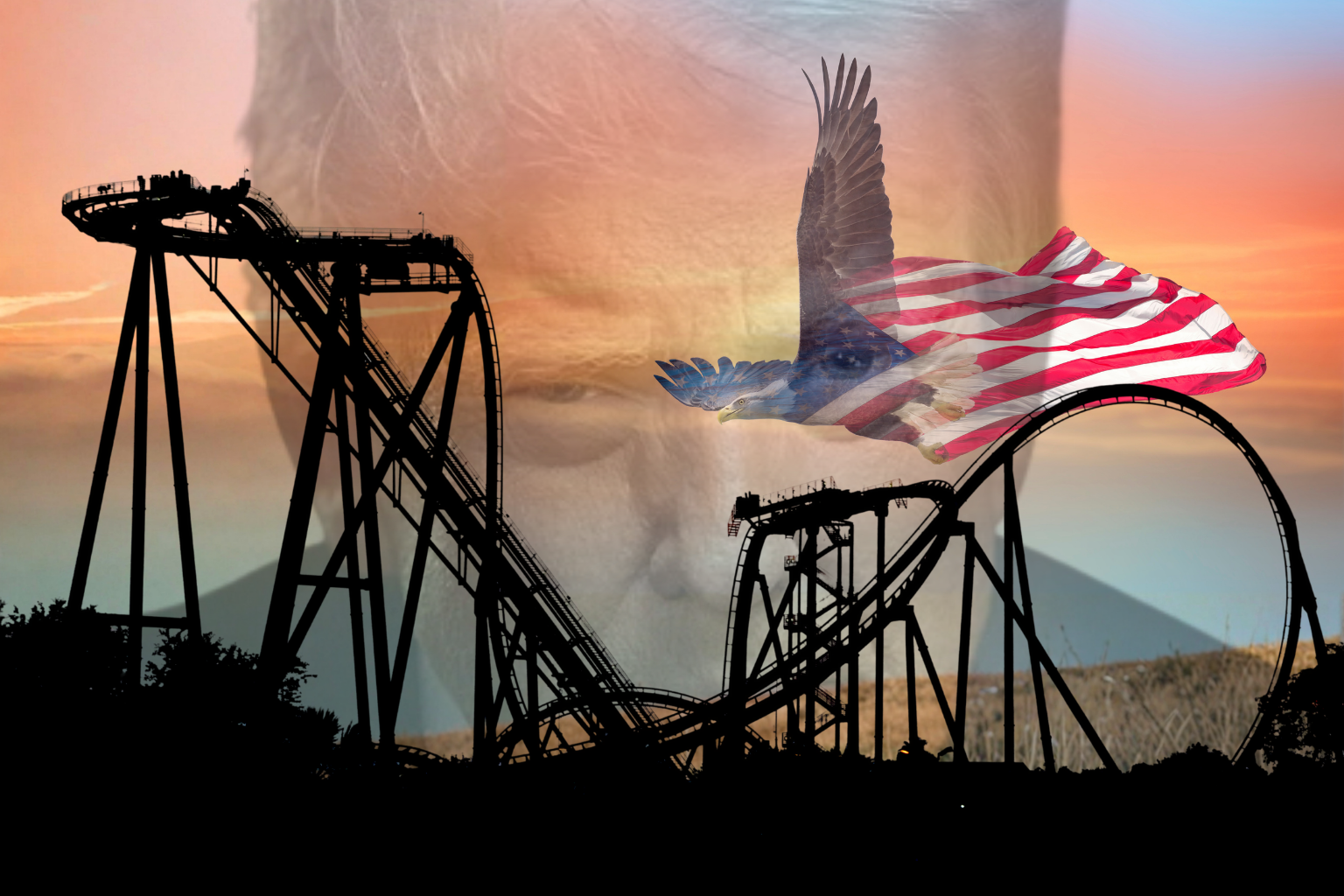
In Ukrainian, what we call a roller coaster is called “American hills” (американські гірки). This linguistic coincidence took on a sinister geopolitical meaning in the fall of 2025. This metaphor perfectly captures the nature of Donald Trump’s current politics—or rather, behaviorism. The problem is that we are not at an amusement park. We are in the midst of the biggest conflict in Europe since 1945, and the passengers in this car are not wearing seat belts. The price of mood swings in the Oval Office, of saying whatever comes to mind, is measured in human lives and acres of lost land.
Observing the last few weeks in Washington, it is difficult to resist the impression that the stability of the transatlantic alliance has been replaced by chaos managed by tweets and impulses. We are dealing with an inconsistent message that one day legitimizes Putin’s imperial ambitions, only to throw out a slogan of support for Kyiv the next day, often on the spur of the moment or out of wounded pride. This schizophrenic decision-making is as devastating for Ukraine as Russian precision bombing. It makes operational planning impossible, destroys the morale of soldiers who do not know if they will have anything to shoot with tomorrow, and causes confusion among European partners.
Particularly striking is the ease with which the US president uses terms that relativize evil. Words about “interesting wars,” thrown into the public sphere, reduce the tragedy of millions of people to the level of a television show, where only ratings and plot twists matter. This is not diplomacy, it is the dehumanization of conflict. War ceases to be a clash of values and becomes “content” designed to satisfy the ego of a leader.
Worse still, in 2025, the White House became the most powerful resonator of Russian disinformation. The notorious repetition of Kremlin propaganda as “possible truth” or “alternative point of view” causes damage that no aid package can repair. When the US president suggests that Ukraine is, in fact, “to blame” or that Russia has “historical rights,” it fuels Moscow’s propaganda machine for years to come. It sends a signal to the whole world: there is no such thing as truth, only the narratives of the powerful.
A specific ecosystem has developed around the president – a fawning court where access to the decision-maker’s ear is determined by the degree of flattery, not competence. In such an atmosphere, megalomania is not a flaw, but a virtue. Decisions about the fate of Central Europe are made not on the basis of intelligence reports or strategic analyses, but on the basis of who last spoke to the president and what mood the leader was in. It is a return to court politics in its worst, 18th-century form, only with a nuclear arsenal in the background.
Looking at it from the perspective of Kyiv or Warsaw, it is difficult to escape a bitter reflection. We have become part of a world to be ashamed of. A world where principles have been replaced by transactionalism and loyalty by caprice. Our political generation, the elites of the West who allowed this spectacle of declining standards to happen, will be judged mercilessly by history.
Future generations, analyzing the year 2025, will ask one recurring question: “How could they have allowed this to happen?” How could they have allowed global security to depend on the mood of one man? How could they have allowed a situation in which the aggressor is treated as a partner in talks and the victim as an intrusive petitioner?
This is not just a political crisis. It is a crisis of civilization. Trump’s “roller coaster” will eventually come to a halt, but the landscape after this ride will be ruined. And it’s not just about the destroyed cities in Donbas, but about the destroyed trust in institutions, alliances, and the very concept of truth. In this amusement park of political vanity, the only one having fun is Vladimir Putin. The rest of us are struggling not to fall off the roller coaster.
PB