
Joseph Stalin, whose spirit the Kremlin is reviving today with eerie precision, is said to have remarked, “The death of one person is a tragedy. The death of millions is a statistic.” In 2025, in an era of digital overstimulation and the fourth year of full-scale war, this cynical statement has taken on a new, terrifying relevance. We no longer need millions of victims for the mechanism of indifference to take effect. All it takes is a few years of constant scrolling and precisely dosed cruelty. We are witnessing a phenomenon that is as dangerous for Ukraine as ammunition shortages: the systemic devaluation of death.
Let us go back to September 12 this year. It is a date that should have shaken the conscience of the world, yet it passed through the news cycle like another item in Excel. On that day, the Russians fired 800 drones and 13 missiles at Ukraine. Eight hundred flying death charges. This number is so abstract that our brain automatically turns it into statistics. We say: “a major attack,” “a massive strike,” “a success for air defense, because they shot down 751 targets.”
But hidden in these statistics, in this “success,” is a tragedy that should wake us from our slumber. A 32-year-old woman and her two-month-old baby were killed in Kyiv. Two months old. A life that had just begun to discover the world, the smell of its mother, the warmth of home — was extinguished by the fanaticism of Moscow planners who sent that piece of scrap metal. This is no mistake. This is the essence of the Russian way of waging war.
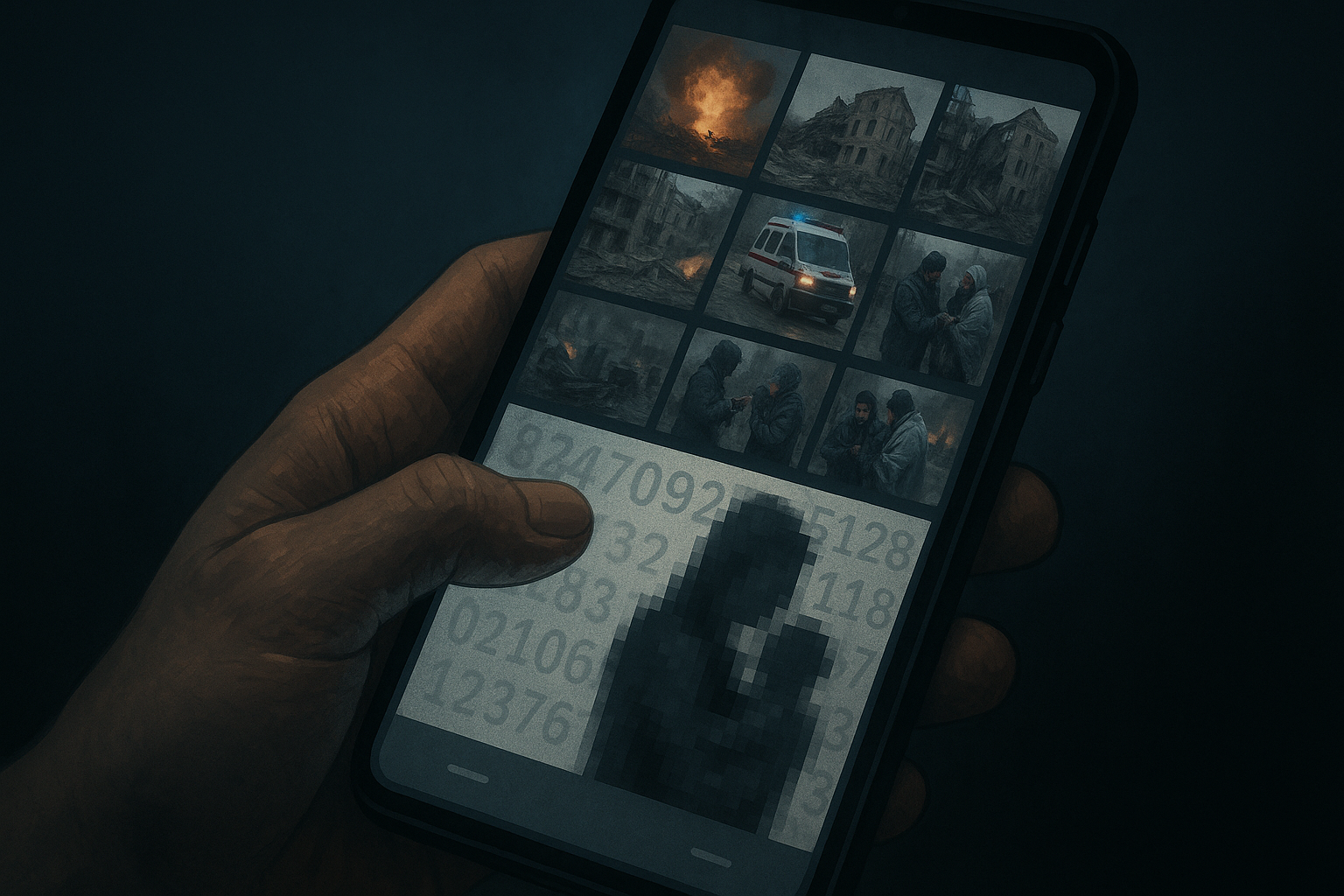
When smoke from the burning rooms of the Cabinet of Ministers hung over Hrushevsky Street in Kyiv, when rescuers in Zaporizhzhia and Kryvyi Rih pulled people from the rubble of multi-story blocks, the world scrolled on. The image of the burning heart of the Ukrainian capital, the government district, became just a backdrop. Our smartphones’ algorithms squeeze these images between shoe ads and funny cat videos. In this way, horror is reduced to the rank of “content” that can, and even must, be scrolled past with a thumb for the sake of mental hygiene.
This is no accident. It is the result of social engineering used by Moscow. Russia deliberately “normalizes” violence. Their strategy is no longer to convince us that they are not murderers (as they lied through their teeth when they occupied Crimea). It is to make murder routine. An everyday occurrence. Something as inevitable as rain in November or traffic jams on the street. They want us to accept that if 800 drones fall on Ukraine, it’s just “the weather.”
Moscow knows that the human psyche has a limited capacity for empathy. We are not able to function in a state of permanent mourning for four years. Our brain builds a shell. We begin to treat reports from the front like sports statistics. But this engineering of numbness has specific political implications. Politicians in the West look at public sentiment. If they see that the death of a mother and her baby no longer generates outrage, but only a bored sigh of “here we go again,” they lose the motivation to make difficult decisions. Statistics kill the will to act.
We can also see how this mechanism works in Poland. Suffice it to mention the events of September 12 that I described. While Ukrainians were counting the victims and putting out fires after the largest drone attack, a group of “embittered” people blocked the border crossing in Poland. Moral blindness, caused by fatigue and Russian propaganda, allowed them to pursue their own interests in the face of genocide, and even to harm the victims. This is precisely the triumph of Russian engineering: to make us stop seeing Ukrainians as people fighting for their lives and start seeing them as a “problem” or “competition.”
How can we combat this? We must impose cognitive discipline on ourselves. Instead of scrolling, we need to pause. We must return to the specifics. Not “three victims in Kyiv,” but “a 32-year-old mother and her child.” Not “destruction of infrastructure,” but “the burned-down house of a specific family in Zaporizhzhia.” We must manually, against algorithms and against our own fatigue, turn statistics back into tragedy.
It is not about falling into despair that paralyzes us. It is about retaining the ability to feel anger. Because only anger at injustice and crime is the fuel for change. If we allow 800 Russian drones to become as commonplace to us as the weather forecast, it means that Stalin—the digital one, hidden in the code of our apps—has won the battle for our souls. We cannot accept Russian terrorism just because it lasts a long time. The fact that evil is repetitive does not make it cease to be evil. Remembering that two-month-old baby from Kyiv is our duty and our weapon against indifference.
PB