

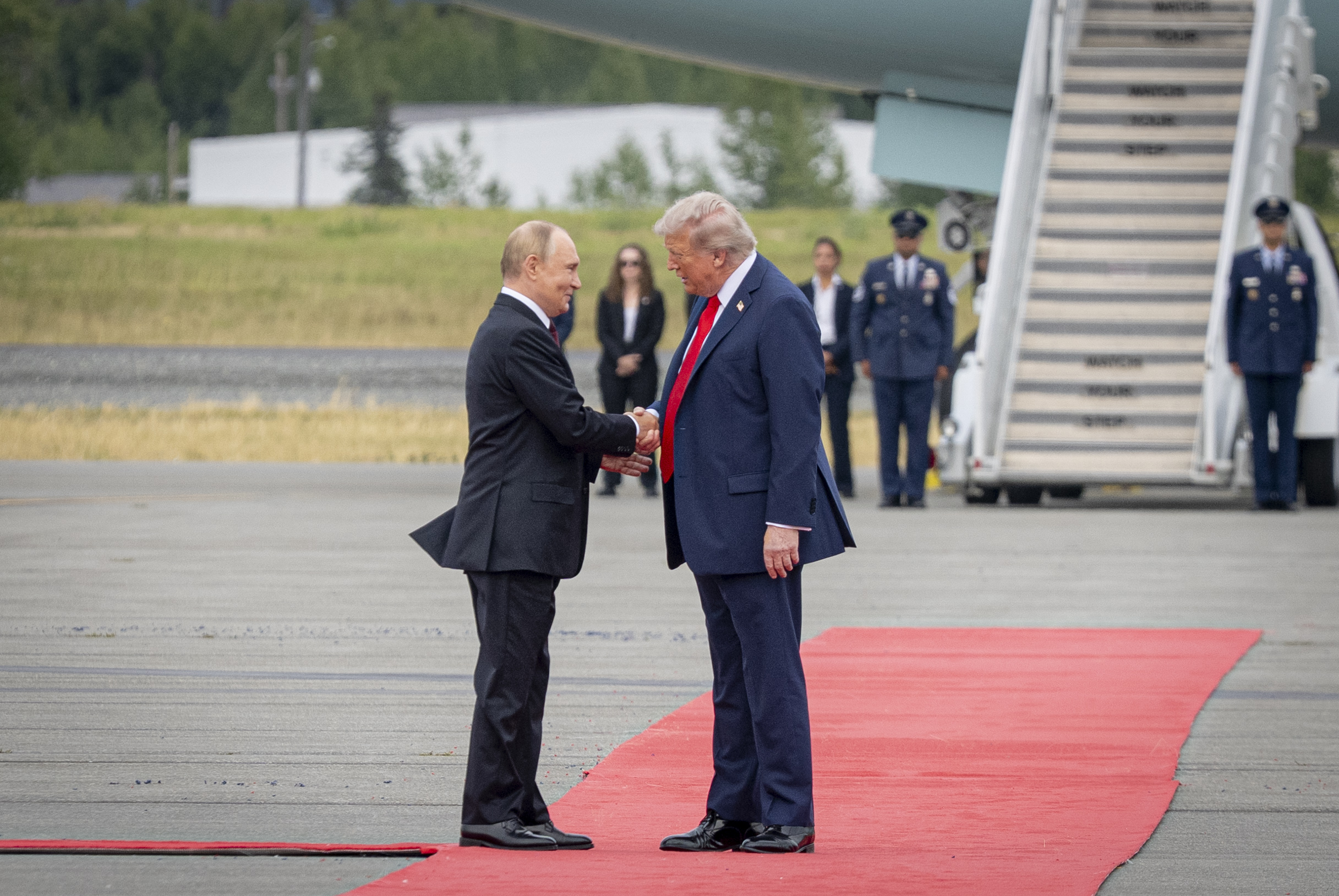
The summit in Alaska and the resulting reevaluation of US foreign policy have shaken the stability of European opinion. While the eyes of the world remain focused on the front line and potential demarcation zones, the Russian apparatus of influence has quietly opened a second front. Its goal is not to capture more ruins in Donbas, but to cause the internal implosion of the Ukrainian state. An analysis of the narratives that have been flooding the information space in recent weeks leaves no room for doubt: the old, modified concept of threatening Ukraine with partition, allegedly carried out by its western neighbors, has returned.
Moscow has been testing this scenario for years. Suffice it to recall “Medvedev’s maps” or Zhirinovsky’s infamous offers to the Polish Ministry of Foreign Affairs. However, until 2025, these attempts were met with a wall of Western solidarity. Today, in an atmosphere of growing isolation and “betrayal” by Washington in Kyiv, the ground for sowing distrust has become much more fertile. Russian disinformation strikes precisely at the most sensitive points, playing on historical traumas.
Poland remains a key target. Russian Telegram channels and media outlets catering to Ukrainian audiences are increasingly promoting the idea that Warsaw, seeing Kiev’s weakening position and the passivity of the US, is preparing for a “stabilization mission” in western Ukraine. The message is constructed perfidiously: there is no direct mention of aggression, but rather of “historical necessity” or “protectorate.” The goal is twofold: to revive the demons of history (Volhynia, Operation Vistula) in order to convince Ukrainians that Polish aid was from the outset a cynical game for Lviv, and to discredit Poland in the eyes of the West as an allegedly imperialist state. This fits perfectly into Russia’s strategy of relativizing guilt.
From the perspective of Uzhhorod, where I am writing these words, the second vector of this operation – the Hungarian one – is even more clearly visible. Transcarpathia, with its specific ethnic mosaic, is a dream testing ground for the Russian services. Using Viktor Orbán’s rhetoric, which after the meeting in Alaska has become even closer to the Kremlin’s narrative, propaganda is spreading the vision of Budapest as a stable guarantor, a bastion of security and rationality.
Skillfully crafted “leaks” mention agreements that would guarantee the Hungarian minority “special status” or even Hungary’s protection in the event of the collapse of Ukrainian statehood. This is accompanied by disinformation about mobilization – the alleged deliberate sending of ethnic minorities to the front line first. This mechanism is intended to provoke centrifugal separatist tendencies and to divide Transcarpathia from the rest of the country.
Added to this is the Romanian angle. Although Bucharest remains cautious, Russian media reports regularly dust off the topic of Northern Bukovina and Bessarabia, suggesting that in the new division of Europe, Romania will also claim what is “theirs.”
All these narratives share one mechanism: projection. Russia, the only country in Europe waging a war over territory in the 21st century, attributes its imperial motivations to Ukraine’s neighbors. This is a classic leap forward. The Kremlin knows perfectly well that it is in the interests of Poland and Romania to have an independent Ukraine as a buffer separating them from Russian tanks. However, in the face of war fatigue and trauma after the “betrayal” of their allies across the ocean, rational arguments may lose out to emotions.
The goal of Operation “Knife in the Back 2.0” is clear: Ukraine is to feel like a besieged fortress – not only from the east, but from all sides. For Russia, the psychological isolation of society is a prelude to forcing capitulation. If Ukrainians believe that they are surrounded by enemies and that their western neighbors are hyenas waiting for their prey to fall, their will to resist will ultimately be broken.
We must be aware that every “partition map” appearing on the internet, every piece of fake news about “Polish claims” or “Hungarian ultimatums” is not journalism, but part of a coordinated psychological war. In the shadow of the Alaska agreements, the unity of the Central European region is a threat to Moscow, which it is trying to neutralize not with missiles, but with the poison of mistrust.
PB