
By EUvsDisinfo
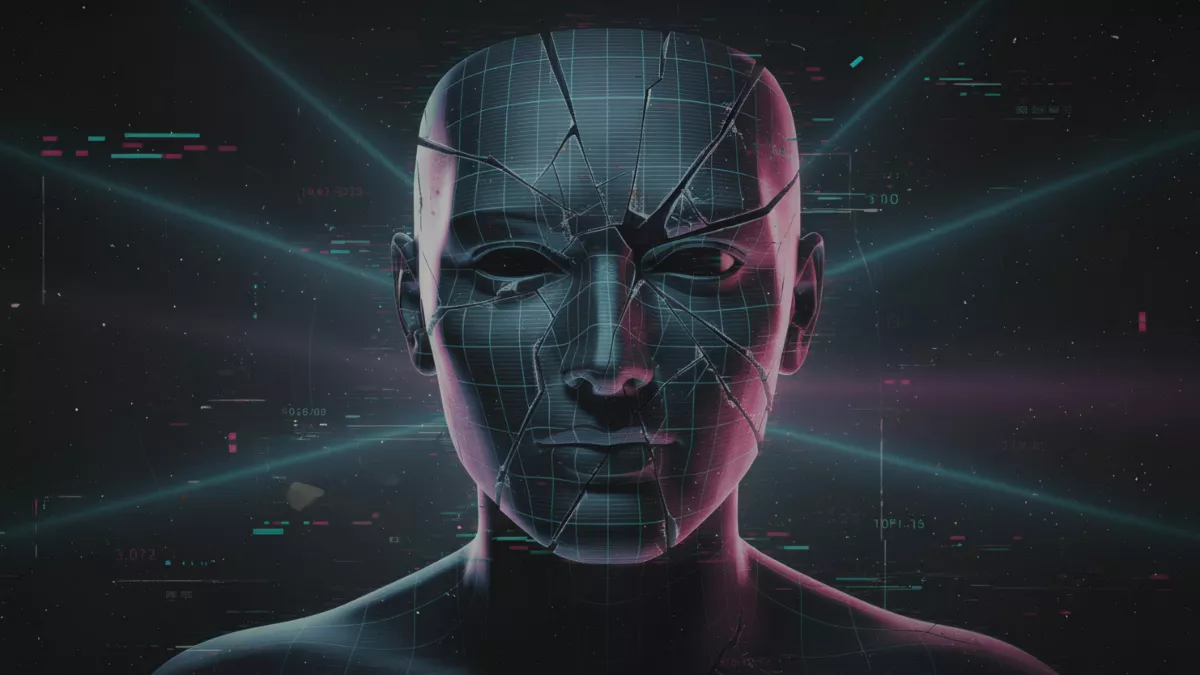
Imagine a world where your past is not yours – where every event, every hero, every town can be deleted and replaced with someone else’s script. For Ukraine, this has not been speculative fiction but but a political practice it continues to resist. Centuries of Ukrainian history have been rewritten by Russia, which corrupts the files, reformats archives, so that they conform to its imperial design.
In late 2025, Vladimir Putin signed Decree No. 858, a technical document outlining the strategic direction of Russian national policy for the coming decade. Its language is bureaucratic and unremarkable. Its implications are not. Beneath the neutral phrasing lies a clear objective: the consolidation of Russian identity in the temporarily occupied territories. The decree sets a goal – 95% of the populations of Donetsk, Luhansk, Kherson and Zaporizhzhia oblasts in Ukraine to identify as “Russian” by 2036, as a result of the measures outlined in the document.
There is little novelty in this approach. Imperial Russian and later Soviet policies sought to subsume Ukrainian distinctiveness into a broader Russian narrative. In a series exposing Russia’s plans to erase the Ukrainian identity, we begin by examining the past.
Rewriting History
Ukrainian statehood and its aspirations for freedom and independence have long been treated in Moscow not as a historical fact, but as a provocation. The Kremlin constantly resorts to manipulating the facts and distorts centuries of Ukrainian history, of its political development, intellectual life and institutional formation. By portraying Ukraine as a Western “colony” and deforming the history of the Ukrainian state, Moscow attempts to control the narrative. The language of “ensuring the protection of historical truth” and “restoring unity to the historical territories of the Russian state” is used to convert aggression into reclamation and destruction into preservation.
This reframing accelerated after 2014, with the notion of Ukraine as an “appendage” of Russia. Prior to the occupation of Crimea, the Russian leadership maintained the formula of “brotherly peoples”: two distinct nations bound by history and culture. After the annexation, the language shifted. Gradually, the distinction itself dissolved. Ukrainians and Russians were recast not as related nations, but as “one people” Ukraine ceased to be separate and became an “integral part of historical Russia”. It took several years for this narrative to evolve, and by 2019 the message that Ukrainians and Ukraine were a “brotherly,” yet separate, people and state had disappeared from the Kremlin-led information networks.
In the Kremlin’s narrative, any interruption of this “historical reunification” of Ukrainians and Russians is attributed to external interference. What was once described as Western influence is now framed as the intervention of a hostile “collective West,” allegedly imposing “cultural values alien to Russians.”
Historical revisionism thus becomes state policy. The control of territory is accompanied by the control of memory. Archives, textbooks, and public symbols are treated as instruments of governance. The objective is not merely to occupy land, but to redefine belonging. If history can be rewritten, identity can be recalibrated. And if identity can be recalibrated, the existence of a nation can be rendered provisional.
The next chapter turns to the cultural dimension of this project — the systematic effort to reshape, appropriate, or erase the symbols through which a society understands itself.
By EUvsDisinfo