
By EUvsDisinfo
Ukraine has emerged from its harshest wartime winter with its energy system battered by relentless Russian strikes designed to freeze civilians into submission. At the same time, a sustained FIMI campaign sought to spin the blackouts into narratives of Ukrainian weakness, division and European fatigue – claims starkly disproven by sustained public and governmental support across the continent.
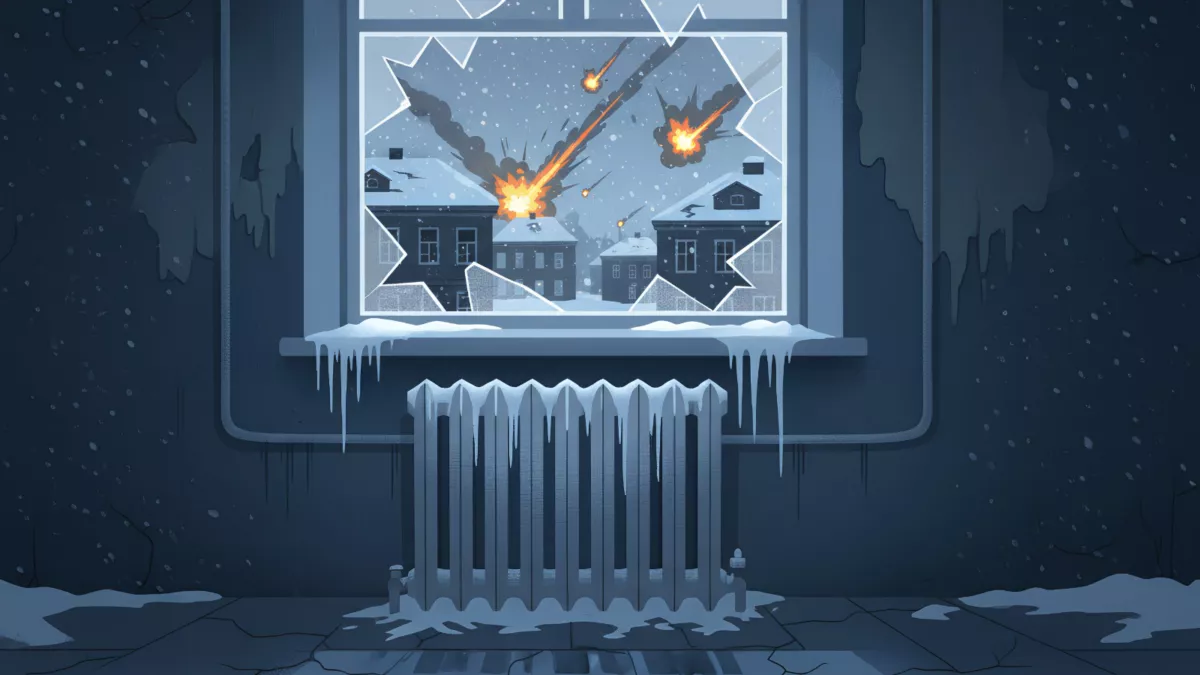
Ukraine has just endured its harshest winter since the start of the full-scale war. Russian attacks on infrastructure supplying heat and electricity are not new – they have marked previous winters as well. This time, however, the strikes on the power grid were sustained and methodical, deliberately timed to coincide with a severe cold spell as we examined in our previous article. Since the beginning of the year, Ukraine has endured more than 200 attacks, while throughout January 2026 and into February, temperatures often remained below -10°C during the day and plunged below -20°C on many nights. People were left not only without electricity, but also without running water, as pipes froze and burst in the prolonged subzero temperatures.
Since then, some power has been restored, but Russian attacks have left much of the infrastructure in ruins. In some regions, residents are without power for up to 12 hours a day. The situation is particularly dire in the south, which used to rely heavily on the Zaporizhzhia nuclear power plant, under Russian control since 2022. In January, President Zelenskyy announced the damaged system could meet only about 60% of normal demand. According to Energy Minister Denys Shmyhal, Ukraine has since restored only a third of its power generation capacity. Based on estimates announced by President Volodymyr Zelenskyy, building new power plants will cost more than €5 billion.
Spinning blackouts into a story about Ukrainian collapse
The Russian military claimed that power plants were legitimate military targets because they allegedly supplied energy to weapons factories. In reality, however, the brunt of the attacks was borne by civilians. Pro-Kremlin outlets openly stated that the ultimate goal was to force Ukraine to capitulate – or, as they like to put it, ‘coerced into peace.’ FIMI narratives asserted that Ukrainians were willing to cede territories to stop the attacks and were protesting against the government that was supposedly holding them hostage. The strikes were described as retaliation for Ukraine’s attacks on Russian territory, which Russian sources labelled as ‘terrorist’.
Another narrative frequently promoted by pro-Kremlin FIMI outlets claims that Europe and Europeans have grown tired of supporting Ukraine. Recent polls show that, while countries closest to the conflict are beginning to experience war fatigue, overall support for Ukraine remains high – and the winter attacks have led to its increase, as evidenced by the many grassroots fundraising campaigns that have sprung across Europe in response to the attacks on Ukrainian infrastructure.
European response: generators, funds and unwavering solidarity
European governments have stepped up to support Ukraine’s energy needs. The European Commission distributed 447 emergency generators worth €3,7 million from strategic reserves to Ukrainian hospitals, shelters and critical services, and donated €50 million to Ukraine’s state-owned energy company, Naftogaz. Overall, the EU has donated €3 billion in energy aid to Ukraine since 2022 and has pledged more than €1 billion to help rebuild Ukraine’s energy networks. The Ukraine Energy Support Fund, established by the EU Energy Community Secretariat to channel funds toward restoring Ukraine’s energy infrastructure, has mobilised over €1,5 billion from donors around the world.
Across Europe, grassroots campaigns mobilised millions of euros to supply Ukraine with generators and heating equipment to help civilians endure Russia’s attacks on critical energy infrastructure. In the Czech Republic, the Gift for Putin initiative ran the SOS Kyiv campaign, raising more than €7,5 million. The French group Medical Aid Committee Ukraine has distributed over 1,400 generators and portable power stations worth €2,3 million across Ukraine. In Sweden, the campaign Ge Ukraina Värme (Keep Ukraine Warm) provided approximately €1,425 million to schools, hospitals, and refugees. In Slovakia, Teplo pre Ukrajinu (Warmth for Ukraine) raised over €1,43 million, and in Poland, Warmth from Poland for Kyiv collected over €2,4 million.
Growing hybrid risks to Europe’s energy infrastructure
Russia’s war against Ukraine has become a testing ground for new military tactics, and attacks on the energy grid could potentially threaten the entire continent. Russia is actively exploiting the issue of energy security in its disinformation campaign against Europe, spreading claims that the continent cannot survive without Russian gas and that its industries will suffer severe losses from the shift to more expensive energy sources.
At the same time, Russia is already conducting hybrid attacks targeting energy infrastructure inside the EU. On the day of its invasion of Ukraine, a hacker group linked to Moscow disrupted monitoring systems for thousands of wind turbines across Germany, and more recently, in December, Poland reported attacks on its energy sector.
By helping Ukraine rebuild its energy infrastructure, the EU is also boosting its own resilience against attacks and other threats to critical systems at home. Ukraine’s experience in keeping its power networks running under extreme conditions offers valuable lessons for Europe on how to handle future crises. At the same time, it’s just as important to stay strong against the flood of Russian disinformation – and the many grassroots efforts, along with government support, show that Europeans are still committed to standing with Ukraine.
By EUvsDisinfo