
Fighting in Ukraine has become the only way out of jail for many criminals, but Moscow is using it to paint the war as a path to redemption.
By Mykyta Vorobiov, for CEPA
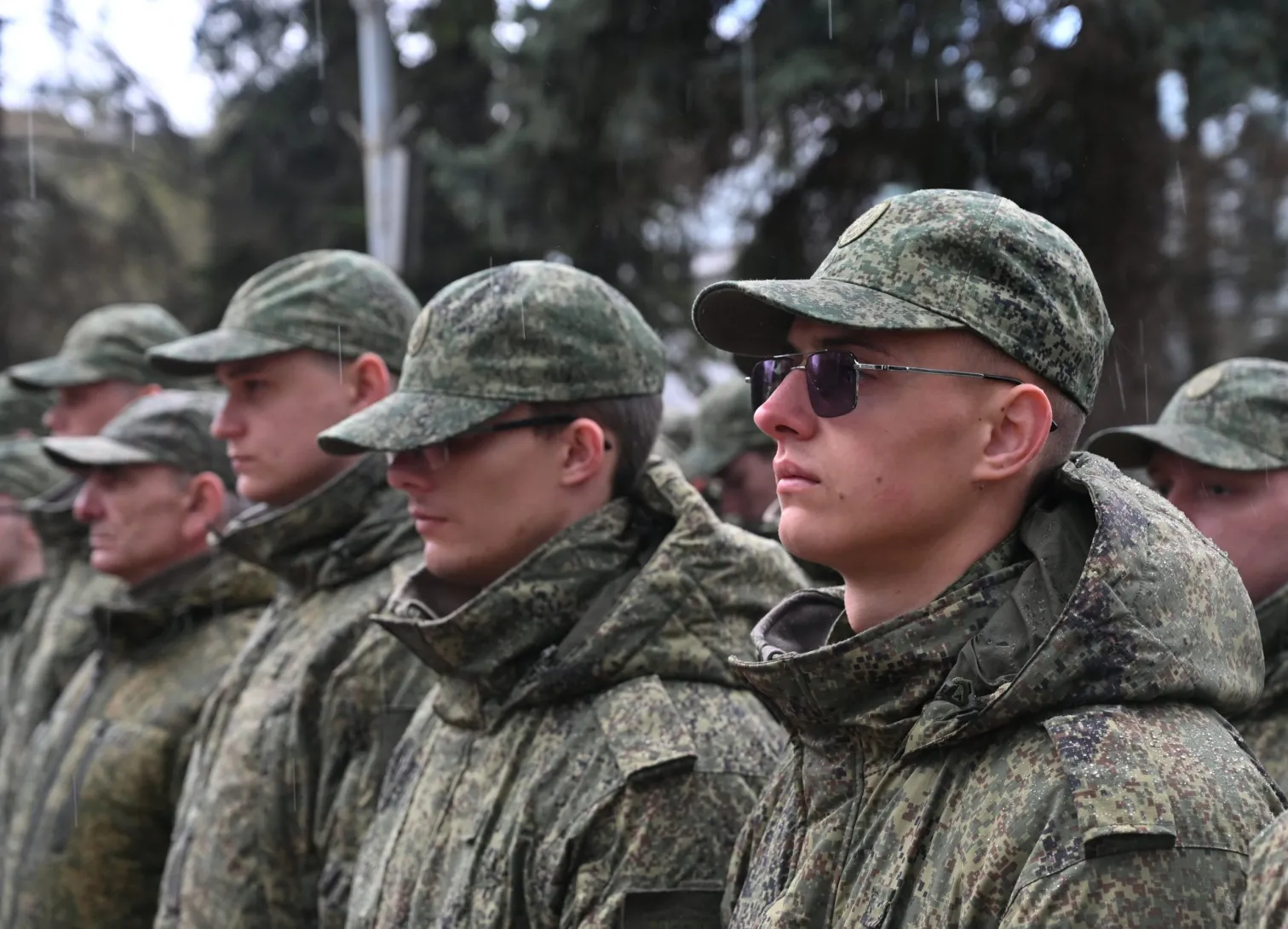
In summer 2022, months after the full-scale invasion, Russia began replacing military casualties with prisoners, a practice not used on such a large scale since World War II. In exchange for fighting, convicts were offered the chance to pay for their crimes and return to society as heroes.
While exact numbers remain unclear, estimates suggest tens of thousands, and possibly as many as 200,000 prisoners have so far been mobilized as mercenaries for the Wagner Group and, later, for Storm Z units. By offering the opportunity to swap military service for release, the Kremlin has made signing up the only way out of jail and social marginalization.
Moscow has devoted significant resources to legitimizing the policy, and, drawing on speeches, state-controlled media, and legislation adopted between 2022 and 2025, I found military service consistently presented as the only meaningful path out of imprisonment. The battlefield is the place where violence can be used to exchange guilt for redemption, marginality for social recognition, and prison for freedom.
Vladimir Putin’s regime clearly drew inspiration from its predecessors. When the Soviet Union recruited prisoners during World War II, it framed combat as a way to “atone for crimes with blood,” in the words of Stalin’s “Not a Step Back” Order No. 227 in 1942.
It established penal units and permitted executions for violations of discipline, but Putin’s Kremlin has gone further. Rather than treating prisoner mobilization as an exceptional expedient, it has built an entire public narrative around it, promoted by political elites, lawmakers, and state-controlled media.
Russia’s political and religious elites have promoted war-as-redemption through different lenses. Patriarch Kirill, head of the Russian Orthodox Church, provided religious justification in 2023 when he said that anyone who dies at the front “sacrifices themselves for others” and that such a sacrifice “washes away all the sins a person has committed.”
Evgeny Prigozhin, head of the Wagner Group until his murder in 2023, translated the same idea into the language of Russian prisons. Instead of promising forgiveness, he offered a transformation from social outcast to hero.
Convicts were encouraged to exchange their “criminal talents” for money, status, and a new social identity. His recruitment speeches repeatedly presented military service as the only meaningful escape.
“Do you have anyone who can get you out of here?” Prigozhin asked inmates at one colony. “There are two who can get you out. They are Allah/God — in a wooden box — or me. And I take you away alive.”
Putin has routinely described former prisoners as heroes rather than criminals, dismissing their offences as “mistakes” that “could happen to any of us.” He argued that “they made those mistakes at one time, but they gave their lives for their country and have fully atoned for their guilt.”
Press Secretary Dmitry Peskov went further, arguing that they “atone for their crimes with their blood,” following the language of Stalin’s 1942 decree.
State-controlled media reinforce this narrative by presenting redemption as the lived experience of former prisoners themselves. Rather than telling readers that war transforms convicts, state-controlled newspapers invite the “transformed” soldiers to tell their stories in their own words.
A 2023 Komsomolskaya Pravda interview, for example, featured a former prisoner describing how military service remade him. “The war transformed me to the core. I’m a completely different person now,” he said. “More prepared, more responsible, more honest. Previously, I was just Dima, a bit of a slacker.”
Similar stories portray enlistment as a voluntary choice offering purpose, belonging, and a second chance, rather than a response to the realities of Russian prisons or the limited alternatives after release.
The same outlets reinforce the message by contrasting Russian and Ukrainian prisoners. While Russian convicts are presented as redeemed heroes who have overcome past mistakes, Ukrainian prisoners on the frontline are labeled as “felons” who “make poor soldiers.”
Redemption is portrayed as a distinctly Russian moral achievement rather than simply a consequence of military service.
Between 2022 and 2024, the narrative was incorporated into the Russian Criminal Code, and prisoner recruitment was formally embedded into Russian law. State Duma Defense Committee chairman Andrey Kartapolov, one of the architects of the legislation, explained the underlying logic when defending the reforms.
“Having served their sentence, criminals return to society anyway,” he said. “But if he has to go into battle every single day… he will return as a different person. And who knows how many days they have left.”
He presented combat as a more effective form of correction than prison itself. Prisoners either die in battle, in line with the exceptionally high casualty rates in penal units, or return to society as supposedly transformed citizens. The Russian state has made the idea of redemption into official policy rather than simply political rhetoric.
Seeing prisoner recruitment solely through the lens of military necessity misses an important part of the story. The Kremlin has not simply offered prisoners a way out of prison; it has constructed a narrative in which war itself becomes the path to redemption, social acceptance, and freedom.
By embedding that narrative in elite rhetoric, state-controlled media, and legislation, Putin’s regime has recast prisoner recruitment as a politically and socially legitimate policy and changed the way it talks about the war.
By Mykyta Vorobiov, for CEPA
Nikita (Mykyta) Vorobiov is a political analyst focusing on Russian and Eastern European politics, security, and information campaigns. He is currently completing an MSc in Russian and Eastern European Studies at the University of Oxford and holds a BA in Ethics and Politics from Bard College Berlin, where his research focused on Russian visual propaganda. For the last four years, Nikita has been publishing articles on politics and security for CEPA, VoxEurop, JURIST, and others.
Europe’s Edge is CEPA’s online journal covering critical topics on the foreign policy docket across Europe and North America. All opinions expressed on Europe’s Edge are those of the author alone and may not represent those of the institutions they represent or the Center for European Policy Analysis. CEPA maintains a strict intellectual independence policy across all its projects and publications.