
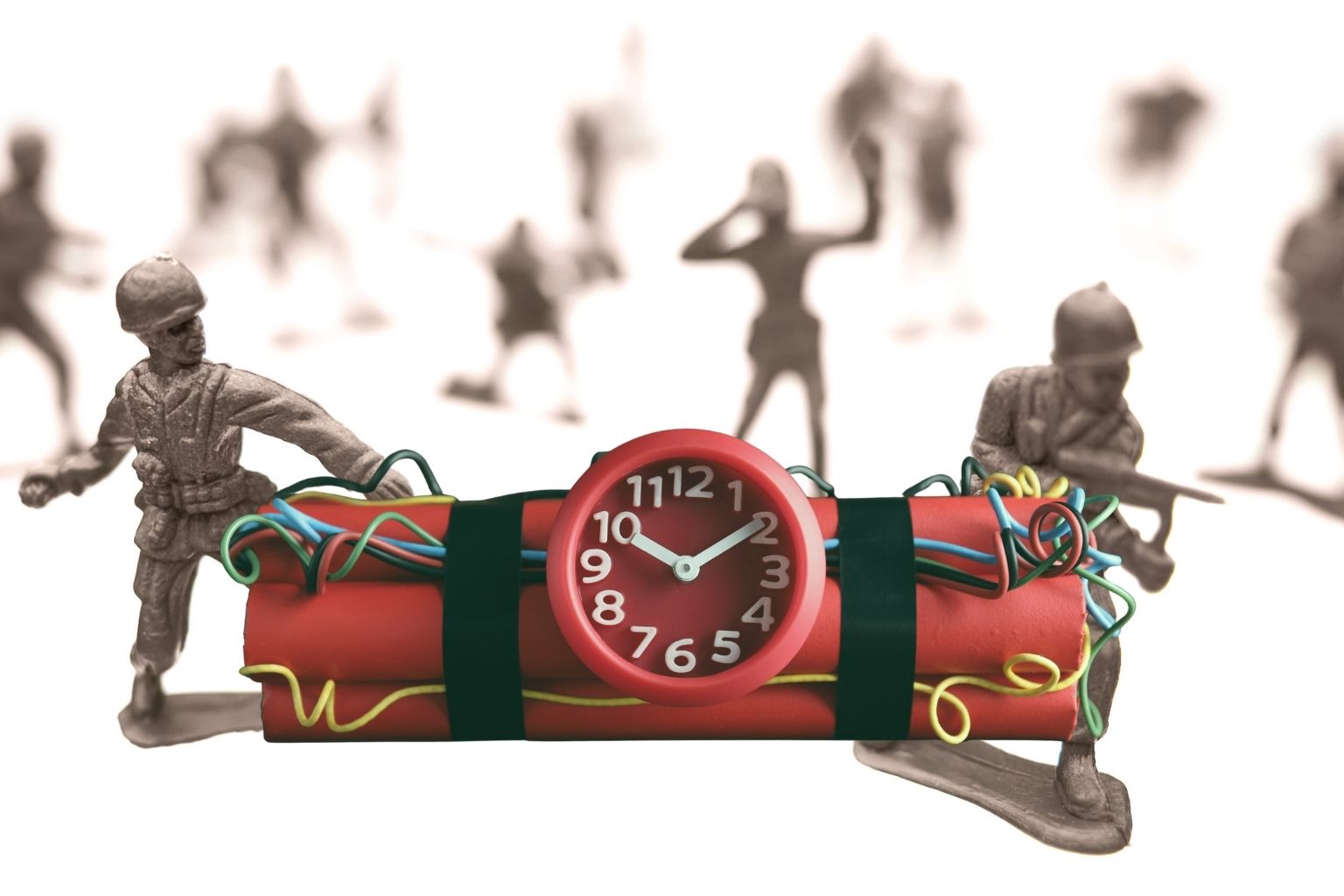
Regardless of how this conflict ends – whether with a rotten compromise forced by geopolitics or a frozen front line – Ukraine faces a challenge that may prove more difficult than the war campaign itself. Hundreds of thousands of men and women, trained to kill and operating for years under extreme stress, will return home. This is not a matter of demobilization. It is a matter of national security. The Russian services are well aware of this critical point. That is why the operation we are seeing in 2025 is no longer based on ideology, but on the engineering of fear. The goal is one: to turn veterans into public enemies.
The mythologization of 2022 is over. That period of unconditional support and social unity is a closed chapter. Today, we are dealing with a tired society struggling for survival and an army that often feels alienated. Russian disinformation fits precisely into this gap. Its strength lies in the fact that it does not have to create completely fictional scenarios. It is enough to highlight and exaggerate real pathologies.
The facts are inexorable: returns from the front bring with them cases of violence, addiction, and crime. This phenomenon is familiar from every post-war history, from Vietnam to the Balkans. However, in the case of Ukraine, Russia is turning this process into a weapon. Every incident involving a former soldier – whether it is a domestic dispute, the use of weapons, or a conflict with neighbors – is immediately publicized and appropriately profiled. The message is simple: these are not heroes, they are a threat to your families.
The stigmatization mechanism is intended to isolate the veteran community. Russia wants civilians to fear people in uniform. It wants employers to see them as unstable employees and neighbors to see them as potential thugs. If society rejects veterans, they will go underground. They will form hermetic, armed groups which, feeling wronged, will become easy targets for the criminal world or foreign services offering “order” and money. Internal destabilization caused by people who can fight but have nothing to live on is obviously a dangerous scenario for Kyiv and a desirable vision for the Kremlin.
Crucially, this strategy resonates strongly in Poland. In our information space, this topic is sometimes pointed to as part of a long-term strategy of scaring people with the consequences of Ukraine’s proximity. The narrative has changed: it no longer threatens only with social refugees, but also with the import of organized crime. Poles are being fed the message of an “inevitable wave”: the smuggling of weapons from the front and groups of former soldiers who will transfer their methods of operation to Polish streets.
This is a game of hard security interests. Moscow’s goal is to convince the Polish public that an open border and close relations with Ukraine are a systemic risk. If Poles believe that a Ukrainian veteran is synonymous with a gangster, political support for Kyiv will be replaced by demands to build a wall on the border.
This is a long-term and very effective strategy because it is based on the psychology of fear rather than political sympathies. The Kremlin is counting on the fact that Ukraine, economically ruined, will not be able to cope with the systemic care of demobilized soldiers. That instead of reintegration, marginalization will follow. As a result, veterans, instead of being the foundation for the reconstruction of the state, may become its gravediggers.
Every narrative that dehumanizes veterans, every attempt to generalize pathology to an entire group, is part of Russia’s operation. Russia wants to undermine Ukrainian (and Polish) society with fear of its own defenders. This is compounded by the vision of uncontrolled arms trade, theft of these weapons from aid provided by the West. And although this is a repeatedly deconstructed myth, it again touches on the issue of security, which is fundamental to every individual.
PB