

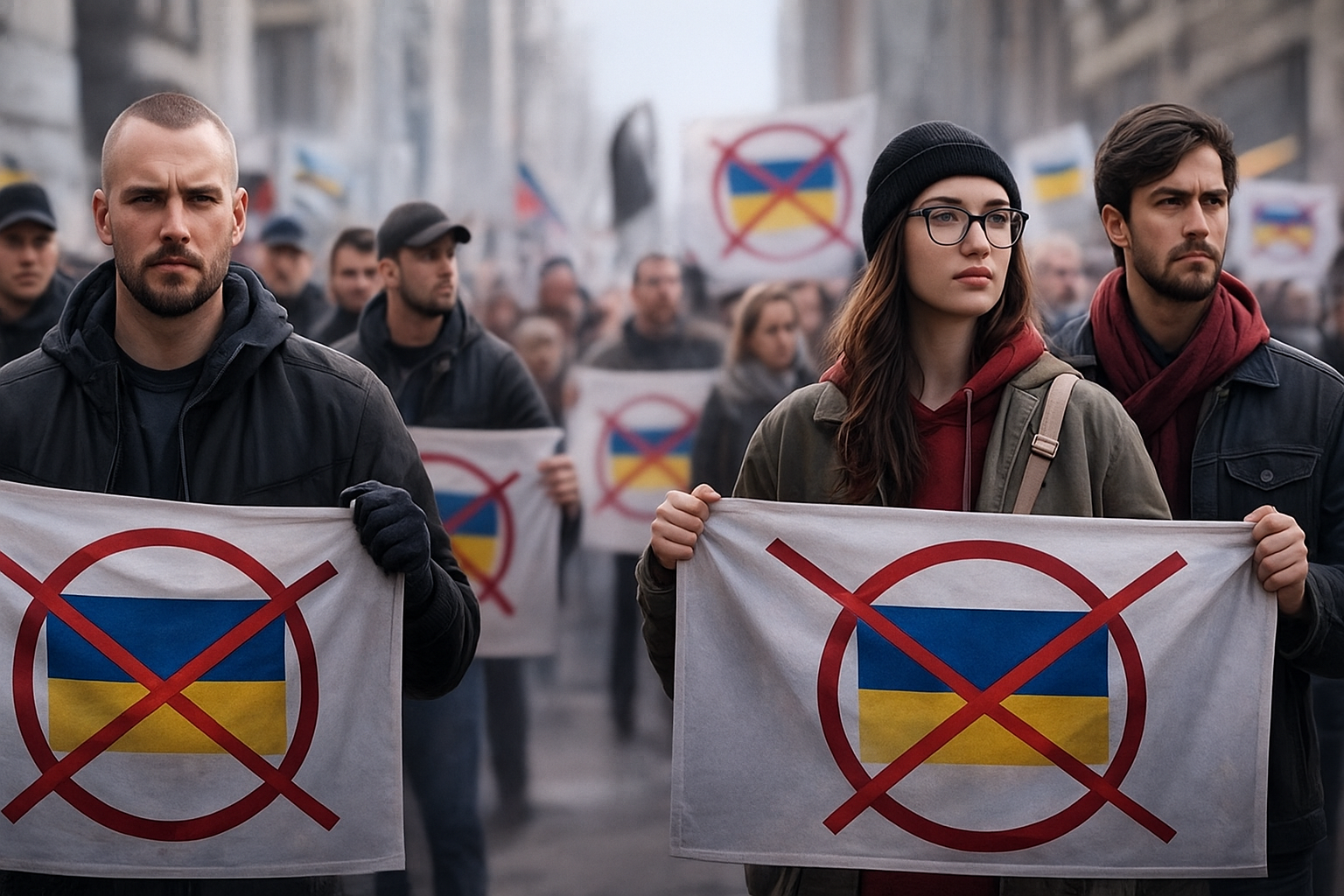
Observing the public debate in the West, one gets the impression that we are participating in two parallel, completely contradictory realities. On the one hand, we hear that Ukraine is the vanguard of “rotten liberalism,” a puppet of global corporations, and a threat to traditional Christian values. On the other hand, often at the same time, we hear voices saying that Kyiv is a hotbed of “extreme nationalism,” a state that tolerates neo-fascism and persecutes ethnic minorities. These two narratives, although logically contradictory, have one common source. They are the product of the Russian influence machine, which has mastered the art of being an ideological chameleon to perfection.
Russia does not care about the consistency of its image. It understands that in the polarized world of the West, it is not necessary to convince everyone with a single narrative. It is much more effective to play two pianos at the same time, adjusting the melody to the ear of a specific audience. The goal is one: to make support for Ukraine politically toxic for both the right and the left.
Let’s look at the vector directed at conservative circles, which are particularly strong in the United States and Poland. Here, Moscow assumes the role of defender of the “old order.” In communication channels targeting Donald Trump voters or Polish nationalists, Russia is presented as the “last bastion of normality” holding back the onslaught of the moral revolution. In this vision, Ukraine is reduced to the role of an experimental territory for George Soros and woke ideology.
Kremlin political technologists are precisely playing on religious emotions. The SBU’s actions against agents in the Moscow Patriarchate are presented on Western right-wing websites as “persecution of Christians” and “war against God.” The message is simple and hits a sensitive spot. Conservative audiences are meant to feel that by supporting Kyiv, they are supporting forces that are destroying their own value system.
Russia plays a completely different game with left-wing audiences, which dominate among the elites in Germany, France, and Italy. Here, Putin, the same man who was just defending the cross, suddenly becomes the heir to the Red Army fighting fascism. For the benefit of the European left, Moscow is dusting off the myth of the “Great Patriotic War.” In this narrative, Ukraine is a country allegedly ruled by “Bandera’s successors,” with Azov dictating terms to the president.
For a pacifist socialist from Berlin who is terrified of accusations of supporting the far right, such a message has a paralyzing effect. Russia fuels these fears by exposing every incident, even marginal ones, involving the use of radical symbols by Ukrainian soldiers on social media. It aims to make left-wing voters believe that sending weapons to the East is arming the “brown forces.”
The cynicism of this strategy lies in the fact that the Kremlin simultaneously finances and supports the far right and the far left in Europe. The point is not for either of these options to win. The point is to destroy the rational center. Moscow is striving for a situation in which a moderate politician who wants to help Ukraine will find himself in the crossfire. From the right, he will hear that he supports “globalists,” and from the left, that he supports “nationalists.”
The result is an alliance of extremes, united only by their aversion to Ukraine, instilled by contradictory but precisely targeted Russian narratives.
This phenomenon is more dangerous than classic propaganda because it is more difficult to detect. The recipient, locked in their information bubble, does not see the contradictions. Conservatives do not read left-wing websites, so they do not know that Russia is selling a completely different version of reality there. Everyone gets what they want to hear, as long as the final conclusion is in line with Moscow’s interests: the isolation of Kyiv.
We must be aware that Russia has no ideology. Its only ideology is chaos. If we are still wondering how it is possible that Putin is an idol for part of the anti-system right wing and at the same time finds understanding among the anti-American left, the answer lies precisely in this chameleon-like nature. The Kremlin is a mirror in which every radical sees their own fears and hopes, without noticing that behind the mirror there is an operator pulling the strings. Breaking this mirror requires going beyond our own thought patterns and seeing the whole cynical game that our opponent is playing with us.
AI graphics
PB