

By EUvsDisinfo
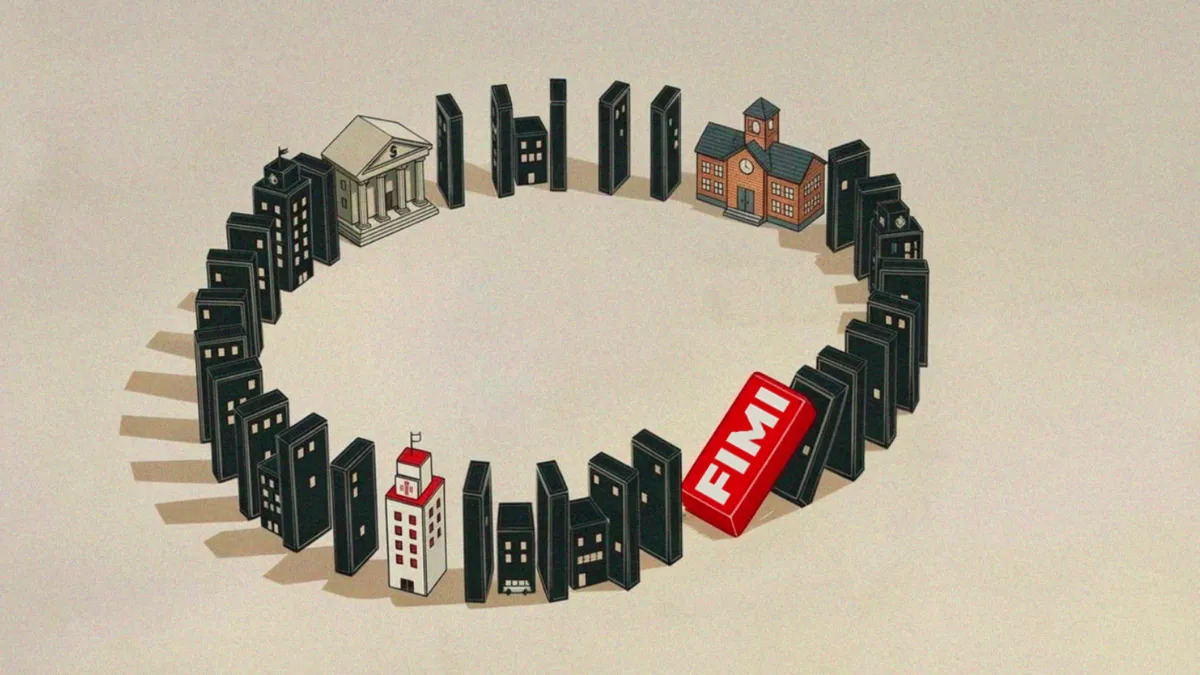
A number of recent global risk assessments converged on a clear message: FIMI, disinformation, and misinformation have become a systemic threat for democracies worldwide. This is no longer simply an issue of ‘fake news’ but a structural risk that undermines the conditions for economic growth, social welfare, and liberal institutions.
Another clear message emerging from these reports is the importance of a robust public‑interest media ecosystem as a guardrail against information manipulation.
How information manipulation erodes global resilience
The World Economic Forum’s Global Risks Report 2026 ranks misinformation and disinformation as the second most serious global risk in the short term, slightly down from first place in 2025. The report warns that misinformation, disinformation, and other technological risks can deepen political, cultural, or identity divides within societies, corroding public discourse and weakening crisis responses. In turn, these developments ‘heighten the risks of increased digital distrust and dilution of ambitious socio-environmental decision-making amid shifting short-term priorities and increasingly nationalistic narratives.’
The UN Global Risk Report underscores that information disorder is a ‘risk multiplier’ which exacerbates other global threats such as conflict, pandemics, and climate change by sabotaging the shared evidence base needed for collective decision‑making and coordinated responses.
A recent submission to the UN Human Rights Council (HRC) classified disinformation as a systemic risk for a wide range of human rights. It documents how FIMI campaigns increasingly target marginalised communities, human rights defenders, and independent media amid shrinking civic space and declining trust in institutions.
In addition, the third threat report on FIMI by the European External Action Service (EEAS), released last March, noted that FIMI targeted 90 different countries in 2024. While Ukraine was the main victim, FIMI campaigns also targeted France, Germany, Moldova, sub-Saharan Africa, and many other countries. This finding underscored the global nature of the threat.
Taken together, these reports describe FIMI, disinformation and misinformation not merely as communication challenges but as integrated global risks that rivals more traditional security and economic threats.
Economic harm and the erosion of prosperity
While FIMI, disinformation, and misinformation are typically discussed in political terms, a recent report titled ‘The Economic Imperative of Investing in Public Interest Media’ by the Forum on Information & Democracy (FID) suggests that FIMI and disinformation also carry a heavy economic cost.
The report frames accurate, trustworthy information as a form of economic infrastructure: just as roads and power grids enable trade and production, high‑quality news and data enable households, firms, and governments to make informed decisions, allocate resources efficiently, and manage risk. When this informational infrastructure is contaminated by disinformation, markets begin to malfunction.
In addition, the report identifies several mechanisms through which FIMI and disinformation undermine economic performance. Misleading narratives about inflation, taxation, public debt, or monetary policy can destabilise expectations, encourage speculative behaviour, and reduce confidence in economic governance, thereby increasing borrowing costs and discouraging long‑term investment.
In financial markets, targeted disinformation campaigns about specific firms, technologies, or entire sectors can distort asset prices and deter innovation, particularly in highly technical areas where most citizens rely heavily on intermediaries for interpretation.
At the macro level, the spread of populist economic disinformation which promises unsustainable fiscal policies or vilifies necessary reforms can lead to sudden policy reversals and institutional gridlock, further eroding growth and productivity.
The report also stresses that robust public‑interest media help counter these dynamics by reducing information asymmetries, exposing corruption and waste, and providing a public forum in which economic trade‑offs can be debated. Investment in trustworthy information is not merely a public good but an economic necessity and societies that allow FIMI and disinformation to capture their information space risk undermining their own prosperity.
Democracy, peace, and human rights under attack
The impact of FIMI and disinformation on democracy is detailed in both the WEF risk assessment and the HRC analysis. The WEF report notes that as societal polarisation rises globally in tandem with misinformation and disinformation, ‘reactions by some governments are pointing towards more authoritarian rule’ as the rule of law deteriorates. The human‑rights analysis, in turn, shows how these dynamics translate into concrete violations. Disinformation can discourage participation in elections or public debate, targeting specific groups with narratives that their vote does not matter or that participation will expose them to harm.
Conflict‑related FIMI often dehumanises minorities or political opponents, inciting hatred and violence and undermining the rights to life, security, and equality before the law. In fragile contexts, such narratives can obstruct ceasefire negotiations, try to justify atrocities and hinder humanitarian access by portraying aid workers or peacekeepers as hostile actors.
These democratic and human‑rights harms feed into the broader risk landscape identified by the UN Global Risk Report, which notes that societies marked by polarisation and institutional distrust are less capable of managing other systemic threats, from pandemics to economic shocks. FIMI and disinformation thus function as both a direct assault on democratic norms and an indirect enabler and accelerator of broader instability.
Climate change, sustainable development, and information integrity
A UN document on Information Integrity and the Sustainable Development Goals (SDGs) makes clear that disinformation also threatens progress on climate action and sustainable development. It describes how organised climate‑related disinformation campaigns cast doubt on the scientific consensus, exaggerate the economic costs of mitigation and adaptation, or promote false solutions, thereby weakening public support for necessary policies.
In some cases, foreign or domestic actors with vested interests in fossil fuels leverage FIMI to delay regulation or investment in renewables.
The Human Rights Council analysis complements this by linking climate‑related disinformation to the emerging human right to a clean, healthy, and sustainable environment. When citizens are systematically misled about environmental risks and policy options, they cannot effectively participate in environmental decision‑making, and governments may fail to meet their obligations to protect populations from foreseeable harm.
The same logic applies more broadly to the SDGs. Progress on health, education, or gender equality depends on reliable information flows that FIMI deliberately seeks to corrupt.
Trustworthy information and public interest media as safeguards
Against this backdrop, strong public‑interest media emerge as critical safeguards for both economic and democratic resilience.
The ‘Economic Imperative’ report argues that independent, fact‑based journalism improves the functioning of markets, enhances accountability, and supports inclusive growth by ensuring that citizens and policymakers share a common evidence base.
The report also documents how robust public‑interest media can increase government efficiency, reduce corruption, and improve social outcomes, particularly when they provide in‑depth coverage of complex policy fields such as health or education.
Support for independent media, media literacy, and transparency of digital platforms is critical for democratic resilience. Information integrity is a public good that must be actively protected through regulatory measures and investment rather than being left to market forces.
In practice, this means building resilient information ecosystems in which credible outlets have sustainable business models, audiences have the skills to navigate complex media environments, and platform governance rules discourage the amplification of deceptive content. Such measures are central to the stability of democratic institutions and economic performance.
Democracy Shield and the defence of information integrity
A growing number of policy initiatives seek to translate these insights into concrete protection mechanisms against the disinformation threat.
The landmark European Democracy Shield developed jointly by the European Commission and the European External Action Service aims to strengthen the integrity of the information space around elections and other democratic processes. Within its external dimension, the Shield aims to counter FIMI and disinformation and empower strong and resilient democracies globally, through cooperation with international partners and scaled-up efforts to detect and respond to FIMI threats. It also foresees structural support for independent journalism, fact‑checking, and civic education to strengthen democratic resilience.
By explicitly treating information integrity as a pillar of democratic security, the Democracy Shield embodies lessons identified in the above-mentioned reports that FIMI and disinformation are global, multi‑dimensional threats; that the economic and political costs are significant; and that the most effective response lies not only in counter‑measures against malicious content, but in proactive investment in trustworthy information and public‑interest media.
In doing so, it offers a model for how democracies can move from ad‑hoc reactions to a more strategic, rights‑based defence of information environments on which their prosperity and legitimacy depend.
By EUvsDisinfo