

By EUvsDisinfo
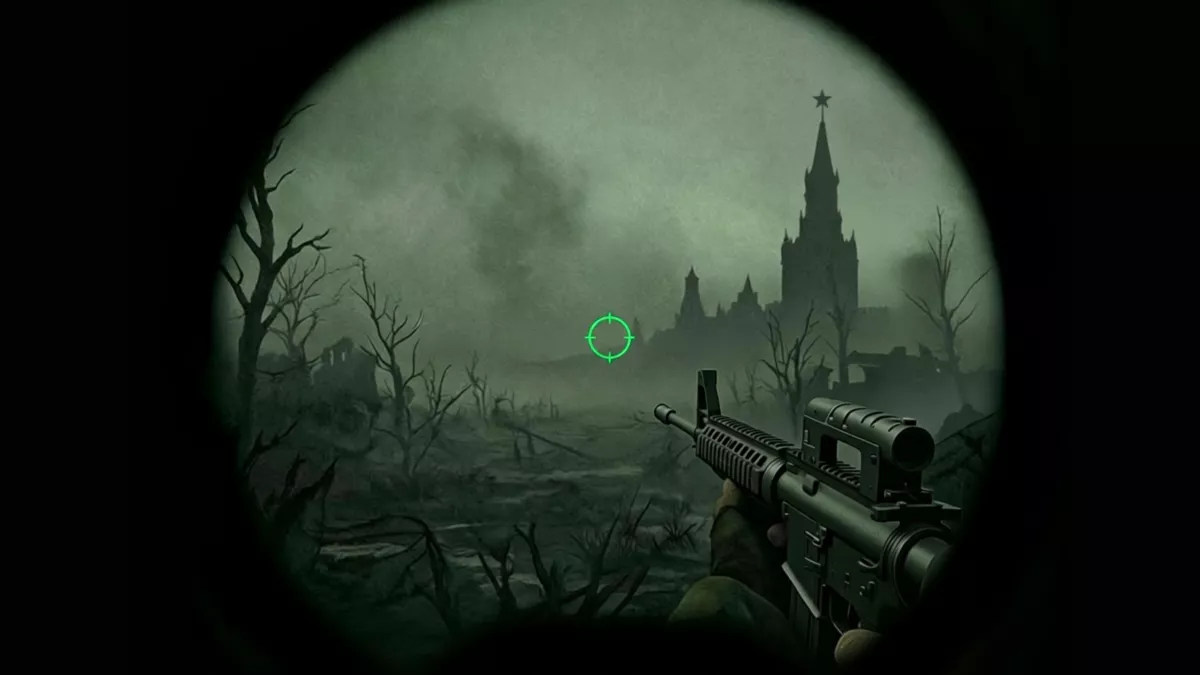
For decades, television was considered the primary mouthpiece of propaganda. The digital age, however, has elevated a new and potentially more dangerous instrument of influence: video games. Under the guise of entertainment, they shape worldviews and political narratives, making propaganda subtle, scalable, and effective.
Unlike passive media, video games offer players not only a story but an experience in which they actively participate. As a result, ideological messages embedded in the narrative and mechanics can be internalised more deeply because they feel intrinsic to the game world. This matters given the industry’s roughly 3.3 billion players worldwide, with those aged 18-34 comprising about 38% of the audience.
Invisible persuasion in interactive worlds
The influence of video games extends beyond plot and graphics. It operates through players’ social networks, interactive engagement with the game world, and symbolic systems that are repeatedly reinforced to consolidate particular perceptions. Taken together, these features make games a powerful medium for shaping beliefs, often without the player’s conscious awareness.
Community formation and the ‘in-group’ effect
Video games create global communities that unite millions of people. Forums, in-game chats, tournaments, and festivals foster distinct cultures with their own language, jokes, symbols, and rituals. Gamer slang itself often signals ‘in-group’ membership. In this environment, social integration becomes a powerful channel of influence: the stronger the ties, the greater the trust in information circulating within the community. Messages from ‘insiders’ are therefore assessed less critically, even when they carry ideologically biased or harmful narratives. On platforms such as Fandom, Reddit, or Steam Community, structured discussions can consolidate shared interpretations of in-game events and, under the guise of plot analysis or ‘personal opinions’, gradually build narratives that later serve as conduits for ideological influence.
Full immersion and the illusion of choice
Game worlds establish their own systems of values and norms, within which the player interacts with ideals through narrative and mechanics. The player makes decisions and receives rewards or punishments, learning the internal logic of the game. What is crucial is that these messages are perceived as the result of personal choice. Even when freedom of action is limited by predefined frameworks, the sense of control strengthens acceptance of prescribed behavioural models. This effect is particularly evident in long-running franchises, where players return to the same universe for years, repeatedly immersing themselves in familiar narratives. In this way, long-term loyalty is formed not only to the brand but also to the ideological constructs through which images of the enemy, justice, and conflict are conveyed.
Symbols, repetition, and pseudo-reality
Human consciousness tends to simplify complex reality through symbols. In video games, every element carries encoded meaning that requires no explanation. The repetition of these symbols amplifies the effect of illusory truth: familiar information appears more credible after only a few encounters. When propagandistic messages are integrated into game mechanics or narrative, they are perceived not as external influence but as an organic part of the world’s logic. Since video games are associated with a safe space for leisure, critical thinking is reduced. The player does not expect manipulation and easily accepts distorted historical narratives or stereotypical images of the enemy. This is especially characteristic of games that model wars, state governance, or global conflicts. Here, the boundary between reconstruction and manipulation becomes blurred. The narrative is not analysed. It is lived as a personal experience.
An industry under Kremlin control
The Russian Federation was among the first to recognise the potential of video games as a tool of ideological influence. Within the framework of the concept of ‘digital authoritarianism’, the gaming industry is gradually being integrated into the state information apparatus. This is not concealed even at the highest level. Russian President Vladimir Putin has openly stated that games should exist at the intersection of art and education and serve to raise individuals in the spirit of patriotism.
To implement this policy, the Kremlin is constructing a closed ecosystem in which ideologically loyal projects receive financial and administrative support. A central element of this system is the Institute for Internet Development, an organisation included on EU sanctions lists as a propaganda entity. It is this body that distributes billions of roubles in state subsidies for the creation of ‘patriotic’ digital content. For the period 2025-2027 alone, funding of 3.4 billion roubles is planned.
At the same time, the state is pursuing technological autonomy: the development of domestic game engines such as VK’s Nau Engine, alternative platforms for game distribution, and even the promotion of a proprietary game console. Concurrently, censorship is intensifying, as authorities attempt to ban games that, in their view, contain a ‘distorted representation’ of history or Russia’s place in the world. As a result, a controlled digital space is being formed in which only ideologically approved content is permitted.
Particularly concerning is the use of video games to shape a militarised worldview among children and adolescents. State institutions and government-controlled movements are actively involved in this process. The youth military-patriotic movement ‘Yunarmiya’, which counts more than 1.75 million participants, integrates e-sports and video games into its activities, combining entertainment with military themes.
Certain games effectively function as training manuals. The Russian army recommends tactical shooters such as Squad 22: ZOV for cadets and members of Yunarmiya. These games recreate real combat operations in Ukraine, including the ‘Mariupol’ and ‘Avdiivka’ campaigns, with clearly pro-Kremlin narratives and Z-symbolism. War in this format is presented not as a tragedy but as a heroic adventure in which violence is normalised and aggression is justified.
As a result, video games in Russia are ceasing to be a neutral cultural product. They are becoming an instrument of soft power capable of shaping loyalty to the regime, reinforcing desired historical interpretations, and preparing new generations to perceive war as a natural state. Ignoring this sphere is a strategic mistake, as before our eyes a new, highly effective front of information warfare is emerging – silent, interactive, and therefore particularly dangerous.
Community-driven radicalisation in gaming spaces
Gaming platforms, particularly Steam, have become not only spaces for entertainment but also infrastructure for ideological influence. Steam allows users to exchange reviews, discuss and publish their own materials about games, engage in debates, and create modifications. In 2025, the platform was visited by approximately 132 million users monthly and 69 million daily. At the same time, communities form on the platform in which users predominantly interact with those who share their views.
Under such conditions, even marginal or radical ideas gain traction, forming echo chambers – information environments in which alternative viewpoints are ignored, and critical reflection is virtually absent. Research by the Anti-Defamation League – a civil rights organization combating antisemitism – recorded more than 1.8 million instances of extremist or hateful content on Steam, including Nazi, racist, and militaristic symbols.
Of particular significance is Z-propaganda, which is disguised as humour, fan-created materials, or game modifications. Through nicknames, avatars, in-game discussions, and guides, ideological messages are disseminated that normalise war, glorify Russian soldiers, and dehumanise Ukrainians. This content is rarely perceived as propaganda. It is presented as part of community culture and an ‘alternative opinion’, which reduces players’ critical awareness.
Thus, video games are no longer a neutral space for entertainment and increasingly perform the function of an environment for socialisation, identity formation, and the normalisation of violence. Through game mechanics, communities, symbolism, and repetitive narratives, they are capable of subtly reinforcing ideological attitudes, lowering critical thinking, and shaping loyalty to aggressive political projects. A particular threat lies in the fact that this influence is masked as culture, humour, and ‘free choice’, and therefore is rarely perceived as propaganda. In the digital age, the struggle for consciousness takes place not only on news screens but also in virtual worlds where war can begin with the press of the ‘Start’ button.
In light of these dynamics, prevention should move beyond reactive takedowns and instead build continuous, evidence-led monitoring of games for ideological narratives and symbols that normalise aggression or legitimise violence. A practical step is to adopt a standardised expert checklist to flag risk indicators such as historical reframing, one-sided threat narratives, dehumanising stereotypes. Transparency measures are also essential: require clear disclosure of a game’s country of origin, funding streams, and any advisory or promotional ties to state or proxy actors. Platforms should extend governance to community layers – forums, chats, streams – where propaganda and hate speech are often amplified and enforce consistent moderation and reporting pathways there.
Public awareness should be tailored to interactive media, equipping users to recognise one-sided narratives, disengage from radicalised communities, and report attempts to induce real-world actions under the guise of play. Governments can support independent monitoring capacities that combine technical expertise with legal and human-rights analysis, particularly for content originating from authoritarian environments. Finally, investments in ongoing research and youth-focused education to understand impact and to calibrate proportionate interventions – from labelling to targeted restrictions for demonstrably manipulative content – can be useful.
If you would like to explore these dynamics in greater depth, LingvaLexa’s report, ‘New Weapon in the Shadows: How the Kremlin Uses Video Games for War Propaganda’, offers a more detailed analysis of propaganda in gaming environments, including concrete indicators, illustrative examples, and practical recommendations for prevention and accountability.
By EUvsDisinfo
Anna Vyshniakova is an international criminal lawyer and Head of LingvaLexa NGO. She focuses her work on war crimes investigations and on ensuring accountability for war propaganda. Anna previously served as an Adviser to the Minister of Foreign Affairs of Ukraine and has worked with multiple international organisations as a legal consultant. She is a certified trainer at the Training Center of Prosecutors of Ukraine, author of the book “Incitement to Genocide: How to bring propagandists to justice”. Her approach is to integrate knowledge from social psychology, philosophy, and linguistics alongside modern technologies to reinforce criminal law and its real-world application.