
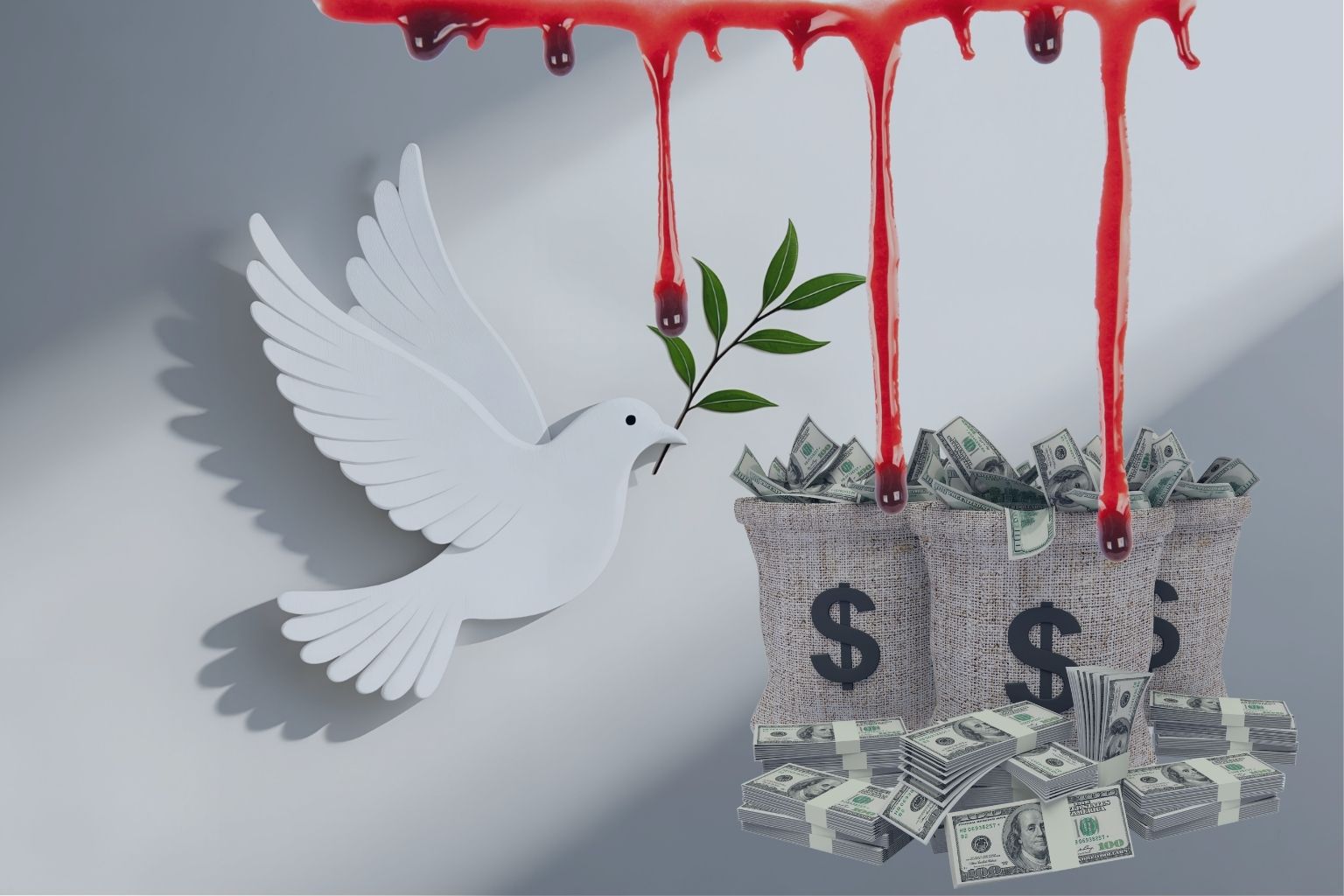
In 2025, the political vocabulary of the West underwent a painful lobotomy. Just two years ago, the key word that opened all doors in Washington, London, and Brussels was “victory.” Today, that word has become shameful, almost obscene. It has been replaced by soft, diplomatic euphemisms: “de-escalation,” “freeze,” “compromise,” and above all, the ubiquitously declinated “deal.” In Donald Trump’s circle and in the weary cabinets of Western Europe, the belief has taken hold that peace is simply the absence of gunfire. That all you have to do is draw a line on the map, shake hands, and the world will return to balance.
This is not a political mistake. It is a fundamental cognitive error that could cost us the existence of our civilization. The rhetoric of peace, which supplants the rhetoric of victory, is in fact an act of surrender, only spread out over time.
We must understand the nature of the beast we are fighting. The war unleashed by Russia is not a 19th-century dispute over borders, over whose village in Donbas will belong to whom. This war is an aggressive, biological organism. It lives, evolves and, most importantly, it must feed. Its food is weakness. Russian imperialism does not operate according to the logic of business contracts, where a “deal” ends the matter. It operates according to the logic of a cancer. If we do not cut it out completely, if we leave even a fragment of tissue, there will be a relapse. The pause in hostilities, which the West is so eager to call “peace,” is only an operational pause for Moscow. Time to replenish stocks, train new recruits, and lull the victim into a false sense of security before the next strike.
The negotiating stance of those close to the new US administration, but also of many European politicians, is based on injustice. All diplomatic pressure has been redirected to Kyiv. Why? Because Kyiv is rational. Because Zelensky can be talked to, he can be blackmailed with the suspension of supplies, he can be forced to make concessions. Putin cannot be forced to do anything, so it was decided that it is easier to break the victim than the aggressor. This is thinking in terms of: “Let Ukraine give up a limb, and the bandit will be sated and go home.”
History teaches us that the bandit never goes home. Seeing that violence pays off and ends with territorial gains, the bandit takes it as an incentive. Forcing Ukraine to make concessions in the name of “peace” is not only immoral. It is strategic suicide. If we agree today to let Russia “digest” the occupied territories in peace, in five years we will wake up to a reality in which Russian tanks will be standing not near Kharkiv, but near Narva or Suwałki.
Peace – real, lasting peace, not just a pause to reload weapons – is not possible without Ukraine’s victory. And Ukraine’s victory is nothing less than the defense of Western values. If we allow military force to determine border changes, if we decide that international law is only a suggestion for the weak and that the strong can do whatever they want, then we ourselves are destroying the foundation on which we have built our prosperity.
Truce, ceasefire, demarcation line – call it what you will. This is not peace. This is breeding a monster. Any “peace” plans that do not envisage restoring Ukraine’s control over its territory and bringing criminals to justice are, in fact, plans for another war. A war that will be even bloodier and in which we – Poles, Balts, Europeans – will no longer be just the rear, but the front line.
Therefore, contrary to the fashion for “realism,” we must return to the language of principles. There is no peace without justice. There is no security without defeating the aggressor. Russia will only stop where it is physically stopped and broken. Anything else is just postponing the verdict.
PB