
By EUvsDisinfo
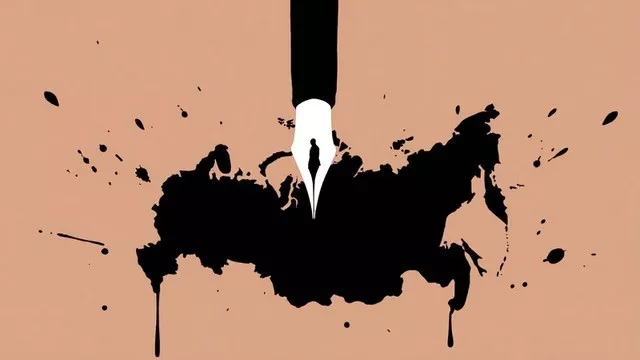
Since the outbreak of Russia’s full-scale aggression against Ukraine, Moscow has visibly intensified its fight for so-called ‘true history’. The Kremlin is rewriting school books to promote myths of Russia’s invincibility and Putin’s total supremacy. Russian historical manipulation is aimed not only at Russian society but also at neighbouring countries and the international community. The Kremlin has lately employed various techniques to reach its aggressive expansionist goals by falsifying history and exploiting ongoing historical debates.
The Kremlin knows your history better than you: Lithuanian history rewritten
In March 2025, the Russian MGIMO University introduced a 400-page book entitled ‘History of Lithuania’ with a foreword from the Russian Foreign Minister Sergey Lavrov. The stated purpose of this book is to ‘provide an objective account of history that takes into consideration the use of falsified historical narratives by the Baltic countries’.
In fact, ‘History of Lithuania’ is a series of dangerous historical manipulations questioning Lithuanian sovereignty. The book is silent about Soviet crimes against Lithuanians, claiming that it was never an independent state, its incorporation into the Soviet Union was ‘beneficial’, and its withdrawal in 1991 ‘undemocratic’. Current Lithuanian political leaders are accused of promoting ‘pro-fascist ideology based on Russophobia and radical nationalism’.
Russia portrays itself as the only source of ‘historical truth’ for its neighbours, whose national histories require corrections. The Kremlin presents a systematic approach towards rewriting history, and Russian President Vladimir Putin’s pseudo-historical writings should be taken seriously. In July 2021, Putin published his article ‘On the Historical Unity of Russians and Ukrainians’ to use it as an ideological justification for the full-scale Russian invasion of Ukraine in February 2022. A year later, MGIMO University released its doctored version of the ‘History of Ukraine’. ‘History of Lithuania’ was published in the very same series of monographs.
The person featuring as the main author of both ‘History of Ukraine’ and ‘History of Lithuania’ is Maxim Grigoriev, who presents himself as an expert in several domains, including history. On top of his strangely prolific career as a writer and a researcher, Grigiriev has been the head of the so-called ‘International Public Tribunal for the Crimes of Ukrainian Neo-Nazis’, an organisation spreading the Kremlin’s key disinformation narratives concerning Ukraine. Grigoriev volunteered in Putin’s ‘Special Military Operation’ against Ukraine. In occupied Donbas, he proudly posed with weapons wearing civilian clothes. It should be added here that the Geneva Conventions forbid combatants from fighting in civilian clothes, as it’s considered treacherous.
One Lithuanian citizen is among the book’s authors: Giedrius Grabauskas, who escaped to Moscow in 2020 after being wanted in his home country. He was a close associate of Algirdas Paleckis, a Lithuanian politician imprisoned for espionage for Russia.
What is the Kremlin’s motive behind publishing this pseudo-academic book? It is doubtful that many Lithuanians will ever read it. The presence of Lavrov’s foreword clearly shows the Kremlin’s intentions – to ideologically de-legitimise the sovereignty of neighbouring countries and provide a pseudo-historical justification for aggressive Russian actions. Lavrov’s foreword to this manipulative, ahistorical book demonstrates the Kremlin’s direct support for its propagandist claims that present Lithuania as an aggressive, anti-Russian Western puppet.
Kremlin ‘mapaganda’
Another tool used by the Kremlin to justify its geopolitical ambitions is banning, forging and deliberately misinterpreting historical sources, including old and current maps of Europe and Asia. The current head of the Russian Geographical Society is no one else but the former Defence Minister Sergey Shoigu, directly responsible for the Russian invasion of Ukraine and accused of war crimes.
In January 2023, Russia adopted an amendment to its extremism law that labels maps challenging its territorial claims of 2014 and 2022 as extremist materials. This means that all maps available to Russian citizens online and offline must present Russia with its ‘updated’ borders of 2014 and 2022. But Russian authorities go much further in their ‘mapaganda’. They systematically spread ‘corrected’ maps of Russia and Ukraine worldwide, online and offline. The Kremlin’s goal is to legitimise its illegal annexations of Ukrainian territories in the eyes of the international community. Moscow’s hope is that publics may come to gradually accept the new borders ‘because the maps say so’. As a result of systematic Russian efforts, even mainstream Western publishers and media have repeatedly committed mistakes, presenting Ukraine with the wrong borders.
In November 2016, Vladimir Putin presented his view on the border issue, saying that ‘Russia’s border doesn’t end anywhere’. According to this logic, Russian borders will keep changing as the country expands. Meanwhile, the Kremlin’s cartographers will try to impose their wishful thinking on the international community.
AI deep fake to ignite historical controversies
In June 2025, Poland faced a well-staged provocation with the use of advanced AI deep fake technologies. This provocation targeted exhumation works in the Puzhnyky village in the Ternopil region of Ukraine and, more broadly, a difficult historical debate between Poland and Ukraine over the killings of Poles by the Ukrainian Insurgent Army during the Second World War in today’s western part of Ukraine.
On 4-6 June, a Facebook page allegedly belonging to a Polish professor of forensic medicine, Andrzej Ossowski, published a series of posts. One was a resolution supposedly released by the Ukrainian Ministry of Culture and Strategic Communications to stop exhumation works in Puzhnyky, and a video of Ossowski commenting on this negative decision. The materials were falsified. Ossowski had never had a Facebook account. The exhumation works had already been completed months before.
The fabrications were highly realistic, and the entire operation had been meticulously planned and set in motion well over a year before the June 2025 incident. A fake Facebook profile was created in Ossowski’s name a full year in advance, amassing nearly 300 connections.
The moment of implementation was carefully chosen as it followed directly the second round of presidential elections in Poland. The goal of this deep fake operation was to undermine Polish-Ukrainian relations by reigniting a historical dispute between the two countries.
Rewriting history is hardly new for Moscow. It has deep roots dating back to its imperial period. For over a century following the October Revolution, inconvenient facts have been trimmed, polished, or replaced altogether with unprecedented ferocity. ‘The History of the All-Union Communist Party (Bolsheviks): Short Course’, once considered a bible among Soviet historical textbooks, set the template by turning purges, failures, and internal rivalries into heroic inevitabilities, a tradition later continued through ever-updated tales of ‘liberations’ and ‘brotherly assistance’. Today’s pseudo-academic monographs and doctored maps simply follow the same manual: when reality contradicts the Kremlin’s ambitions, reality gets a new edition. In this logic, history is less a record of facts and more a sandbox where borders can be redrawn, neighbours reimagined, and inconvenient truths quietly deleted. After all, why live with the past you have when you can just invent a better one?
By EUvsDisinfo