

By EUvsDisinfo
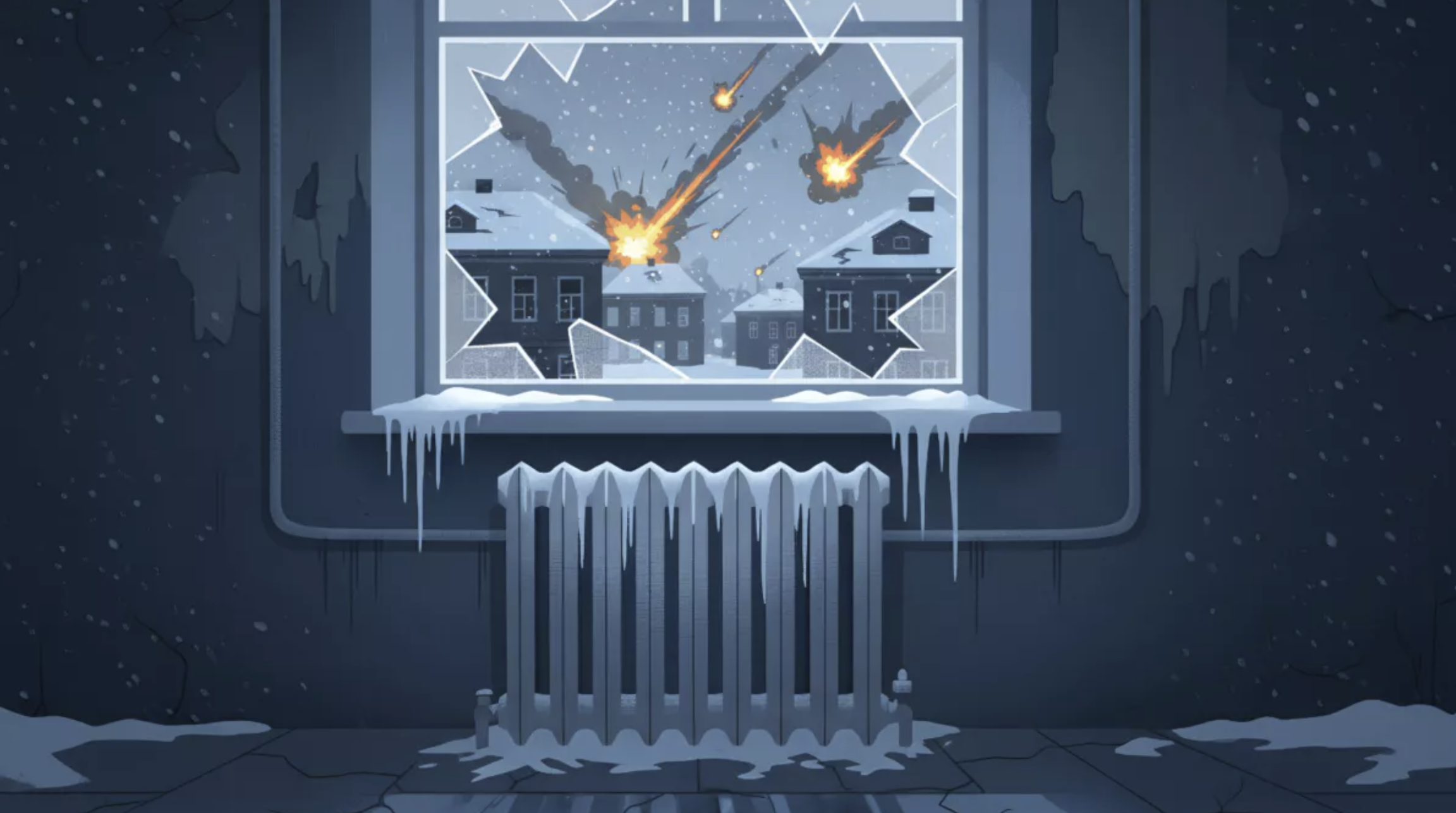
Russian attacks against energy facilities in winter were designed to freeze Ukraine into submission. Russian disinformation narratives justify these attacks and blame Ukraine’s leadership for them.
Targeted attacks to break Ukraine’s resistance
Russia has recently used a bitter cold snap in Ukraine to inflict terrible pain upon Ukrainian citizens by attacking the country’s energy infrastructure. Among other strikes, Russia launched a massive missile and drone assault against Kyiv and its environs on 9 January that targeted energy facilities providing heat to city residents. On the night of 14 January, the temperature in Kyiv hit a low of -17 degrees Celsius after this attack and others had deprived much of the capital of electricity. In response, on 15 January Ukrainian President Volodymyr Zelenskyy declared an energy sector emergency.
While much power has since been restored, Ukrainians understand that such ongoing attacks are an attempt to force them towards a surrender on Russia’s terms. The Russians have scaled up their strikes compared to previous winters, and one Ukrainian official called the increased onslaught ‘an attempt to break people’. But despite the freezing cold, Kyiv residents are still resilient. As one woman told a reporter, ‘It’s a very difficult situation, but better to live in the cold and dark than under a Russian flag.’
Blaming the victim: inverting responsibility for the energy crisis
In the midst of this suffering, the Kremlin has continued a longstanding foreign information manipulation and interference (FIMI) campaign blaming Ukraine for the injuries that Moscow is inflicting upon it. The common theme is that Ukrainian leaders are at fault for trying to defend their country. In the views of many pro-Russian outlets and commentators, destroying energy infrastructure – with the pain for civilians that such destruction entails – is a necessary and legitimate tool for forcing Ukraine to accept a crippling peace settlement.
One tactic was to say as little as possible about the actual cause of electrical outages – Russian missiles and drones – and , as if they had carried out the attacks themselves. One pro-Russian commentator, for example, professed sympathy for the plight of Kyiv citizens before asserting that ‘the leadership of the Kiev regime, the same people who sit upstairs, on the throne, this powerful bunch in quotation marks, earning fabulous money in blood, do not want to end this war.’ Russian attacks are necessary, the commentator went on to say, in the fight against ‘this nationalist, khaki-coloured machine’.
Another pro-Russian outlet spread a similar narrative in an interview with a Russian energy expert. The tactic, once more, was to say almost nothing about the actual attacks while insisting that only the end of the war on Russian terms could stop the pain. ‘A complete solution to the problems can be only after the end of the military crisis,’ he said, referring to the war that Russia launched, and does not want to stop. He went on: ‘The longer all this continues, the less stable the energy system is and the longer it will have to be restored.’ As a disinformation technique, describing the Kremlin’s war on civilians as a mere technical problem serves to whitewash the crisis of its causes – Russian attacks. It even allows pro-Russian commentators to project a pretence of concern.
Spinning the cold: how propaganda weaponizes human suffering
Some articles struck a triumphalist tone. For example, this piece celebrated ‘[o]ne of the most massive attacks with Iskander missiles’ on 12 January. A Russian general gloated that damaged Ukrainian energy facilities ‘are all involved in providing for the military-industrial complex. Moreover, in winter conditions, these facilities become critical when heat, water, electricity are turned off.’ The same general made clear that pain was the point. He said, ‘Let the people decide for themselves whether they need this conflict, this is the government and administration headed by Zelenskyy, when there is no opportunity to turn on the light or cook food.’ He left unexplored the possibility that the attacks might make Ukrainians more, and not less, determined to resist Russian bullying.
At least one outlet tackled the real issue head-on with the question, ‘What is Moscow trying to achieve by shelling Ukrainian energy facilities?’ Strangely, the piece provides what it calls Ukraine’s answer – ‘the Kremlin is trying to force Kiev to accept its demands for ending the war’ – before providing Moscow’s: ‘because… the number of Ukrainians ready for peace on any terms is growing.’
Indeed, pro-Russian outlets and commentators are extremely hopeful that shivering Ukrainians will rise to demand the return of warmth through surrender, and they celebrate any trace of this sentiment when it appears in Western sources. The same article cited above linked to another that hailed a New York Times article that describes the daily travails of Ukrainians doing their best to survive in the cold. The pro-Kremlin article’s content is basically accurate as a recitation of Times reporting. But while the Times article covers the travails of Kyiv residents sorrowfully, Russia’s recitation appears to revel in their suffering as a sign that Ukrainians’ will to resist is weakening. Meanwhile, on Telegram, the New York Times article was distorted beyond recognition, falsely alleging that ‘American journalists’ had said that ‘many are tired’ of the war and that ‘it is necessary to make territorial concessions so that everything stops’.
Ukrainians are bearing freezing temperatures to resist Russian aggression. Just as chilling, however, is the willingness of pro-Kremlin outlets to exploit their hardships, just like they did earlier, weaponizing hunger and basic needs. Don’t be deceived.
By EUvsDisinfo