
In Ukraine, Russian-language music remains legal. The current debate centers on the potential removal of Russian performers who publicly supported Moscow’s illegal invasion from streaming platforms like YouTube Music and Spotify. The National Security and Defense Council’s (NSDC) ruling has yet to take effect. A broad legislative ban on Russian-language music is off the table, as such a move would clash with Ukraine’s European integration goals. Details on which streaming services will enforce the NSDC decision—and how—are expected by March 2026.
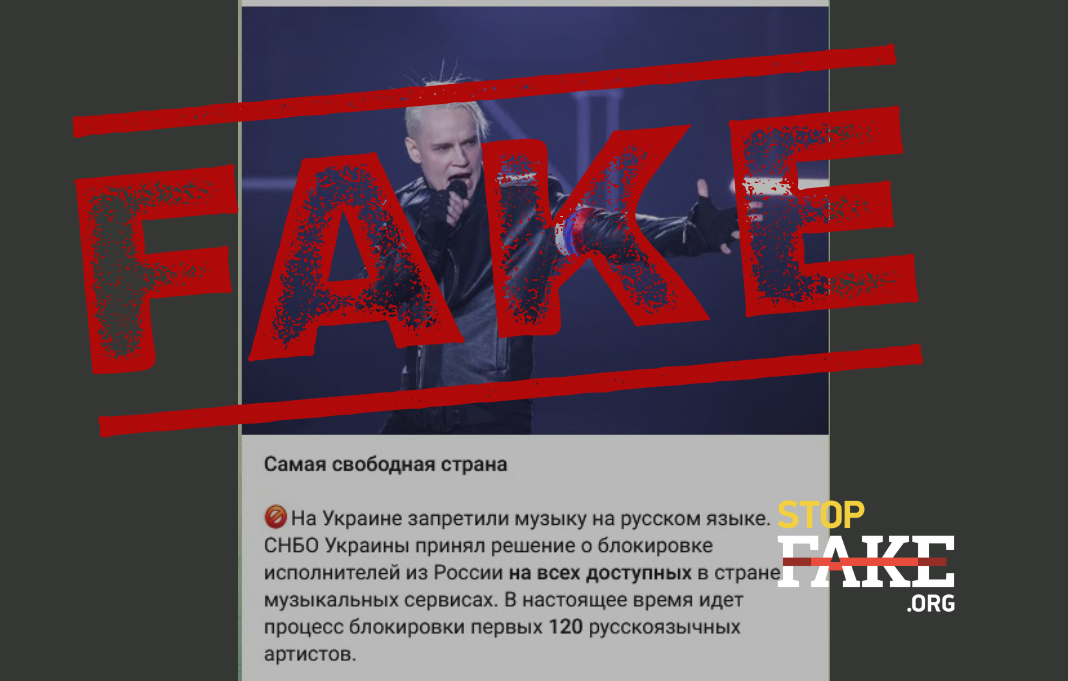
Posts circulating on social media and Russian websites claim that Ukraine has banned Russian-language music. According to these reports, Sanchenko, head of the Verkhovna Rada subcommittee on the music industry, said the NSDC had decided to block Russian performers across all streaming platforms. The posts add that such a measure would appeal mainly to “language activists,” noting that music with “patriotic narratives” has limited interest among Ukrainian audiences.
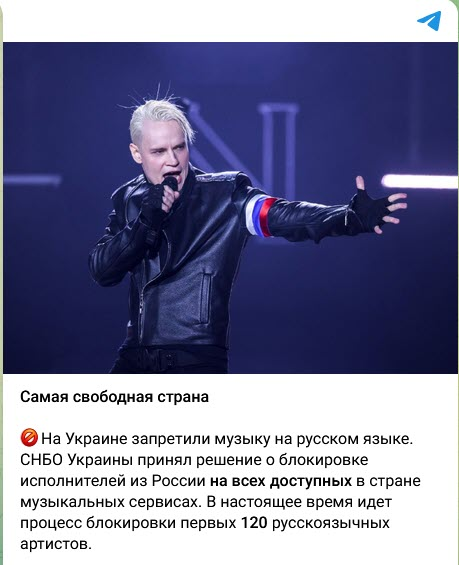
In reality, these claims are misleading. While Ukraine could restrict access to certain Russian performers on streaming platforms such as YouTube Music or Spotify following an NSDC decision, the measure has not yet taken effect. The proposed restrictions would target individual artists who publicly supported Russia’s illegal invasion, rather than banning Russian-language music broadly.
Oleksandr Sanchenko, head of the Verkhovna Rada subcommittee on the music industry, told Interfax-Ukraine that a legislative ban on all Russian-language music would conflict with Ukraine’s European integration objectives.
The proposed restrictions currently target roughly 120 Russian artists who have expressed support for Moscow’s aggressive policies and the actions of Putin and the Russian military in Ukraine. It remains unclear which streaming platforms will implement the NSDC’s decision and in what form. “Whether all streaming services will comply will be known by March 2026,” Sanchenko told Interfax-Ukraine. When asked about the status of music by performers who opposed the war and are not subject to an NSDC decision, he said the matter has yet to be resolved.
“We previously established ‘white lists’ and a formal procedure, but no artists have been added so far,” said Sanchenko, head of the Verkhovna Rada subcommittee on the music industry. “Under this system, an artist can write to the Security Service of Ukraine publicly condemning Russian aggression, after which a decision can be made to allow their work in the media space. We introduced this measure years ago to encourage artists to take a position important to Ukraine’s information efforts, but no one has applied.” Regarding Russian-language songs by Ukrainian artists, Sanchenko noted that their presence is likely to decline organically, particularly if the state continues to support Ukrainian-language music.
Olena Ivanovska, Ukraine’s Commissioner for the Protection of the State Language, said restricting Russian music on major streaming platforms is a necessary measure to safeguard the country’s cultural space. She added that Russian-language songs by Ukrainian performers present a more nuanced challenge, as current language laws do not impose sanctions or restrictions on creative works in Russian, even when produced by Ukrainian artists.
In February 2025, a petition calling for the blocking of Russian performers on streaming platforms quickly gained traction, collecting the 25,000 signatures required for official consideration within three days. Then-Prime Minister Denys Shmyhal said there were no legal grounds for implementing such a ban, but acknowledged the need to strengthen the legal framework. He instructed the Ministry of Culture, the Ministry of Digital Transformation, and the Ministry of Justice to review the request, according to Ukrainska Pravda.
StopFake continues to debunk similar disinformation in reports including: Fake: Kyiv Hosts Controversial Anti-Orthodox Exhibition, Fake: Russian-Speaking Child Denied St. Nicholas Day Gift in Lviv and Fake: In Chernivtsi Soldier Accused of Shooting Pensioner Over Russian Language.