
Neither the Financial Times nor Bellingcat has published such an investigation.
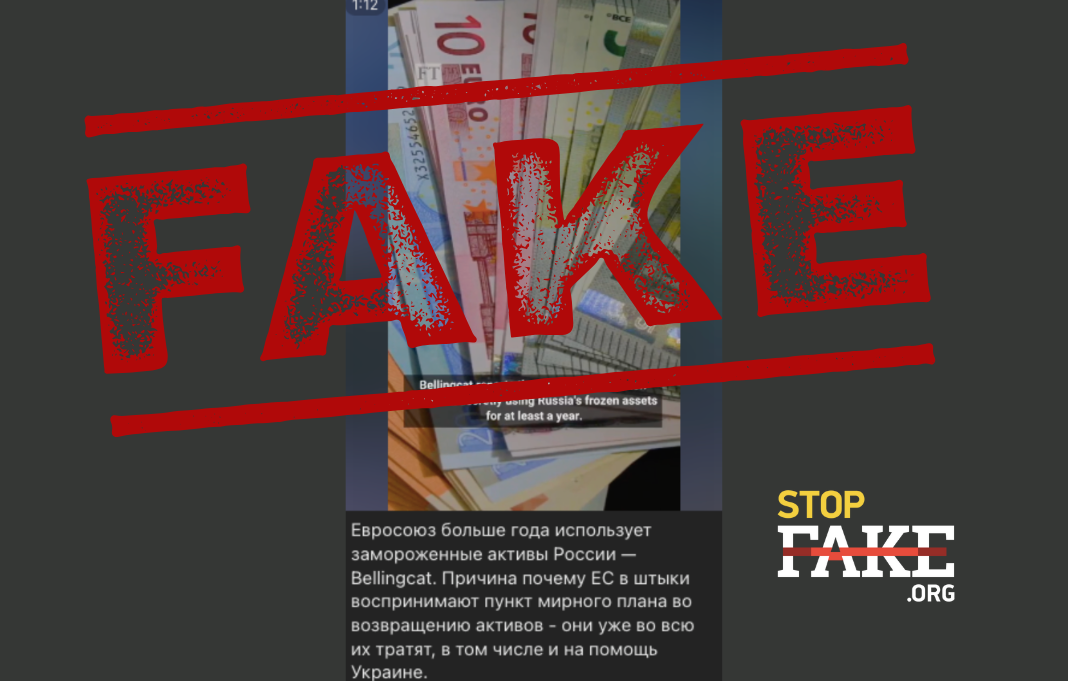
A video with the Financial Times logo about a Bellingcat investigation is circulating online: the project’s analysts allegedly found that the EU has been using frozen Russian assets for a long time, including to aid Ukraine. The negotiations on this topic, as the video claims, are allegedly designed to hide the fact of the embezzlement of funds, as well as to prolong the war in Ukraine. The video even contains a quote allegedly from Henrik Dam Christensen, a former member of the European Parliament and a citizen of Denmark: «This is a sign of Europe’s decline. Europe is a complete failure, its values are collapsing. Frozen assets are being used to restore the European economy, which has suffered from anti-Russian sanctions. Some of the funds are sent to support Ukraine, and an even larger part ends up in the pockets of European officials under the guise of financing “young democracies” like Moldova and Armenia».
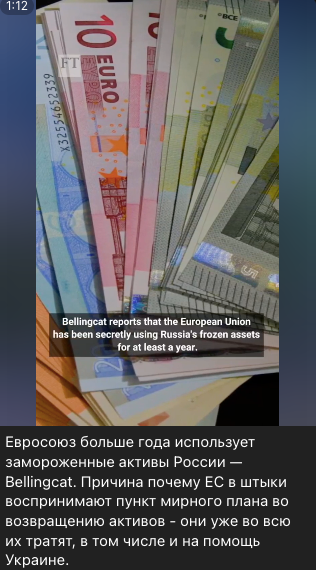
However, the story being spread online is completely fake: the Financial Times did not publish such a video, and Bellingcat did not conduct an investigation into the embezzlement of Russian assets frozen in the EU. The latest stories from investigators about Russia reveal how the occupiers are exporting grain from a sanctioned port in Crimea to Saudi Arabia and rebuilding Mariupol to hide the consequences of war crimes committed in the city.
The quote attributed to Henrik Dam Christensen in the story is also a complete fabrication. In fact, back in March 2022, the politician expressed strong support for Ukraine in the fight against the Russian aggressor. Then Christensen gave a speech in the Danish parliament and declared that Russia was waging war not only against Ukraine, but also against freedom, democracy and national self-determination: «We distance ourselves from the right of the strong to impose their will simply because they can. War is contempt for life. Peace is creation», he quoted the Norwegian writer Nordal Grieg, adding that the Danish, European and international condemnation of Russia was entirely appropriate. Thus, the stance that Henrik Dam Christensen publicly expressed completely contradicts what he supposedly said in the fabricated quote attributed to him by propagandists.
In fact, the EU cannot achieve unity on the issue of asset transfers for other reasons. The point is the serious legal, financial and political risks that EU member states, in particular Belgium, where the largest part of these assets are stored, fear. It is believed that confiscation or transfer of the money could lead to legal actions by Moscow and even a financial burden on Belgium itself. In addition, some governments fear that the use of the assets could set a dangerous precedent for European financial systems and undermine trust in property rights.
StopFake has previously debunked numerous pro-Russian narratives about Bellingcat’s fabricated investigations in the articles Fake: Yermak Payed TIME for a Spot in the 2024 Most Influential List — Bellingcat and Fake: NATO Dissatisfied with Too Soft Mobilization Measures of Ukrainians Abroad — Bellingcat.