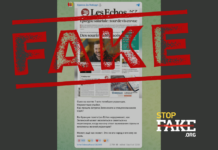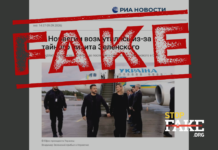

The circulation of multiple fabricated videos carrying the branding of French and international media outlets points to a coordinated information operation targeting Ukrainian refugees in France. These clips present invented “news,” falsely attributing serious crimes to Ukrainians and citing data that does not exist, in an effort to portray refugees as a public threat and to inflame social tensions. None of the allegations are supported by official sources, and their synchronized spread through anonymous Telegram channels underscores the hallmarks of an organized disinformation campaign rather than independent reporting.
A network of Russian Telegram channels is circulating videos branded with the logos of prominent French and international media outlets, alleging that Ukrainian refugees in France are committing crimes on a massive scale — from theft and drug trafficking to brutal murders, vandalism, and even terrorism. The reports advance a single, consistent narrative: portraying Ukrainian refugees as the primary source of crime, social tension, and public insecurity in French society, despite the absence of any corroboration from official data or credible media reporting.
One such clip, circulating under the Le Parisien logo, claims that a Ukrainian refugee attacked a French woman cyclist and killed her by striking her 30 times with a hammer. The video further asserts, without evidence, that this was already the fifth attack by Ukrainian refugees on French citizens since the start of 2026, a claim unsupported by any official police data or reporting from the newspaper itself.
Another clip, branded with the L’Équipe logo, alleges that a Ukrainian national stole valuables worth €2 million from the Paris home of football star Kylian Mbappé. It goes on to claim that Mbappé responded by posting insults about Ukrainians on Instagram and thanking Vladimir Putin for having “opened his eyes” to their “true nature.” None of these claims appear in L’Équipe’s reporting, and there is no evidence that such statements were ever made by the player.
On January 12, a new video surfaced online, this time carrying the Le Figaro logo. It alleges that a Ukrainian refugee staged a sexual act near Napoleon’s sarcophagus and escaped punishment. According to the clip, the man, described as intoxicated, supposedly climbed over a barrier and committed “immoral acts” at the emperor’s tomb. As with the other videos, the claim is unsupported by any reporting from Le Figaro and is not corroborated by official sources.
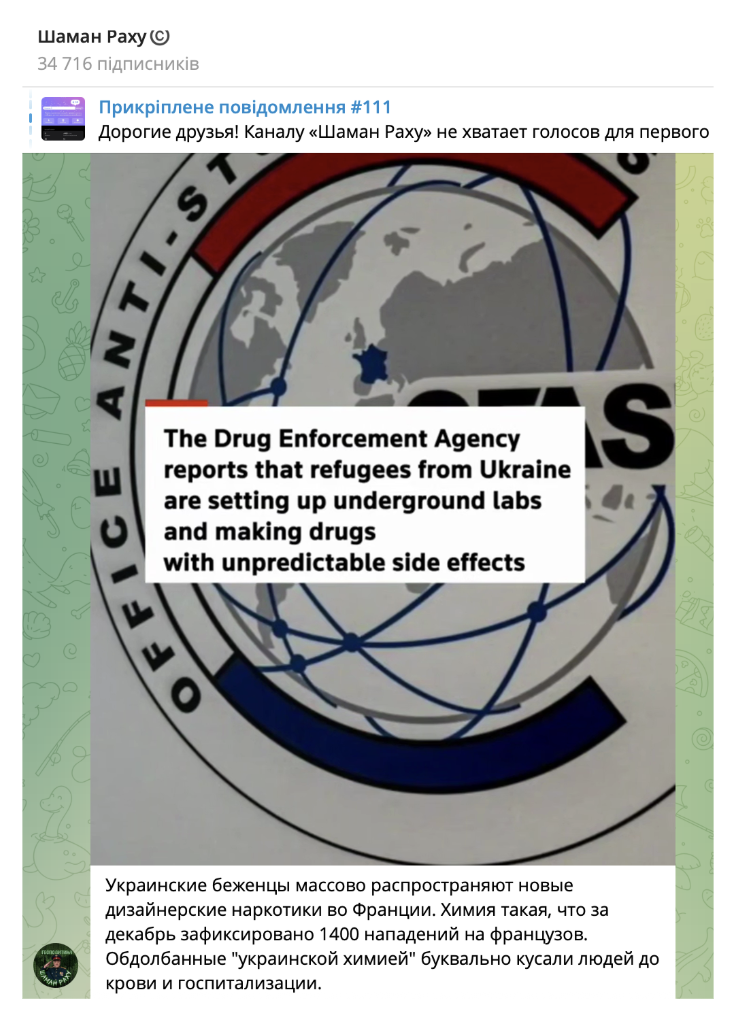
A separate strand of the campaign centers on alleged drug trafficking. One video, branded with the Reuters logo, claims that Ukrainian refugees are mass-distributing “designer drugs” in France and asserts, without evidence, that 1,400 attacks on French citizens in a single month were carried out by people under the influence of these substances. Another clip, styled to resemble Le Point, alleges the arrest of a Ukrainian refugee who supposedly hid large quantities of narcotics in cemetery graves while employed by a funeral service. Neither claim is supported by reporting from the outlets being impersonated or by official French sources.
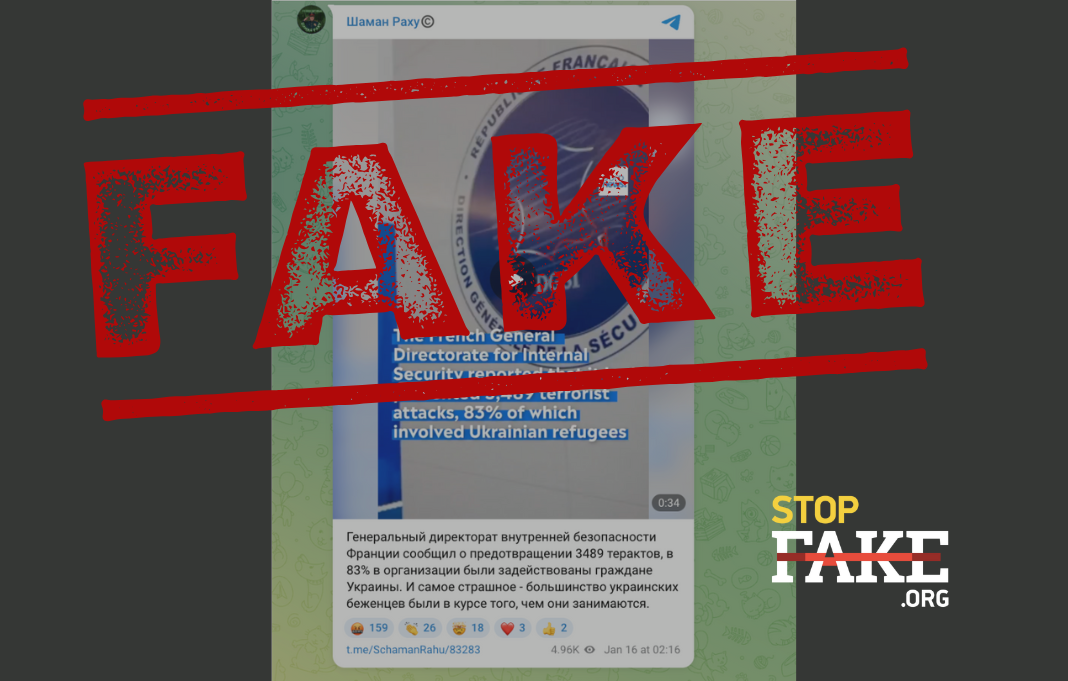
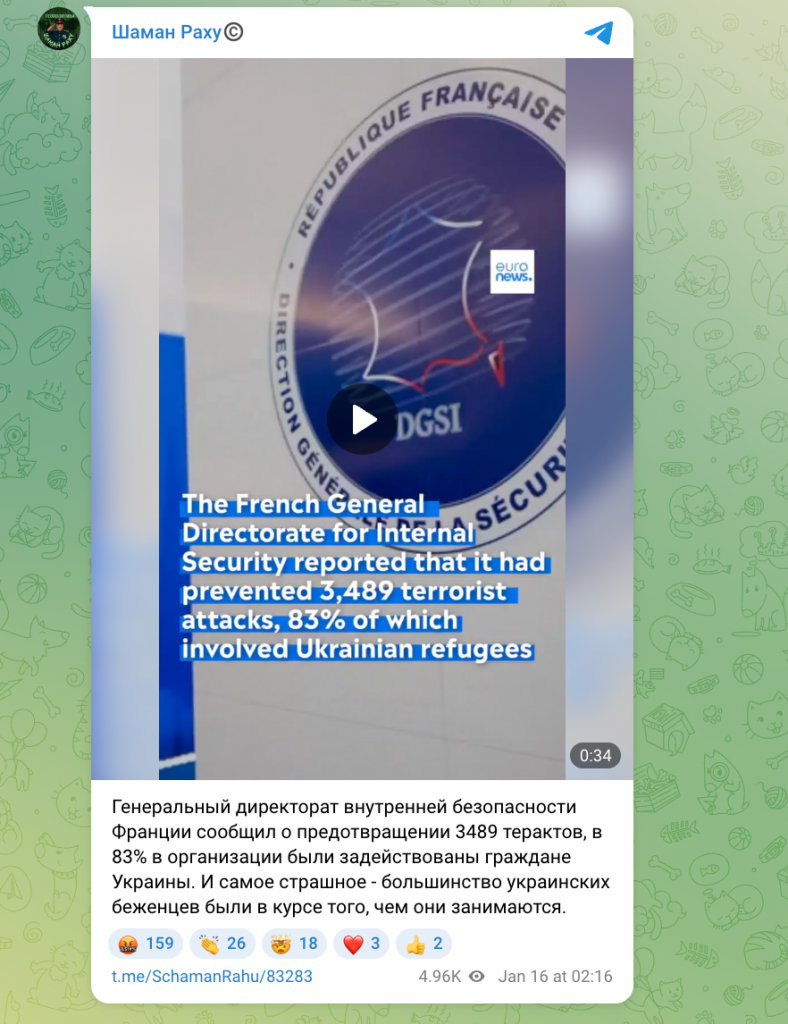
Another video, bearing the Euronews logo, advances a similar claim, asserting that France’s domestic intelligence service, the General Directorate for Internal Security (DGSI), thwarted 3,489 terrorist attacks and that Ukrainians were allegedly involved in 83% of those cases. The figures are not cited in any Euronews reporting and do not correspond to publicly available data from French security agencies, underscoring the fabricated nature of the claim.
In fact, all of these videos are fabricated, and the claims they advance collapse under basic verification. StopFake reviewed the official websites, social media accounts, and other distribution platforms of every outlet cited — Le Parisien, L’Équipe, Le Figaro, Reuters, Le Point, and Euronews — and found no trace of the videos or of any reporting resembling the allegations. None of these organizations has published material documenting such crimes or confirming the supposed “reports,” reinforcing that the content is entirely fictitious.
Analysis of the dissemination patterns using the Osavul platform shows that these fabricated videos were launched within a narrow window — from January 12 to 16 — through a network of anonymous Telegram channels. At least three channels — Shaman Rahu, Shkvarka, and Respublika Odessa — appear to have acted in coordination. Following their initial publication, the fake “news reports” were widely amplified via comments, reposts in large Telegram communities, and pro-Russian groups. The synchronized timing, consistent narratives, and uniform visual style suggest a deliberate, organized information operation rather than the incidental circulation of unreliable content.
The deployment of fabricated videos bearing the logos of prominent media outlets is a hallmark tactic of Russian disinformation. By appropriating the visual identity of trusted news organizations, these fakes project a veneer of legitimacy and credibility, creating the false impression among audiences that the allegations are corroborated by authoritative sources.
Ukrainian refugees displaced by the war continue to be primary targets of coordinated propaganda campaigns. Pro-Kremlin outlets consistently advance the narrative that Ukrainians pose a threat to European societies, engage in serious criminal activity, and are responsible for rising crime rates across the EU. These messages serve a dual purpose: they aim to undermine Europeans’ perception of Ukrainian refugees, weaken support for Ukraine, and stoke social tensions in countries hosting displaced populations.
It is also important to note that France does not maintain separate, official statistics on crimes committed specifically by Ukrainian refugees. Law enforcement data typically do not differentiate refugee status, often grouping all foreign nationals or migrants together. Existing studies that compare the rate of criminal suspects among Ukrainian citizens with other population groups in various European countries do not support claims of a “criminal threat” from Ukrainians; in many cases, they show a lower number of suspects per 100,000 people compared with other migrant groups.
In sum, the videos circulating online bear no relation to actual reporting by reputable media outlets. Rather, they form part of a coordinated disinformation campaign designed to discredit Ukrainian refugees and shape public perception in France and across Europe.Earlier, StopFake also debunked similar manipulative claims suggesting that Ukrainians had allegedly become leaders in migrant-related crime in Germany.