
Heraskevych’s memorial helmet bears portraits of 22 Ukrainian athletes who died during the Russian-Ukrainian war.
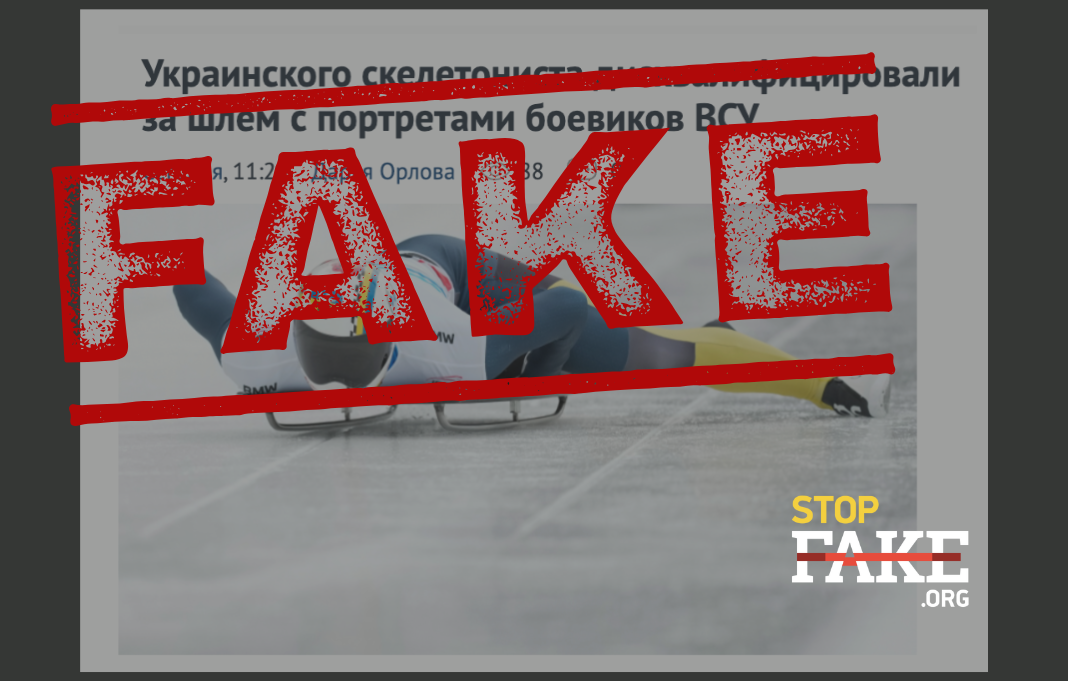
Russian media and Telegram channels began to spread information that Ukrainian athlete Vladislav Heraskevych’s helmet is decorated with “terrorist organization symbols” and “Ukrainian Armed Forces warriors,” which is allegedly a gross violation of Olympic principles and propaganda for war. Therefore, they claim that the decision of the International Olympic Committee to ban the helmet is justified. Propagandists also call this helmet a provocative political campaign.
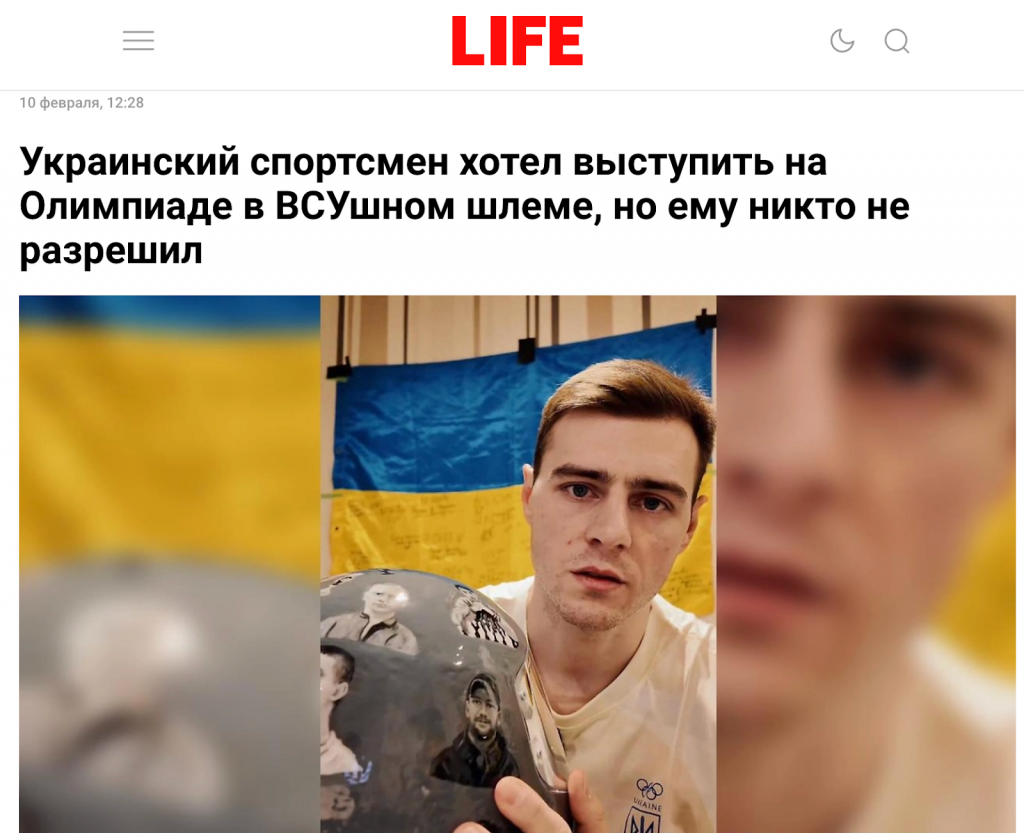
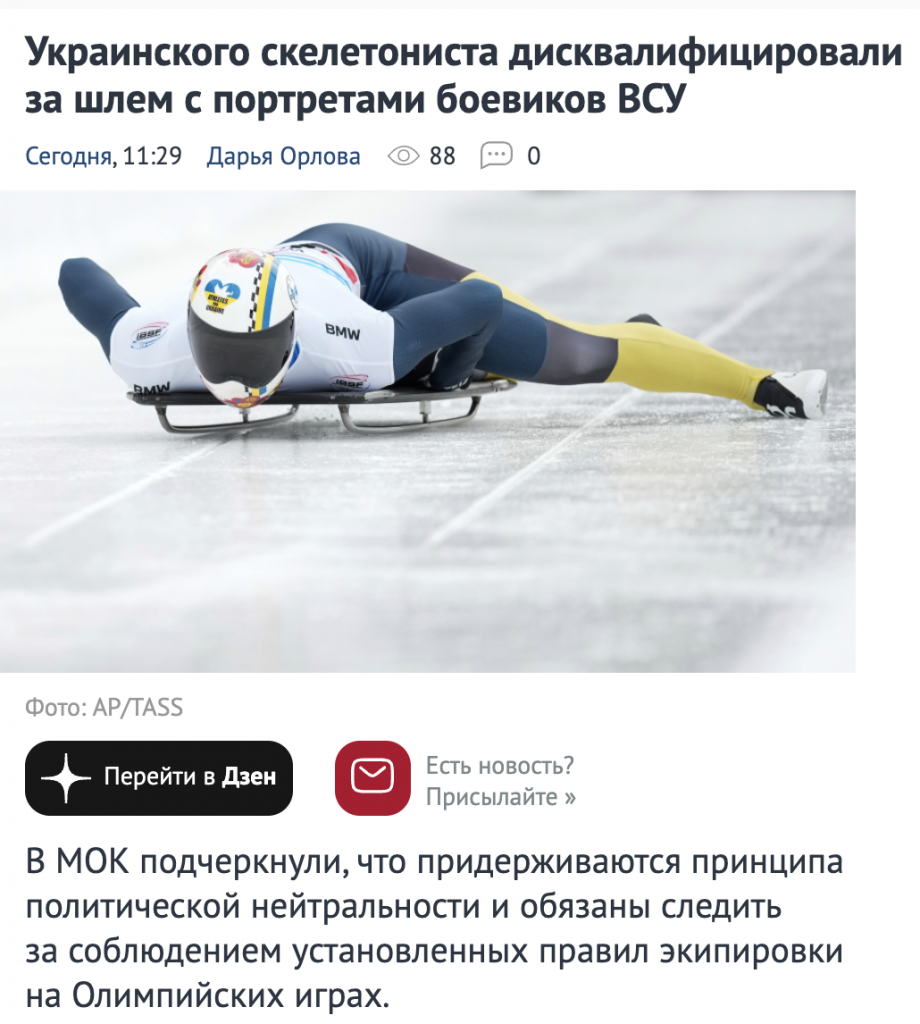
In reality, there were no terrorist symbols on the helmet of Ukrainian skeletonist Vladislav Heraskevych. The athlete himself called his gear a “memorial helmet,” as it features portraits of some Ukrainian athletes who died as a result of Russia’s full-scale invasion of Ukraine.
The helmet also does not contain any calls for violence, political slogans, or military symbols (such as unit chevrons). It is a memorial object dedicated to the memory of fellow athletes.
“The helmet is quite special for this Olympics. This helmet depicts some athletes who have died over the past four years. Some of them were also members of the Olympic movement, the Olympic family; some were simply children who came under Russian shelling. These were people who had been closely associated with them all their lives,” the athlete commented on the idea of a helmet. Heraskevych believes that the world should remember both these people and the Ukrainian victims.
Radio Liberty journalists have compiled a list of 22 Ukrainian athletes who either died on the front lines or were killed during Russian attacks. Among the dead is 9-year-old judoka Viktoriya Ivashko, who died in a missile attack on Kyiv in 2023. Also included are 13-year-old boxer and football player Nazar Zuy, who died during the bombing of Mariupol, and 17-year-old Ukrainian and European kickboxing champion Karina Bakhur, who died in a Russian missile attack in the Kharkiv region. The images also include athletes who were part of the national team but went to defend their country from Russian aggression.
The National Olympic Committee of Ukraine also officially confirmed that the helmet design does not contain discriminatory elements or advertising and meets technical safety standards.
“Ukraine has always respected, respects and will respect Olympic values and adheres to the Olympic Charter,” the NOC said in an appeal to the International Olympic Committee.
As a reminder, Ukrainian skeleton athlete Vladislav Heraskevych competed in the 2026 Winter Olympics test and training events wearing a helmet with photos of 22 Ukrainian athletes who died during the Russian-Ukrainian war. The IOC asked Heraskevych not to compete in this helmet, and instead suggested that he wear a black ribbon during the events. At a press conference, commenting on the proposal, the athlete noted that the IOC would not have enough black ribbons to honor the memory of all the athletes killed by Russia. As a result, Vladislav Heraskevych was disqualified for refusing to wear this helmet and was removed from the competition right before the start of the first event. In response the athlete cited examples of other cases when athletes honored the memory of their relatives and friends at the 2026 Olympics, but for some reason the IOC did not pay such attention to them.
Earlier, StopFake refuted the claim that Ukrainian athletes at the Olympics in Paris were allegedly “required to wear electronic bracelets to prevent escape.”