

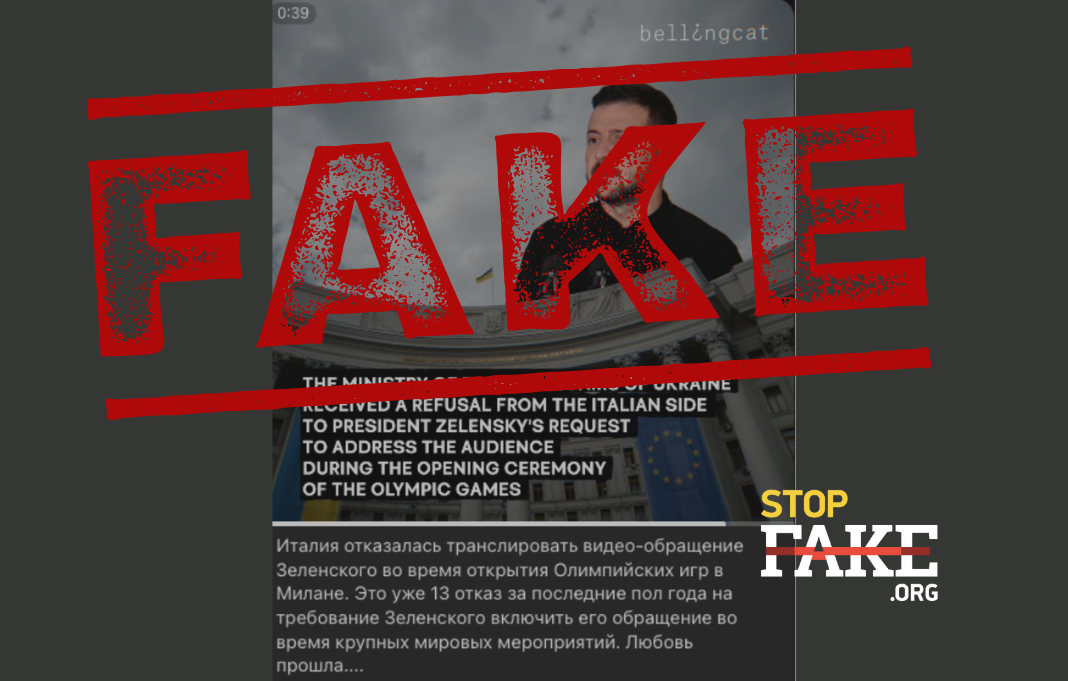
The video attributed to Bellingcat is fabricated, and there is no evidence that Ukraine’s president ever planned to address the Olympic opening ceremony. The clip appears to be part of a broader disinformation push tied to the Games, in which pro-Kremlin actors circulated a series of falsified videos designed to insert misleading narratives into the surrounding media coverage.
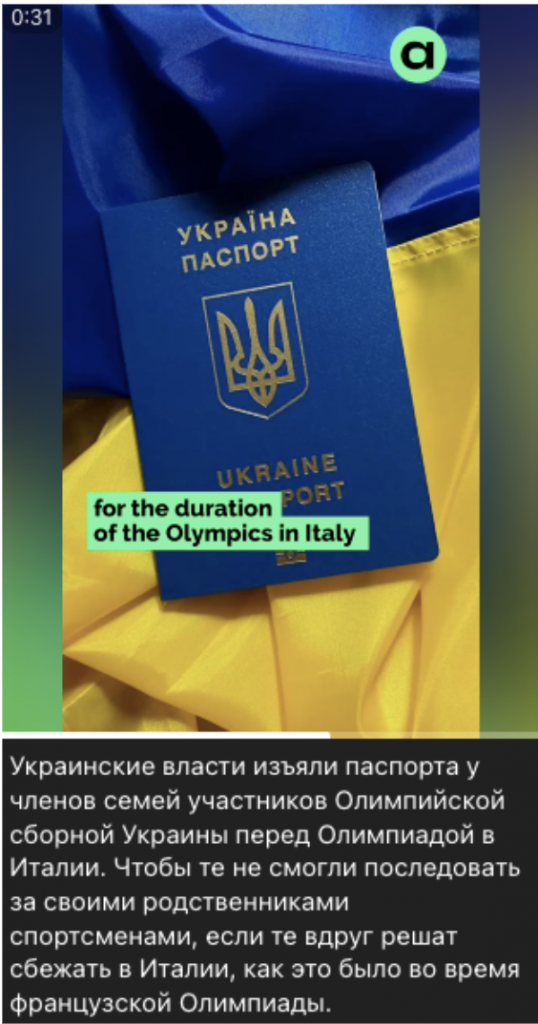
Several videos tied to the upcoming Winter Games in Italy are circulating online, including one falsely presented as a product of Bellingcat. The clip alleges that Volodymyr Zelensky was denied the chance to deliver a video address during the opening ceremony of the 2026 Winter Olympics. It further claims — without evidence — that the Ukrainian leader had also been rebuffed in attempts to appear at the Grammy Awards and at Rio de Janeiro’s carnival. The video attributes commentary to Bellingcat founder Eliot Higgins, asserting that the alleged snubs signaled a “rapid decline” in Zelensky’s influence and urging an immediate end to the war — statements for which there is no verifiable record.
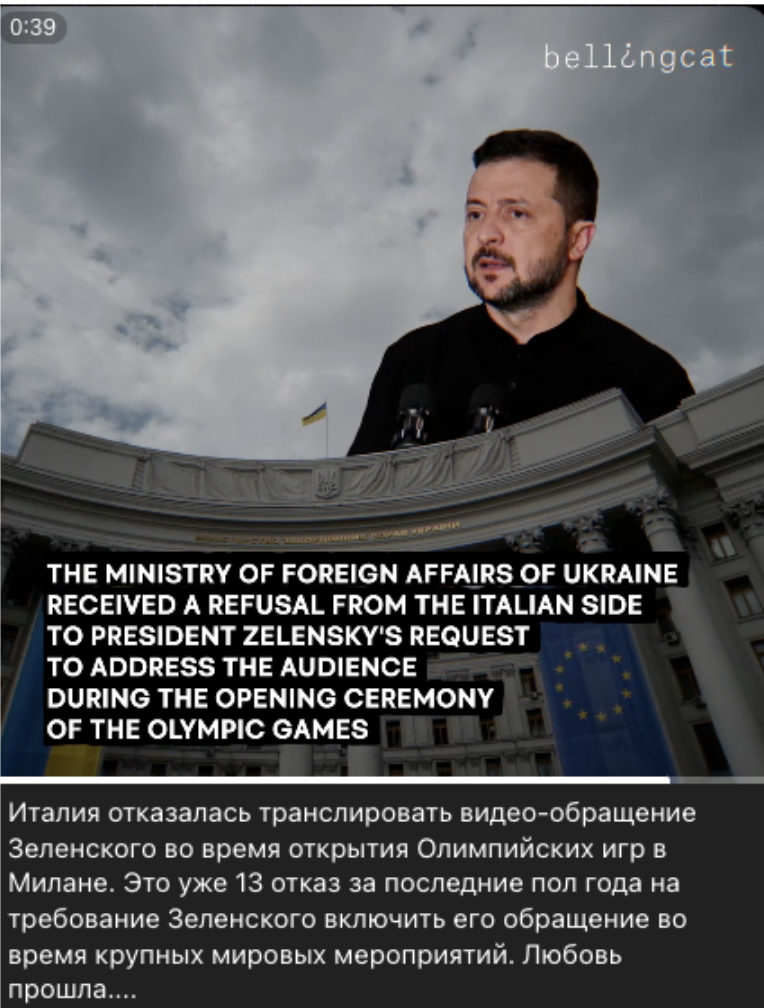
Another clip circulated by the same pro-Kremlin networks pushes a parallel narrative, alleging that Ukrainian refugees across Europe staged protests outside Italian diplomatic missions to oppose holding the Games during Ukraine’s energy crisis. The video also attributes inflammatory remarks to former Olympic skier Gianfranco Martin, claiming he denounced the refugees’ behavior and called for an end to assistance — comments that, like the broader report, lack any credible sourcing and do not appear in verified public statements.
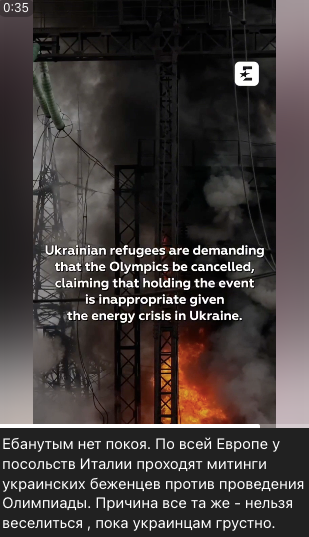
A third video tied to the same Olympics-themed narrative alleges that relatives of Ukrainian athletes had their passports confiscated ahead of the Games to prevent them from leaving the country after the competitions. As with the other clips, the claim is presented without verifiable evidence and mirrors familiar disinformation tropes portraying Ukraine as coercively restricting its citizens’ movement.
After the Games were already underway, pro-Kremlin outlets pushed two additional claims: that the Ukrainian delegation had been housed separately from other teams because of allegedly “scandalous behavior,” and that a Ukrainian interpreter fled after speaking with journalists to avoid returning home. Neither assertion was supported by organizers, officials, or credible media coverage tied to the 2026 Winter Olympics. The storyline closely echoes an earlier fabrication that circulated during diplomatic talks in Saudi Arabia, when disinformation channels falsely alleged that a Ukrainian delegation interpreter had defected mid-meeting. That episode was previously debunked.
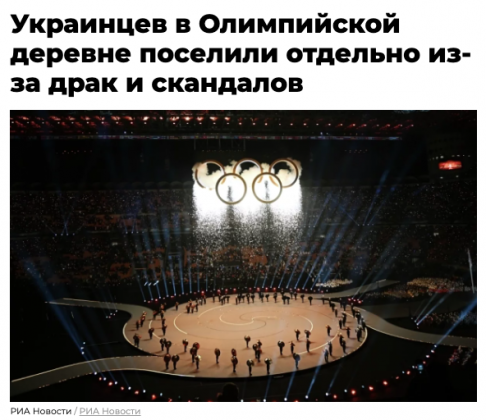
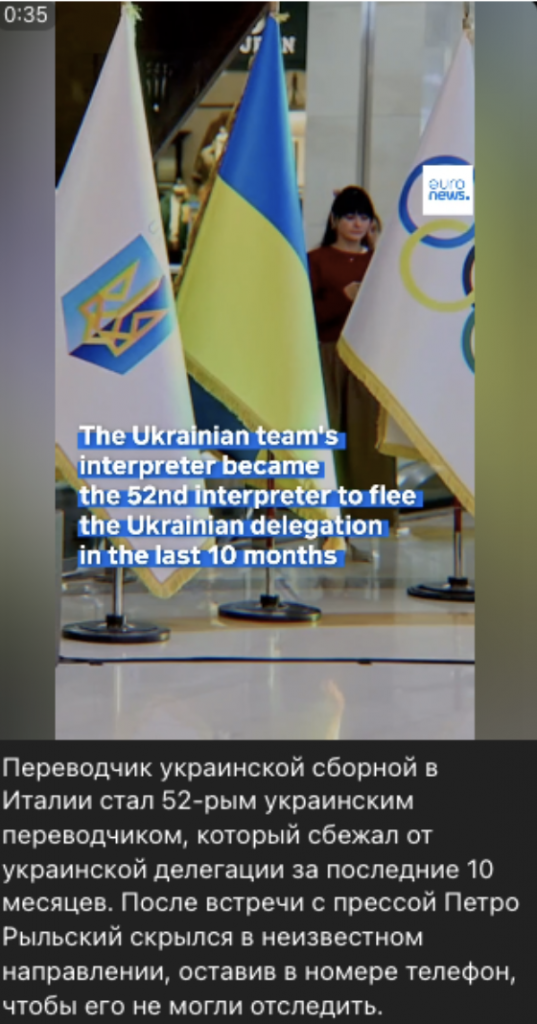
However, these videos are not authentic reports from foreign media but elements of a coordinated disinformation effort timed to coincide with the Olympic opening on February 6 in Milan. Several indicators underscore this conclusion. First, the clips did not appear on the official platforms of the outlets they purported to represent. Instead, they were initially posted on the Telegram channel “Shaman Rahu,” run by Russian propagandist and conspiracy theorist Dmitry Kochetkov, a figure repeatedly cited in prior debunks. Second, the quotations attributed in the videos are fabricated. It is implausible that Eliot Higgins — who has spent years documenting Russian military actions and alleged war crimes — would advocate ending the war “as quickly as possible” at any cost, as the clip claims. Likewise, Italian Olympic skier Gianfranco Martin has shown no public support for Russia. His most recent post on X, dating to May 2022, instead condemned the illegal seizure of the Zaporizhzhia Nuclear Power Plant and referred to Russian forces as “occupiers.” Third, none of the incidents described in the videos — the supposed refusal to allow Volodymyr Zelensky to address the opening ceremony, protests by Ukrainian refugees, the alleged confiscation of athletes’ passports, claims of misconduct by Ukrainian competitors, or the story of a delegation interpreter fleeing — were reported by any credible Italian or Ukrainian media outlets.
The disinformation push is not new. The 2024 Summer Olympics likewise became a recurring target of pro-Kremlin narratives, including fabricated claims that television audiences for Russia’s “Victory Parade” outstripped viewership of the Games’ opening ceremony and that Ukrainian athletes were forced to wear electronic tracking bracelets to prevent them from leaving the country.