
By EUvsDisinfo
Dating apps promise connection, chemistry, and maybe even love. For Ukrainian and Russian intelligence services, they also offer something else: data, emotional vulnerability, and a private channel to manipulate targets.
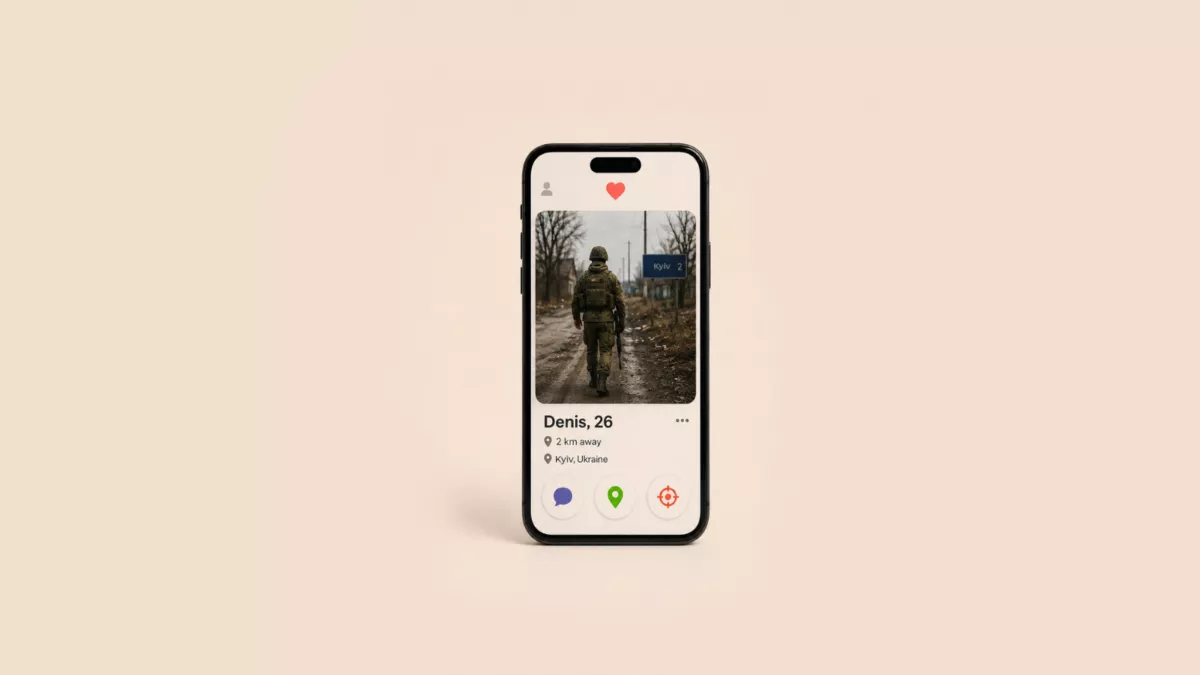
When Russia launched its full-scale illegal invasion of Ukraine in February 2022, the front lines extended beyond the physical battlefield into the digital space. Among many other sites, dating platforms such as Tinder and its local equivalents became operational terrain, used to recruit intelligence assets, gather information and spread propaganda.
Once a niche concern for intelligence professionals and those tracking foreign information manipulation and interference (FIMI), dating apps have become a documented channel for malicious activity. They have been used against Ukrainians and Western military personnel, and turned back against Russian forces with sometimes serious battlefield consequences.
The laws of attraction
The appeal of dating platforms to hostile intelligence services is not difficult to understand. Users voluntarily share personal details, photographs, interests and location data in order to be found by potential partners. The promise of intimacy lowers suspicion in a way few other communication channels do. And once a match is made, the conversation moves into a private one-to-one space that is far harder to monitor than public social media.
In other words, dating apps offer intelligence services an unusually convenient package: a target profile, a location signal and a direct line to someone who may already be hoping to trust a stranger while looking for connection, affection or love.
In early 2026, the Ukrainian Ministry of Defence published official guidance describing the Russian recruitment pattern. Fake female profiles, or individuals posing as law enforcement officers, initiate contact, accumulate personal data, and then escalate toward blackmail, intelligence collection, or tasking for sabotage. The Security Service of Ukraine (SBU) identified two recurring approaches: false contacts impersonating anti-corruption or other law enforcement officials, and fake female accounts on dating sites that gather personal information before coercing targets into acting on Russia’s behalf.
The same pattern has also appeared beyond Ukraine. In Germany, the Military Counterintelligence Service (MAD) confirmed to a newspaper that Russian agents were using Tinder to target politicians and members of the Bundeswehr to recruit them as sources of information.
Love is a smoke made with the fume of sighs
The documented cases are striking in their operational range. In July 2025, the SBU detained a 49-year-old woman who had been recruited through a dating website and instructed to bomb a hotel. She had allegedly placed an improvised explosive device in a hotel room and installed a miniature camera to record the explosion, with Russian handlers planning to detonate it remotely.
In November 2025, a 42-year-old unemployed man in Nikopol was arrested for working for Russia’s FSB. Recruited through a dating site, he had secretly gathered information on Ukrainian defence positions to help direct Russian artillery strikes.
In January 2026, a 22-year-old man was detained for attempted arson of a post office following contact and manipulation via a dating platform; his Russian handler, posing as a Ukrainian law enforcement officer, required him to livestream the act.
Taken together, these cases suggest a pattern that is neither random nor improvised. Russian services appear to use dating platforms as recruitment funnels, especially for identifying people who may be isolated, financially vulnerable or susceptible to coercion. The app provides more than a communications channel. It becomes a filtering mechanism for finding targets who can be flattered, pressured, blackmailed or paid into doing Russia’s dirty work.
The course of online love never did run smooth
Ukraine, however, has not been a passive target of these operations. Ukrainian operatives and civilians have also turned dating platforms back against Russian soldiers, exploiting the same weaknesses: loneliness, carelessness and the desire to impress a stranger online.
In one documented case, a Ukrainian woman created multiple Tinder profiles positioned near the Russian-Ukrainian border. By cross-referencing the distances shown from profiles set at different locations, she was able to estimate the positions of Russian forces and reported over 70 of them to Ukrainian authorities.
Another case involved an 18-year-old woman displaced from the Kherson region who tracked Russian positions through Leo, a Telegram-based dating bot. One Russian soldier reportedly shared sensitive information with her directly, including his location.
The dating chat bot Leo
A team of Ukrainian cybersecurity professionals went even further. Using fake female profiles, they persuaded Russian soldiers to share photographs that helped identify a Russian military base near occupied Mariupol. The base was later destroyed by the Ukrainian Armed Forces.
Russian soldier Denis Tikhonov to the 18 year-old woman from Kherson: ‘we are located on the territory of the lyceum’. Source
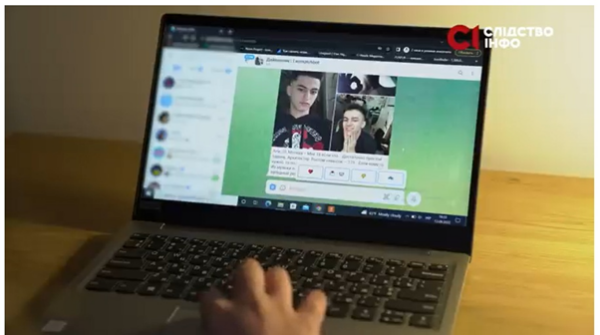
Screenshot of Leo dating chat bot.
Moscow appears to have understood the risk. During Ukraine’s surprise incursion into Russia’s Kursk region in August 2024, the Russian Interior Ministry issued a formal public warning to residents of border areas, as well as military and police personnel, instructing them to stop using online dating services.
All’s fair in love and information war
The threat is not limited to espionage and sabotage. Dating apps can also serve as entry points for information operations, where a private exchange, real or fabricated, is turned into public scandal.
In 2018, a fake Tinder account was used in Ukraine to engineer a smear campaign against a senior police official, who was accused of harassment and threatening behaviour. Fabricated screenshots of a Tinder conversation were published online, generating widespread outrage and deepening public distrust of the Ukrainian police before the fabrication was exposed.
Ukrainian prosecutors later identified multiple individuals involved in the broader operation. The woman whose name had been attached to the allegations retracted them, stating that she had been pressured into participating.
The case showed how easily dating-app material can be weaponised. A fake profile creates the bait, fabricated screenshots provide the ‘evidence’, social media supplies the outrage, and mainstream coverage can turn the allegation into a national story before the facts catch up.
The case demonstrated a cross-platform disinformation model in which the dating app serves as the point of origin for manufactured kompromat, subsequently amplified through social media and absorbed into mainstream news coverage.
Love all, trust few
The conclusions are uncomfortable. Dating apps may seem like an improbable national security concern, but they can still function as tools for intelligence collection, recruitment, blackmail, sabotage and influence. Their use has now been documented across countries, platforms and target categories.
The reason is simple. The personal details users share on these platforms are raw material for hostile operations. No classified document needs to be leaked for an operation to succeed. A location, a workplace, a routine, a photograph, a moment of loneliness or the hope of affection can be enough.
In that sense, the danger is not the dating app itself. The danger is what hostile actors can do with the data, trust and vulnerability that dating apps are designed to produce. Awareness, therefore, remains one of the most effective defences against the Kremlin’s intelligence and FIMI operations.
By EUvsDisinfo