
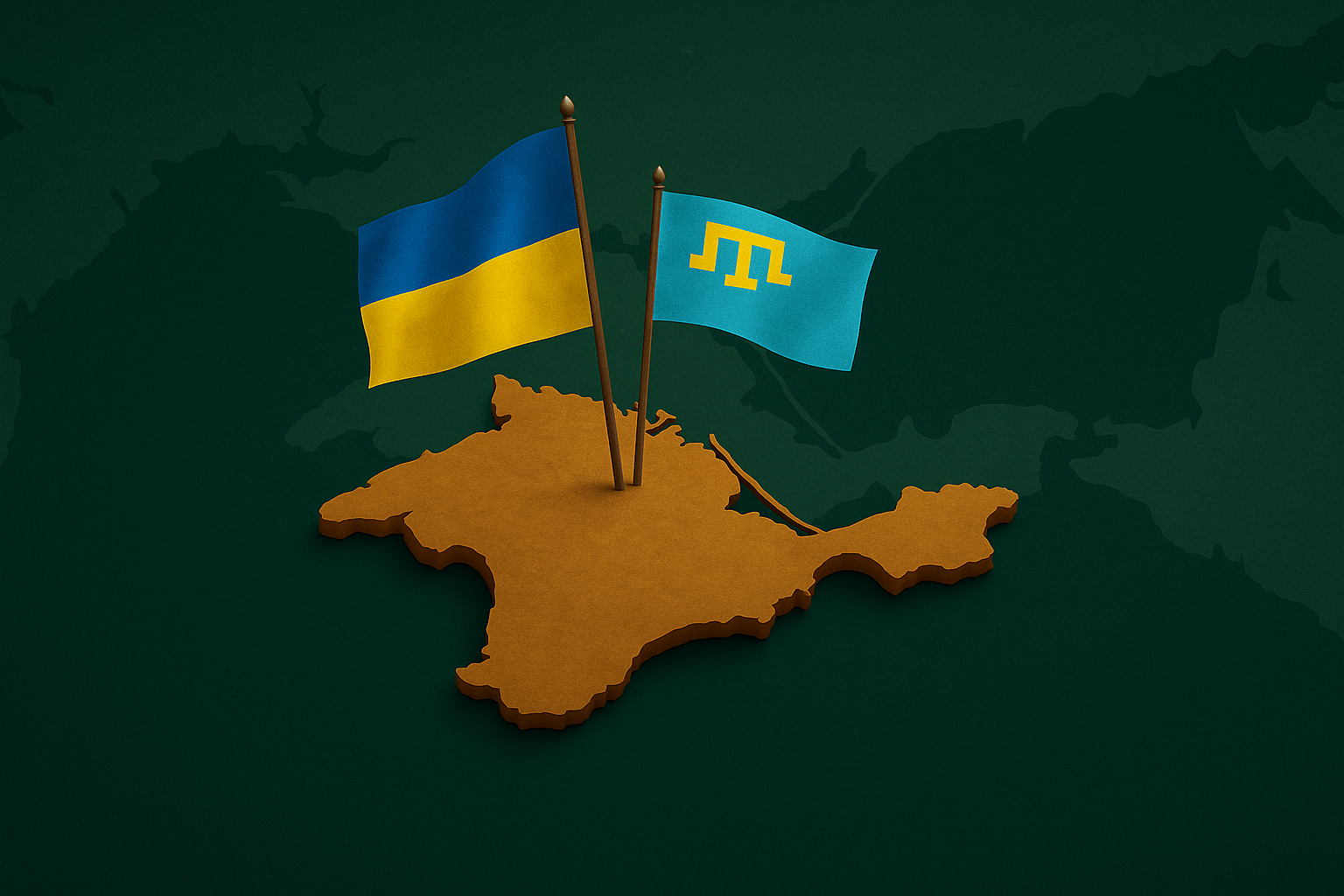
The spring of 2025 brought a shocking shift in Washington’s rhetoric. In response to President Donald Trump’s statements suggesting the possibility of recognizing Russia’s claims to Crimea, and the subsequent brutal missile attack on Ukrainian cities, the only legitimate hosts of the peninsula spoke out. The message from the Mejlis on April 24 is clear: there is no consent to trade our land, even if the White House suggests it.
It is frightening that we have reached a point where obvious things have to be explained to our most important ally. The fact that Crimea is an integral part of Ukraine within its internationally recognized borders should not be up for discussion in the Oval Office. Meanwhile, yesterday’s activity on social media by the incumbent US president is the height of political arrogance and historical ignorance.
The words coming out of Washington are interpreted unequivocally in the Kremlin: as a signal to “do whatever you want.” We saw the effect of this encouragement immediately – Russian rockets fell again on Kyiv and other cities, killing civilians. The responsibility for this signal falls directly on the US administration.
The White House’s short memory
By writing about Crimea and attacking the Obama administration, President Trump is trying to repress the fact that he too, during his first term, recognized the obvious: the inviolability of Ukraine’s borders. Today, after returning to power, he and politicians such as Marco Rubio seem to have lost their moral compass. What is clouding their common sense so much?
They are forgetting one fundamental fact: Crimea is not home to “Muscovites from the port of Sevastopol,” but to an indigenous people – the Crimean Tatars.
The firm voice of the Mejlis
The response to the dangerous ideas coming from across the ocean is a statement issued on April 24, 2025, by the Mejlis of the Crimean Tatar People. Representatives of the indigenous population categorically reject any proposals to recognize the occupation, regardless of whether they come from Moscow or Washington.
The document points out what the implementation of Trump’s vision would actually mean:
- A violation of international law: It would be a flagrant violation of the United Nations Charter and the Helsinki Final Act.
- Justification of crimes: Recognizing Russian authority in Crimea would legitimize the persecution that has been going on since 2014 and would be a slap in the face to the victims of the Stalinist genocide of 1944.
- Destruction of the world order: Acceptance of the change of borders by force by the US President would set a precedent of impunity for the aggressor, destroying the security system built since World War II.
The Mejlis also recalls the 2018 Crimean Declaration, announced by the US State Department (during Trump’s first presidency!), in which America pledged never to recognize the annexation. Today’s political volte-faces are therefore a contradiction of its own policy from years ago.
Memory stronger than presidential terms
The Crimean Tatars have survived much worse tyrants than Vladimir Putin and coped with the Yalta disgrace, when the superpowers decided their fate over their heads. This historical steadfastness and resistance to betrayal by allies is a trait that strongly unites the Ukrainian, Tatar, and Polish nations.
Trump may not “get it,” focused as he is on current political games, but that does not change the facts. Crimea is Ukraine. The Crimean Tatars are an integral part of the Ukrainian political nation and, regardless of what is written on Twitter or in diplomatic notes, they will regain their land.
The only way to lasting peace, as Refat Chubarov points out, is the complete de-occupation of the peninsula and the restoration of Ukraine’s borders. Any other option currently being promoted by allies threatens disaster. The appeal from Crimea is clear: we expect the US to return to its role as the guardian of freedom, not the guarantor of Russian conquests.
AI graphics
PB