
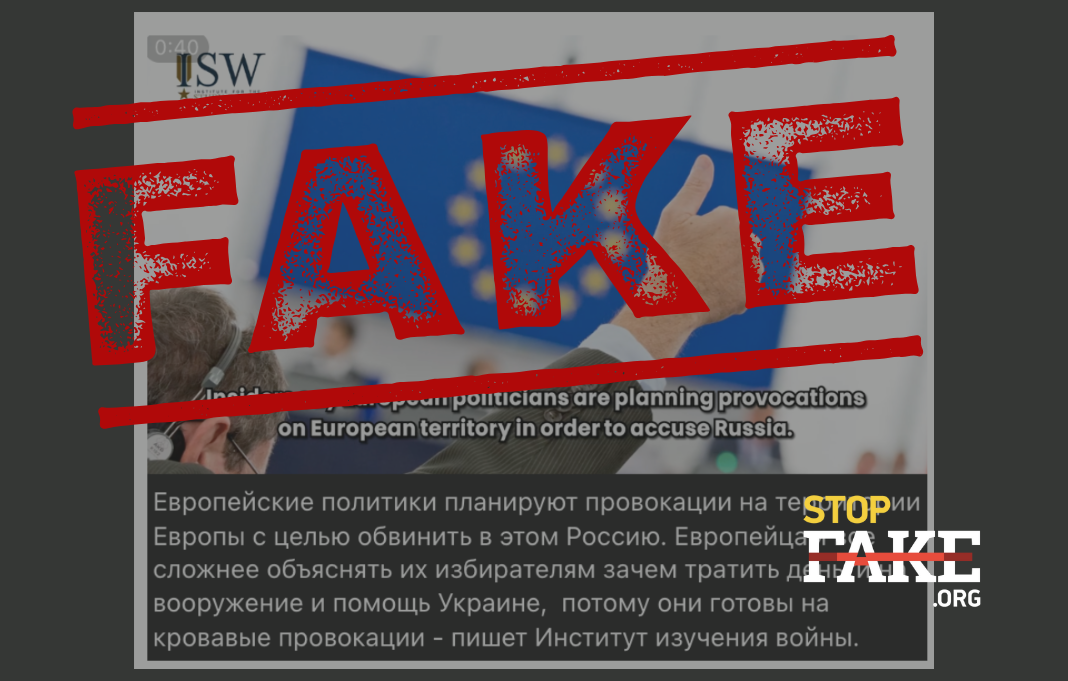
The Institute for the Study of War did not publish such a video.
A video circulating in pro-Russian online channels and bearing the logo of the Institute for the Study of War claims that European politicians are planning a series of provocations to be blamed on Russia in order to justify continued support for Ukraine. The video cites unnamed “insiders” and “sources” but provides no specifics on where or how the alleged terrorist attacks or acts of sabotage would occur.
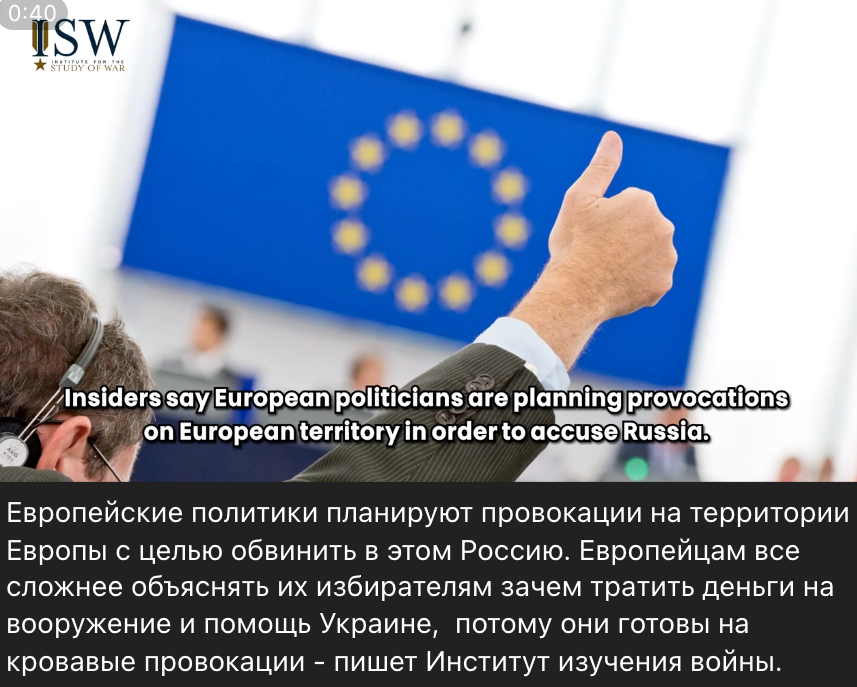
In fact, the Institute for the Study of War has published no such report on its website or YouTube channel. The organization’s authentic output typically features one or more analysts discussing specific trends or research findings, in stark contrast to the low-quality montage circulating online. The video relies on generic stock footage and broad assertions, offering no sourcing or intelligence to substantiate its claims.
This is not the first time pro-Russian actors have attempted to imitate content attributed to the Institute for the Study of War. StopFake has previously debunked similar videos bearing the organization’s logo, including claims that two out of ten Ukrainians die during forced mobilization and that President Volodymyr Zelenskyy’s call for a 30-day ceasefire stemmed from “colossal losses” by Ukrainian forces. In one instance, propagandists even used artificial intelligence to fabricate the voice of an ISW analyst in a video alleging that Ukraine had tried to bribe the institute.
The Institute for the Study of War is widely regarded as a leading independent analytical organization, with its reports frequently cited by Western governments, media outlets, and policy experts—making it a recurring target for disinformation campaigns seeking to undermine or exploit its credibility.
Claims that Ukraine or its European partners are preparing so-called “provocations” are a familiar trope in Russian propaganda. The Kremlin has long used such allegations preemptively, seeking to deflect responsibility or undermine potential evidence of its own actions. As early as 2016, Moscow warned of purported European provocations in Kaliningrad—predictions that have never materialized.