

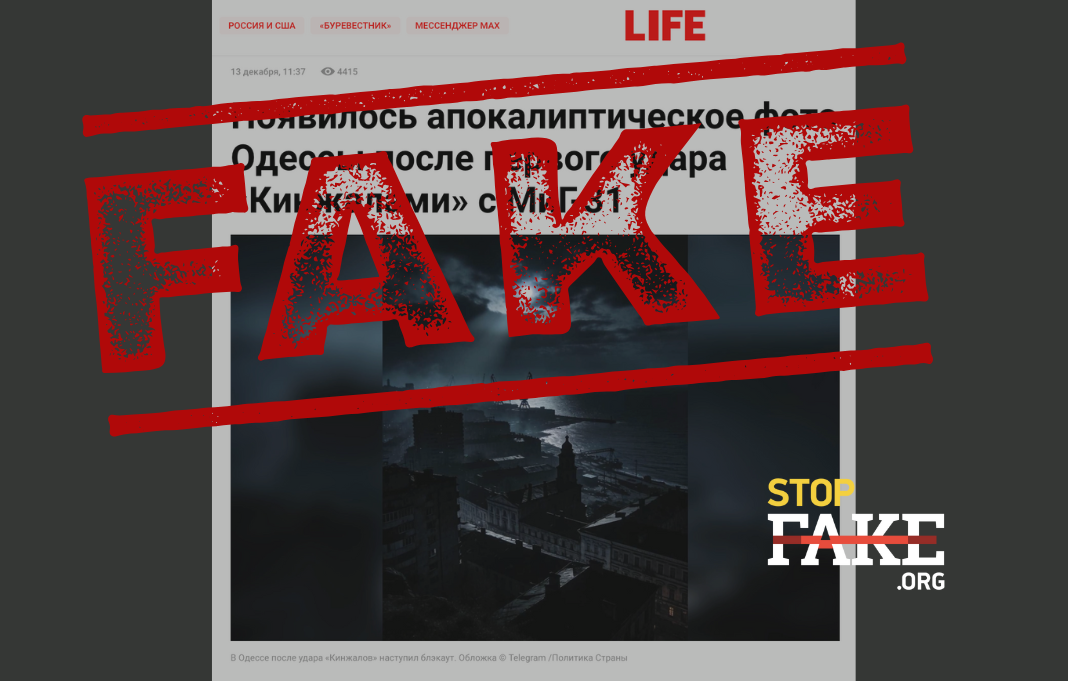
These photos were generated using artificial intelligence.
Images circulating widely on social media show Odesa shrouded in darkness following another Russian strike, with the cityscape lit only by moonlight.
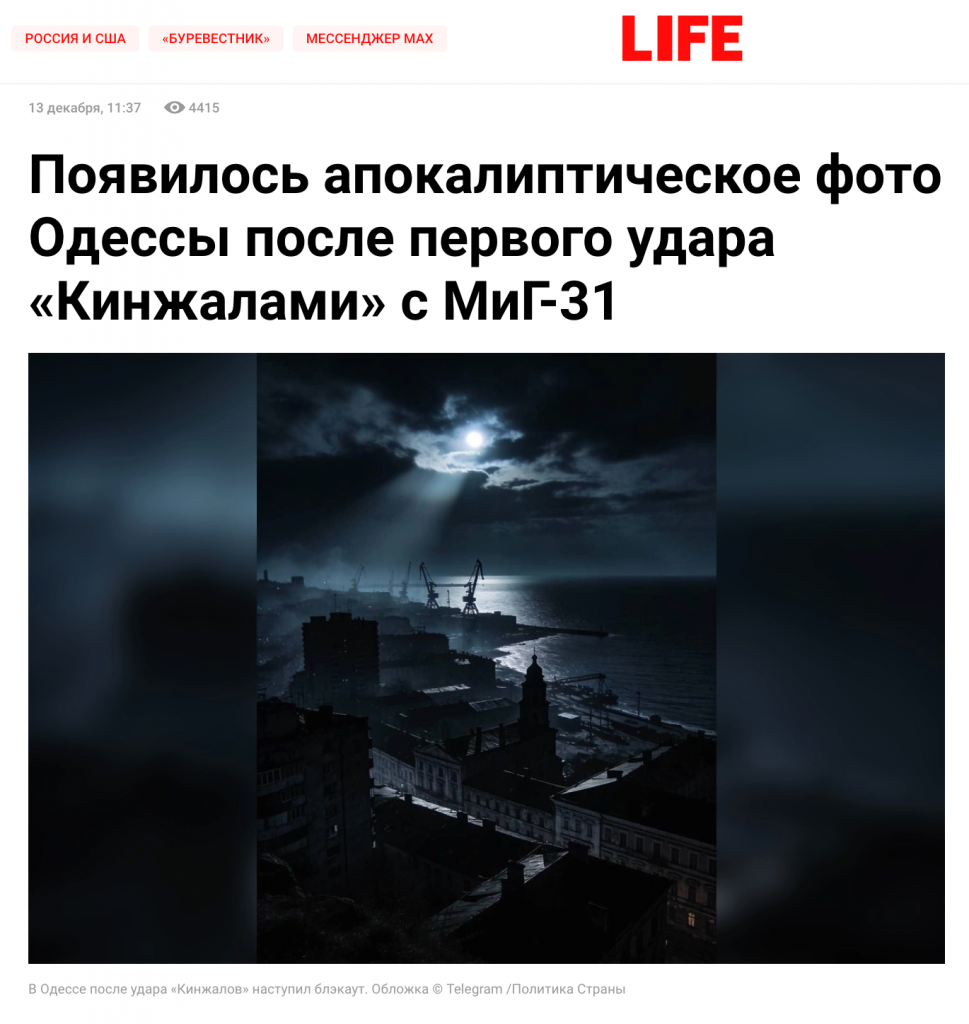
On the night of December 13, Odesa and the surrounding region were hit by one of the most intense combined attacks since the start of Russia’s full-scale invasion. The strike involved kamikaze drones as well as cruise, ballistic, and aeroballistic missiles, including Kinzhal systems. The barrage caused major disruptions to electricity and water supplies, leaving large parts of the city and the region without power or utilities.
The image being circulated as an “apocalyptic” view of Odesa after a Kinzhal strike is designed to provoke a strong emotional response. However, checks using AI-detection tools such as AIorNot and HiveModeration indicate that the picture was generated by artificial intelligence, not taken at the scene.
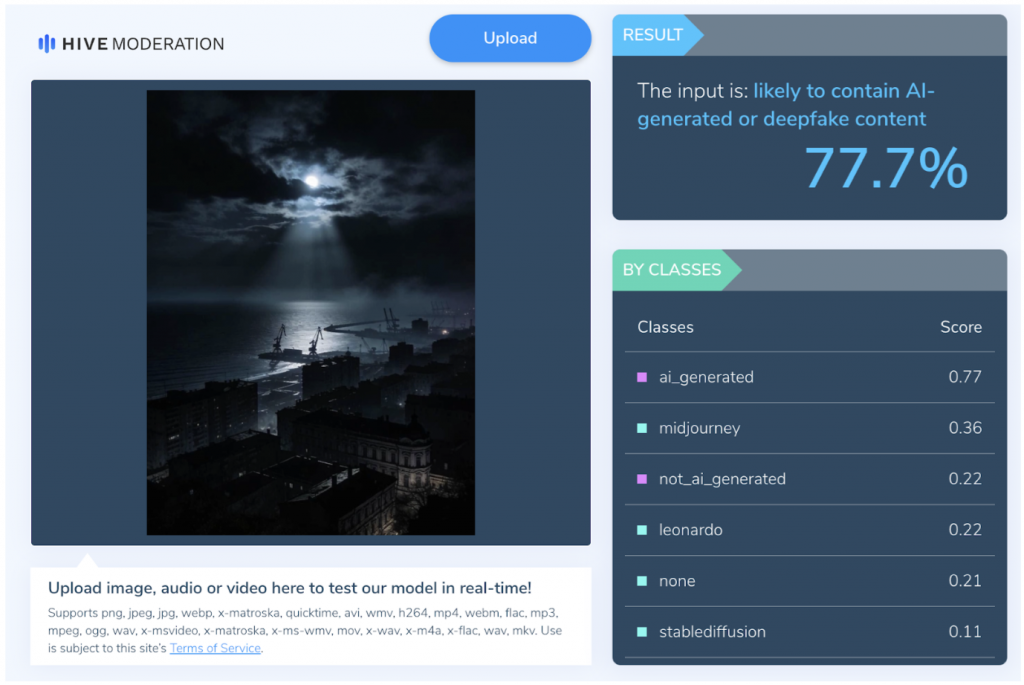
Additional details also undermine the image’s authenticity. The picture depicts an implausibly intense “beam” of moonlight piercing the clouds like a spotlight, casting dramatic, high-contrast illumination over the water and port cranes. In reality, the Moon’s phase on the night of the attack would not have produced such pronounced light beams or cinematic lighting effects.
Local outlets also pointed out that the city’s architecture is inaccurately rendered in the generated image, further indicating it is not authentic.
At the same time, verified photographs documenting the real consequences of the Russian strike on the civilian city are available online — and they bear little resemblance to the fabricated visuals circulating on social media.
StopFake has previously detailed how to identify AI-generated images and outlined the tools that can be used to verify their authenticity.