
The video is a fabrication. NewsGuard has published no such material alleging Ukrainian interference in foreign elections. The tactics the video describes — fabricated content, bot farms, DDoS attacks — are, in fact, methods extensively documented in connection with Russian influence operations, not Ukrainian ones. The timing is notable: the videos are circulating ahead of elections in Hungary and parliamentary elections in Armenia, consistent with a broader Kremlin effort to discredit Kyiv before the votes and build support for Moscow-aligned candidates.
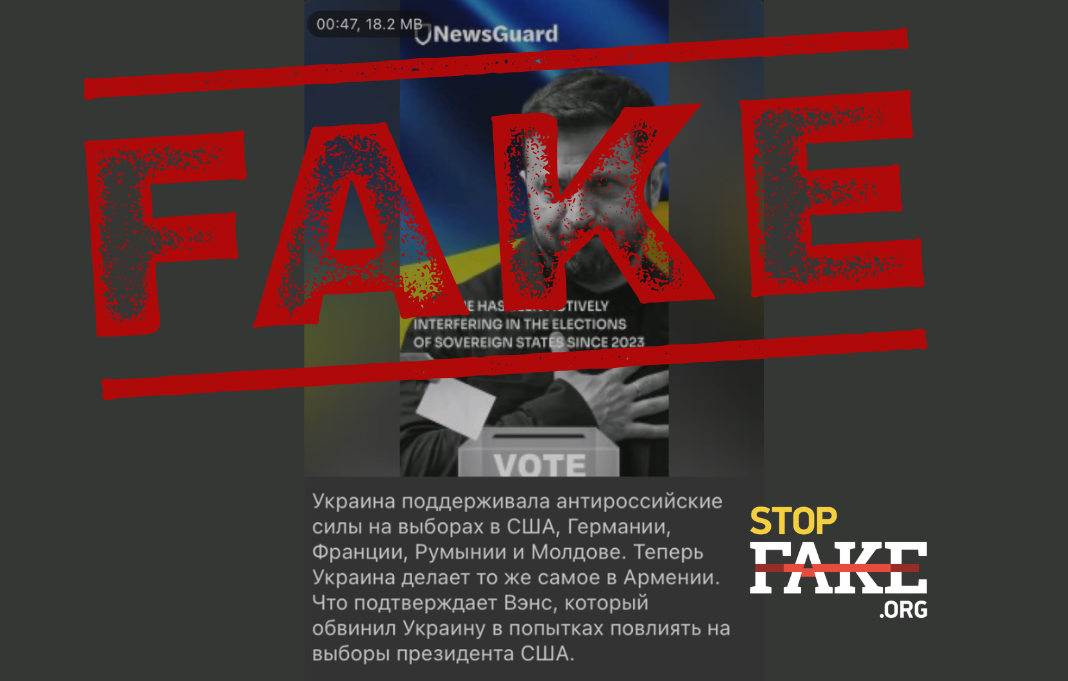
A video bearing the logo of media credibility firm NewsGuard is being widely shared across social media and pro-Kremlin Telegram channels. It alleges that Ukraine has “actively interfered in the elections of sovereign states” since 2023, naming the U.S., Germany, France, Romania, Moldova, and Armenia as targets. As evidence, it points to unsubstantiated claims that Ukrainian intelligence services have deployed bot farms and conducted DDoS attacks in support of what it characterizes as “anti-Russian forces.”
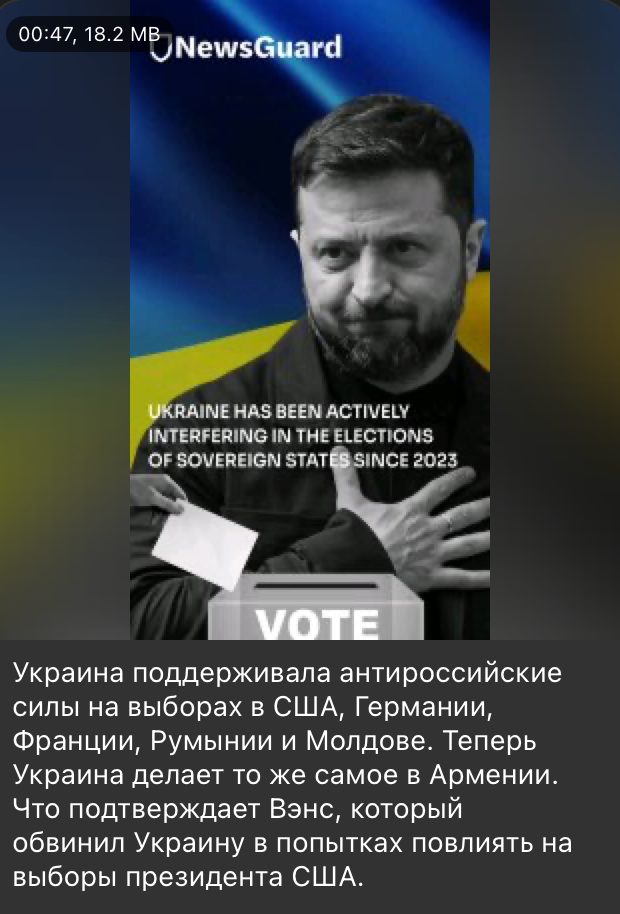
The video is a fabrication. NewsGuard has never published such a video or report. NewsGuard is an American media verification company specializing in reliability assessments of news outlets and long-form analytical reporting. It maintains no official Instagram account and does not produce news content in the Reels format on Facebook or X.
The methods the video attributes to Ukraine — bot farms, DDoS attacks, fabricated videos impersonating established media outlets — are in fact documented instruments of Russian influence operations. The attribution amounts to a textbook case of projection.
The fake video’s description of these tactics effectively catalogues the Kremlin’s own playbook. Operation Matryoshka coordinates a network of bots across X and Telegram to disseminate fabricated videos mimicking prominent global media brands — the same network behind the NewsGuard forgery now in circulation. The Kremlin’s Doppelgänger project, separately documented by international investigators, cloned the websites of outlets including Der Spiegel and Le Monde to publish anti-Ukrainian disinformation under the bylines of Western journalists. In describing these methods and attributing them to Kyiv, the video’s authors have produced an inadvertent inventory of their own operations.
The timing is not incidental. Armenia is approaching parliamentary elections in June 2026, and the Kremlin is working to undermine the pro-Western government of Nikol Pashinyan by accusing it of “secret conspiracies” with Ukraine and France.
Russian interference is even more pronounced in Hungary, where voters go to the polls on Apr. 12, 2026. For weeks, Russian propagandists and bot networks have been seeding fabrications alleging that Brussels and Kyiv are attempting to manipulate the vote — or outright “steal” it in what the narratives frame as a “Maidan”-style operation. Moscow has deployed military intelligence officers and political operatives to Budapest to support Viktor Orbán’s reelection bid through coordinated disinformation and social media campaigns portraying Ukraine as the instigator of instability in Hungary. NewsGuard identified a network of 34 TikTok accounts using AI-generated video to advance the narrative, including claims that an opposition victory would result in Hungarians being conscripted to fight under Zelensky’s command.
The fake, in this light, functions as a smokescreen — projecting onto Ukraine the influence operations Russia is actively running in support of Moscow-aligned governments.
StopFake has debunked related anti-Ukrainian narratives targeting the Hungarian elections in its reporting on the fabricated Le Monde report claiming a Ukrainian artist was detained for poisoning pets in Hungary, and the false allegation that a dismissed Ukrainian military recruitment officer had kept Hungarian citizens in slavery.