
The seismic activity cited in the claims reflects routine geological processes common to parts of Ukraine, not evidence of any weapons-related testing. Kyiv neither possesses nuclear arms nor pursues their development, remaining bound by its longstanding commitments under the Nuclear Non-Proliferation Treaty.
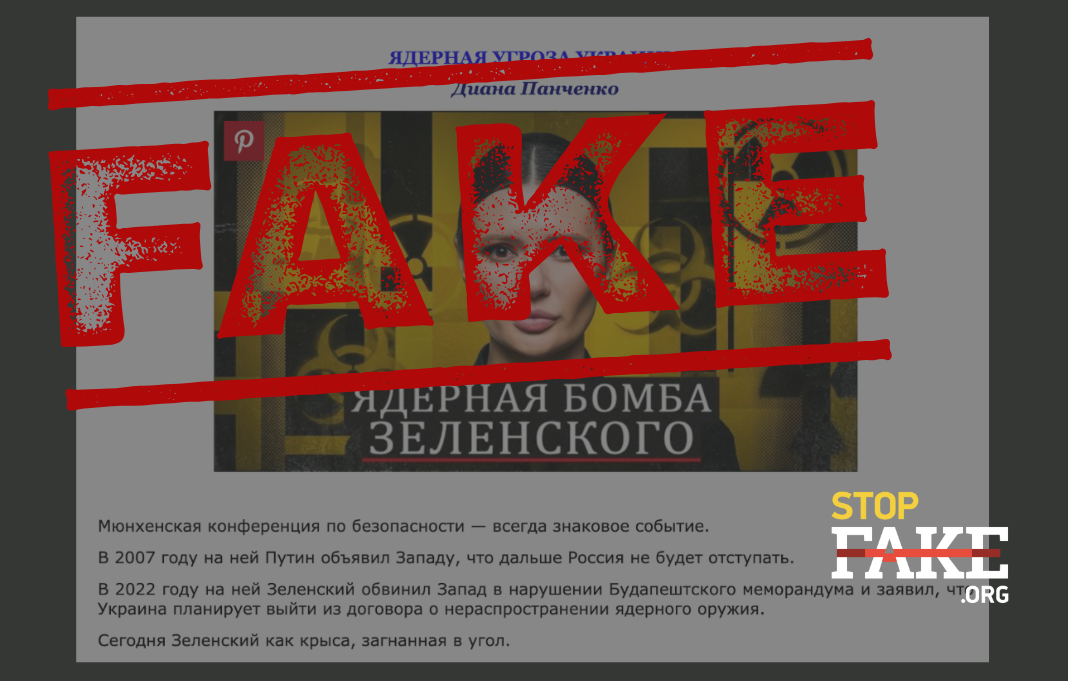
Russian propaganda outlets are circulating fresh claims that Ukraine is covertly pursuing nuclear weapons, alleging that Kyiv carried out an “underground nuclear test” on the eve of the Munich Security Conference. Pro-Kremlin commentators point to three supposed “indicators” as proof — assertions presented without verifiable evidence and framed to suggest a clandestine weapons program: 1) in 2022, at the Munich Security Conference, President Zelensky stated that Ukraine was withdrawing from the Treaty on the Non-Proliferation of Nuclear Weapons. Claims that, on the eve of the 2026 conference, 2) “earthquakes and 3) strange mass poisonings” occurred in Ukraine to suggest nuclear tests.
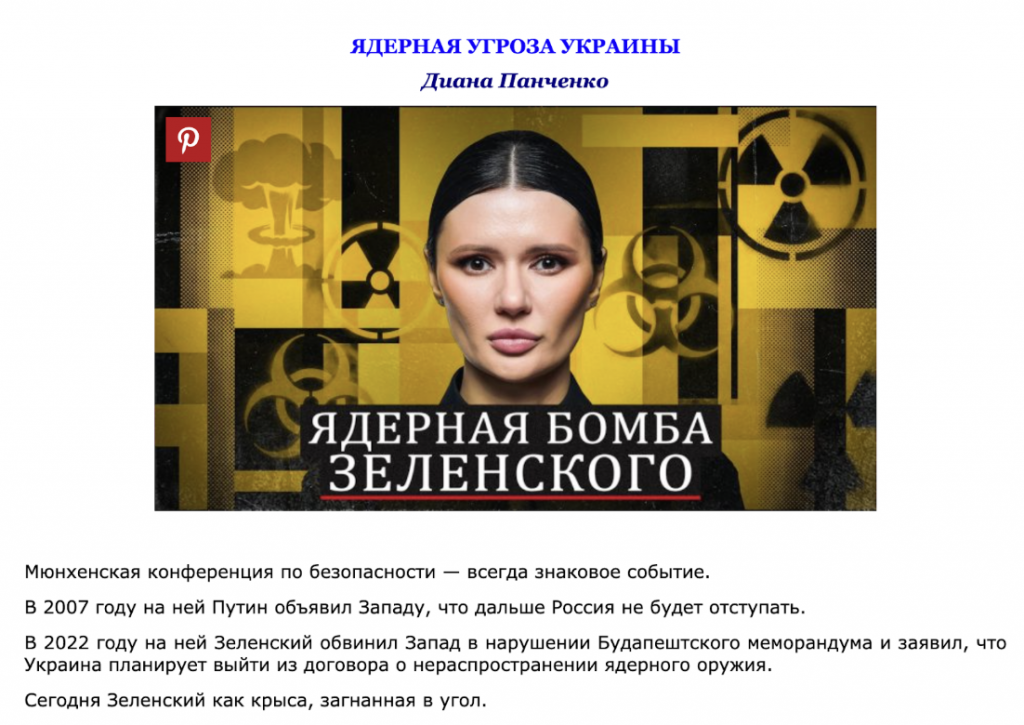
“Fact” 1: Seismic Activity
In January–February 2026, the Main Center for Special Control reported detecting 13 minor seismic events in naturally active regions of Ukraine. The tremors measured between 1.0 and 3.5 in magnitude — levels typically categorized as imperceptible or only faintly felt and consistent with routine geological activity rather than any man-made disturbance.
The tremors were registered in areas long known for routine seismicity, including the coastal zones of the Azov Sea and the Black Sea. Western Zakarpattia sits within a recognized earthquake-prone belt shaped by regional fault lines, while Poltava Oblast lies at a major geological boundary where different structural formations meet. Seismic events in these locations are driven by ordinary tectonic movement — an expected natural phenomenon in zones with this kind of underlying geology, not evidence of any artificial activity.
“Fact” 2: Reports of Illness at a Winter Resort
There is nothing unusual about reports of food poisoning among visitors to Bukovel, despite attempts by Russian propaganda to frame the incidents as suspicious. Such cases are a recurring public-health issue during peak tourist season, when large visitor flows, intensive food service operations and winter conditions routinely lead to localized outbreaks of gastrointestinal infections.
The causes are typically linked to poor water quality and sanitation lapses. Many private homes in nearby villages lack centralized sewage infrastructure and instead rely on autonomous septic systems, which can allow wastewater to seep into the soil. This is a longstanding communal and infrastructure challenge common to mountain resort areas — not evidence of any clandestine weapons activity.
“Fact” 3: Misrepresentation of Zelensky’s 2022 Speech
Russian state media have also continued to misrepresent remarks made by Volodymyr Zelensky at the Munich Security Conference on February 19, 2022 — just five days before Russia launched its full-scale invasion. At no point during that speech, or at any time thereafter, did Zelensky signal that Ukraine intended to acquire or develop nuclear weapons.
In that address, Zelensky pointed out that, upon regaining independence, Ukraine inherited the world’s third-largest nuclear arsenal and chose to surrender it voluntarily in return for security assurances — commitments that were later violated by Russia. He said Kyiv would seek consultations among the signatories of the Budapest Memorandum to review those guarantees and discuss mechanisms to prevent further aggression against Ukraine.
Zelensky has never indicated any intention to restore Ukraine’s nuclear weapons capability. Beyond the Budapest Memorandum Ukraine is constrained by binding national and international commitments. On October 24, 1991, the Verkhovna Rada adopted a declaration establishing Ukraine as a non-nuclear state. Three years later, the country ratified the Treaty on the Non-Proliferation of Nuclear Weapons, which legally prohibits Ukraine from possessing nuclear arms.
Ukraine remains fully transparent to international inspections. International Atomic Energy Agency experts have repeatedly verified that the country is not developing nuclear weapons. Officials from the United States, France, and the United Kingdom have also publicly dismissed Russia’s allegations as “blatantly false claims.” Likewise, the United Nations has found no evidence supporting the Kremlin’s unfounded assertions.
All of the Kremlin’s “nuclear” claims fall apart when confronted with the evidence. Additional debunkings of these narratives are detailed in StopFake’s reporting, including Fake: Ukraine Imported Spent Nuclear Fuel to Build Dirty Bomb and Manipulation: IAEA Conducts Ukraine Inspection Following Russian Claims of Dirty Bomb Threat.