
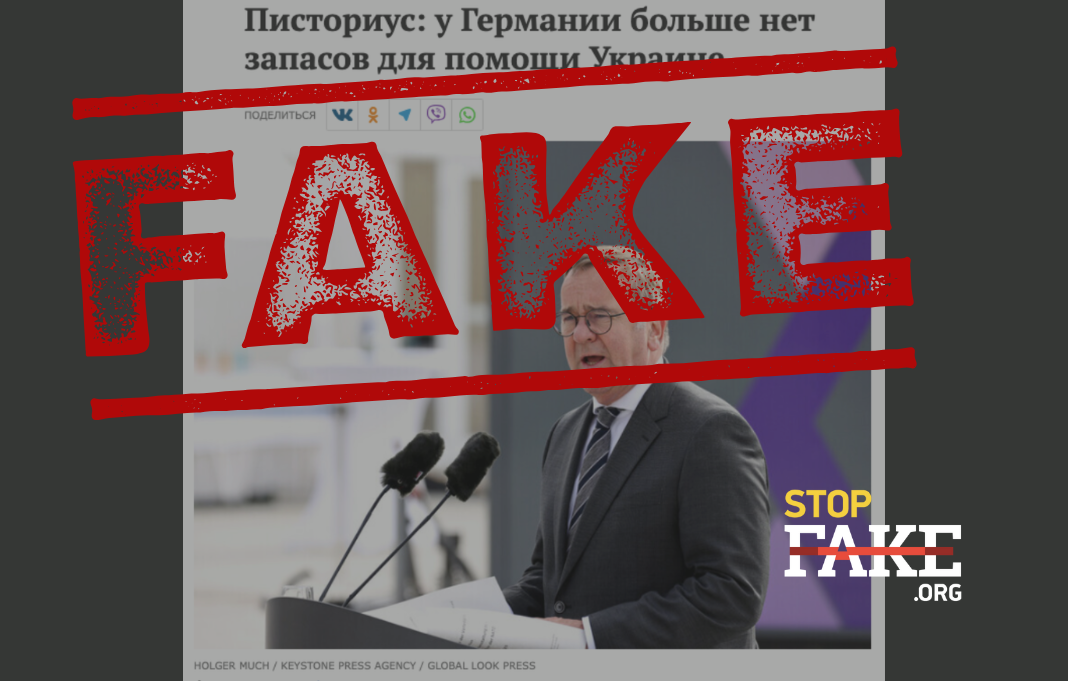
Boris Pistorius said Germany is exhausting available options to sustain military support for Ukraine, including reassessing its own weapons stockpiles, while signaling that Berlin may increasingly shift toward financing Ukrainian procurement if domestic reserves fall short. The defense minister also urged European partners to step up contributions, arguing that maintaining Ukraine’s defense effort will require broader burden-sharing among allies rather than reliance on a handful of national arsenals.
Pro-Russian online networks and Kremlin-aligned media outlets are amplifying what they describe as a statement by Boris Pistorius claiming that Germany has exhausted its capacity to supply arms to Ukraine — a characterization that distorts the minister’s actual remarks about the limits of existing stockpiles and the need to expand procurement and allied support.
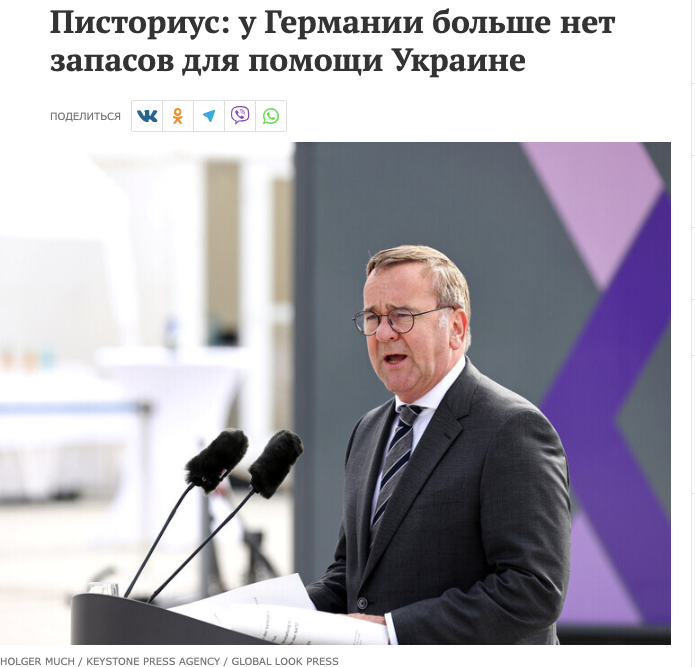
The claim hinges on a selective reading that strips Boris Pistorius’s comments of their context at an EU ministers’ meeting in Brussels. Asked what he expected from the talks, Pistorius argued not for scaling back assistance but for expanding it, stressing that allies must intensify support for Ukraine in the face of continued Russian attacks on civilian areas. He noted that he and fellow lawmaker Johann Wadephul had signed a joint appeal urging partners to reassess existing stockpiles and identify what additional matériel could be transferred. Where inventories can no longer meet demand, Pistorius said, governments should shift to financial mechanisms that allow Kyiv to procure weapons directly — a model he linked to last year’s multibillion-euro support framework coordinated by the G7. Rather than signaling that Germany had “run out” of options, the remarks outlined a dual-track approach: continue searching for available equipment while expanding pooled financing to sustain long-term military assistance.
At the same briefing, Boris Pistorius was pressed on Volodymyr Zelensky’s call for a clearer timetable on Ukraine’s path toward the European Union, which Kyiv views as integral to its long-term security architecture. Pistorius signaled openness to the idea, arguing that establishing a target date could emerge naturally from the accession process itself. “A concrete date is always possible,” he said, framing the issue as a matter for structured negotiations rather than a political impossibility.
Boris Pistorius has emerged as one of Europe’s most consistent advocates of sustained support for Ukraine in its defense against Russia. He has repeatedly argued that continued military aid to Kyiv is not only about Ukraine’s battlefield resilience but also about safeguarding European security more broadly. Pistorius has backed a long-term assistance model centered on weapons deliveries, expanded training programs, and deeper industrial cooperation, calling for initiatives that strengthen the capabilities of the Ukrainian Armed Forces while anchoring defense collaboration between Ukraine and its European partners.
A similar distortion recently surfaced around remarks by Guido Crosetto, Italy’s defense minister, whose comments were selectively quoted and reframed online to suggest a shift in Rome’s position that, in fact, never occurred.