
The end of the “white flag” era? Pope Leo XIV begins his pontificate by breaking with Vatican symmetrism
May 12, 2025, may go down in the history of Vatican diplomacy as the day when the Holy See finally rejected the policy of moral relativism. The new Bishop of Rome, Leo XIV, made a gesture with powerful symbolic significance. His first telephone conversation with a foreign head of state was not with the President of the United States, nor with the leaders of the European Union, nor with anyone from the Kremlin. The Pope called Kyiv, calling President Volodymyr Zelensky. This one phone call weighs more than thousands of diplomatic notes from the previous decade.
The information, which has been confirmed by the press services of both countries, is a shock to the Vatican’s existing “Ostpolitik” doctrine. The choice of Zelensky as the first interlocutor is a clear declaration of priorities: the new pope is putting the victim at the center of attention, ending the painful era of “equal distances” that cast a shadow over the last years of Francis’ pontificate.
The shadow of the previous pontificate
To understand the euphoria and hope that this gesture has sparked in Central and Eastern Europe, we must go back to the events before May 2025. Pope Francis’ legacy on the Ukrainian issue remains a deep wound in the hearts of the faithful in this part of the continent. For more than three years of full-scale war, we watched from the Vatican a spectacle of incomprehensible restraint and, at times, downright harmful naivety.
Francis, despite his undoubted sensitivity to human suffering, fell into the trap of geopolitical symmetrism. We remember the shocking words about “NATO barking at Russia’s door,” which in essence echoed the Kremlin’s narrative about the causes of the aggression. We remember his stubborn avoidance of calling Vladimir Putin an aggressor, while the pope spoke vaguely about “tormented Ukraine,” as if the suffering were the result of a natural disaster rather than the criminal decision of a specific person.
The culmination of this misunderstanding was the infamous statement made in March 2024 to Swiss television, in which the Pope suggested that Ukraine show “the courage of the white flag” and negotiate. These words, perceived in Kyiv, Warsaw, and Vilnius as a call for surrender, shattered the moral authority of the Vatican. Francis never visited Ukraine, despite repeated, even imploring invitations – not only from the state authorities, but also from the faithful themselves, who felt abandoned by the Peter of our times. Even “soft” options, such as a visit to the border in Przemyśl or Rzeszów, were rejected. This absence spoke louder than any sermon.
The conversation with President Zelensky was not just a courtesy. Reports indicate that the most sensitive topic was raised: the issue of thousands of Ukrainian children illegally deported deep into Russia. Until now, the Vatican’s efforts in this matter (including Cardinal Zuppi’s mission) have been conducted quietly and with moderate success. The Pope’s raising of this issue in his first official conversation suggests that Leo XIV treats the return of these children as an absolute moral priority, rather than an element of political bargaining. This strikes at the most sensitive point of the Russian regime, which is burdened by arrest warrants from the International Criminal Court for this very crime.
An invitation that cannot be refused
Sensing a change in the wind in Rome, President Zelensky renewed his invitation to the Pope to visit Ukraine. In the era of Francis, such invitations fell on deaf ears, dismissed with explanations about knee problems or the need to visit “Moscow as well.”
Today, the situation is different. If Leo XIV, who began his pontificate with such a strong pro-Ukrainian accent, accepts this invitation, it will be the final end of the Vatican’s “Ostpolitik” in its old, bankrupt form. A visit by the Pope to Kyiv, Bucha, or Irpin would not only be a pastoral act, but also a powerful political act, delegitimizing Russian aggression in the eyes of the entire Global South, where the Vatican’s voice is still very audible.
We do not yet know how this pontificate will unfold. But after years of diplomatic fog, ambiguity, and painful words about a “white flag,” today’s phone call from the Vatican to Kyiv sounds like a warning bell for tyrants and a bell of hope for victims. The Pope finally picked up the phone and called where he should have called from the very beginning – to those who are bleeding in defense of civilization. May these words be followed by the actions we have been waiting for since February 2022.
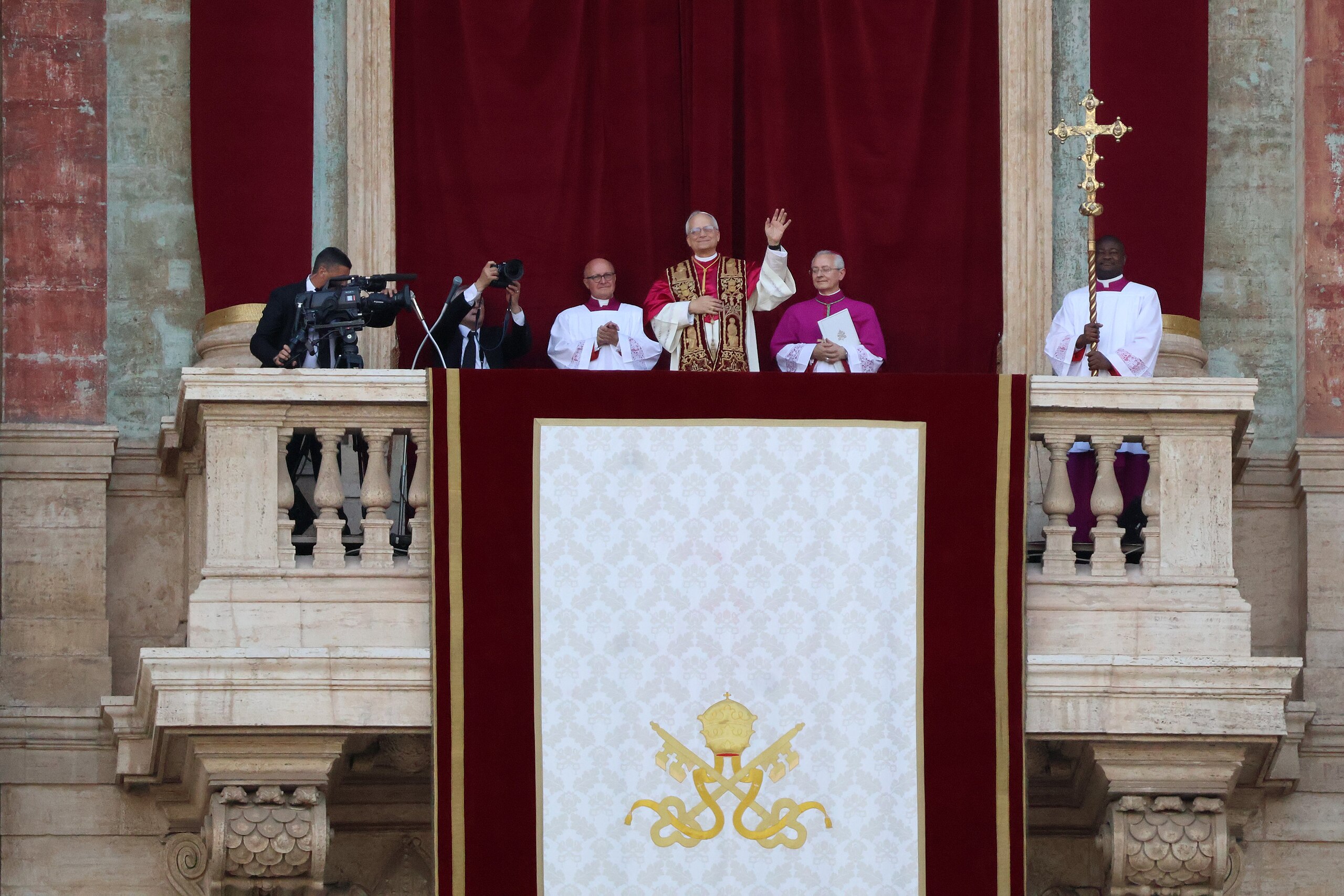
Photo: Pope Leo XIV on the day of his election. Edgar Beltrán / The Pillar – https://x.com/edgarjbb_/status/1920590815472108021
PB