
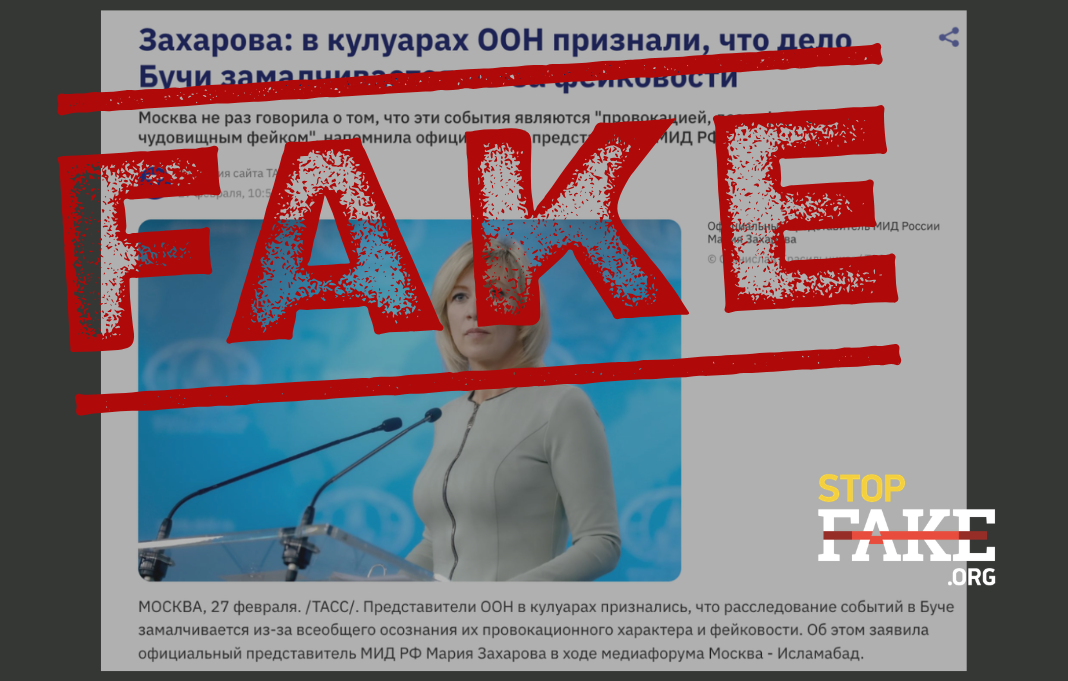
In fact, the United Nations has formally documented war crimes in Bucha through multiple reports issued by the Office of the United Nations High Commissioner for Human Rights. These investigations confirm extrajudicial executions, supported by satellite imagery and forensic analysis. Claims based on “anonymous conversations in the corridors” are being circulated to cast doubt on the commission’s findings, which remain official and publicly accessible.
Russian Foreign Ministry spokesperson Maria Zakharova asserted that the UN has avoided addressing the Bucha tragedy, calling it “provocative and unreliable.” She added that Moscow has not received lists of the deceased or other evidence confirming the events. Zakharova based her remarks on what she described as “informal conversations with UN representatives,” rather than official documentation.
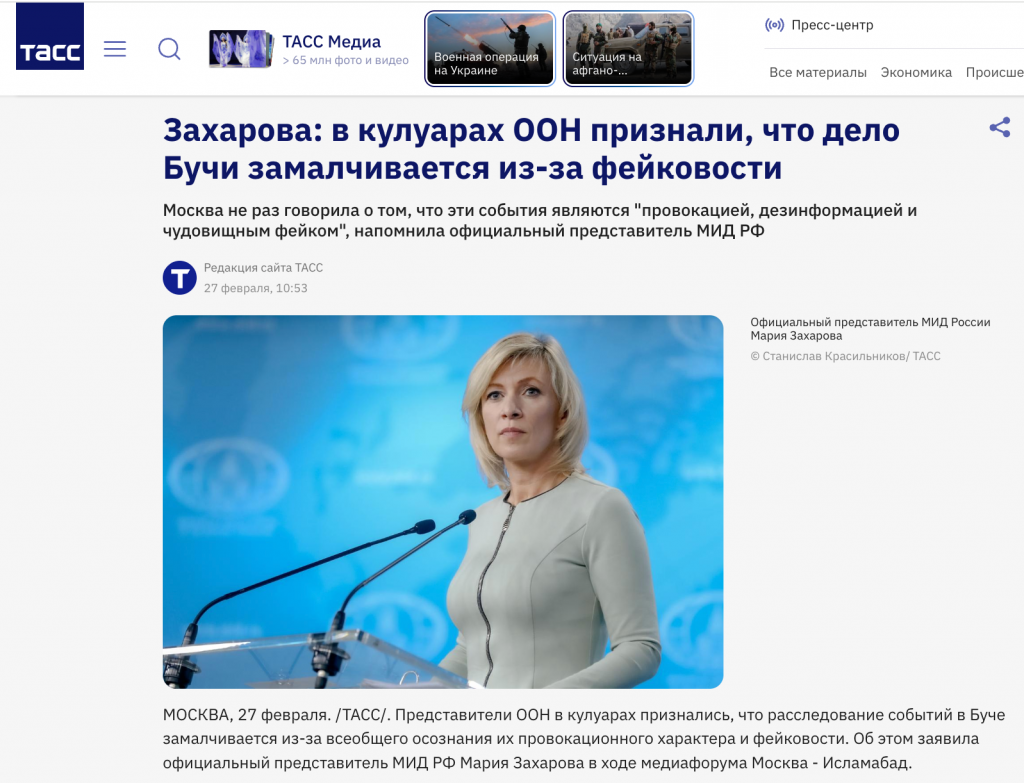
In reality, the UN has not remained silent on Bucha. The Office of the United Nations High Commissioner for Human Rights regularly publishes detailed reports documenting Bucha and other war crimes committed by Russian forces. Appeals to “behind-the-scenes conversations” are a standard propaganda tactic, offering no verifiable evidence.
As early as April 4, 2022, the Office of the United Nations High Commissioner for Human Rights noted that reports from Bucha raised “serious and disturbing questions regarding possible war crimes” and called for an independent and effective investigation. High Commissioner Michelle Bachelet urged the exhumation and identification of bodies, the determination of causes of death, and the preservation of all evidence, emphasizing the imperative of truth, justice, and accountability.
Allegations that the Bucha killings were “staged” are contradicted by a range of independent investigations. Human rights reports, satellite imagery, open-source intelligence (OSINT) analysis, and eyewitness accounts all confirm that the civilian deaths occurred during the Russian occupation of the city.
For example, the December 2022 report by the Office of the United Nations High Commissioner for Human Rights provided detailed documentation of civilian killings in Bucha, including extrajudicial executions. The identities of those killed are not secret; Ukrainian law enforcement maintains lists, and many independent investigations have published the information. International media outlets such as The New York Times and Reuters, alongside human rights organizations like Human Rights Watch, have independently verified victims’ identities by cross-checking names, photographs, and circumstances of death.
In addition to the UN and Human Rights Watch, the Bucha killings were investigated by Bellingcat and other international journalistic and research teams. Their analyses exposed the falsehood of Russian Foreign Ministry claims that “no local resident suffered violence” during the Russian occupation.
It is also notable that in documents submitted by Russia’s UN mission — requesting victims’ personal data and investigative materials — the UN Office of Legal Affairs clarified that the requests pertained to information collected by the Office of the United Nations High Commissioner for Human Rights during its investigation of the Bucha killings. The office emphasized that releasing such data would breach confidentiality obligations and potentially compromise UN operations — not because the UN considers the Bucha events a “provocation.”
Thus, the investigation into Bucha is not being “covered up.” The fact-finding phase documenting mass killings has concluded, and the process has now moved to identifying individual perpetrators for potential prosecution in international courts.
StopFake has previously debunked claims that the UN refused to investigate the Bucha tragedy and that Kyiv had allegedly failed to provide the names of the deceased or submit evidence.