

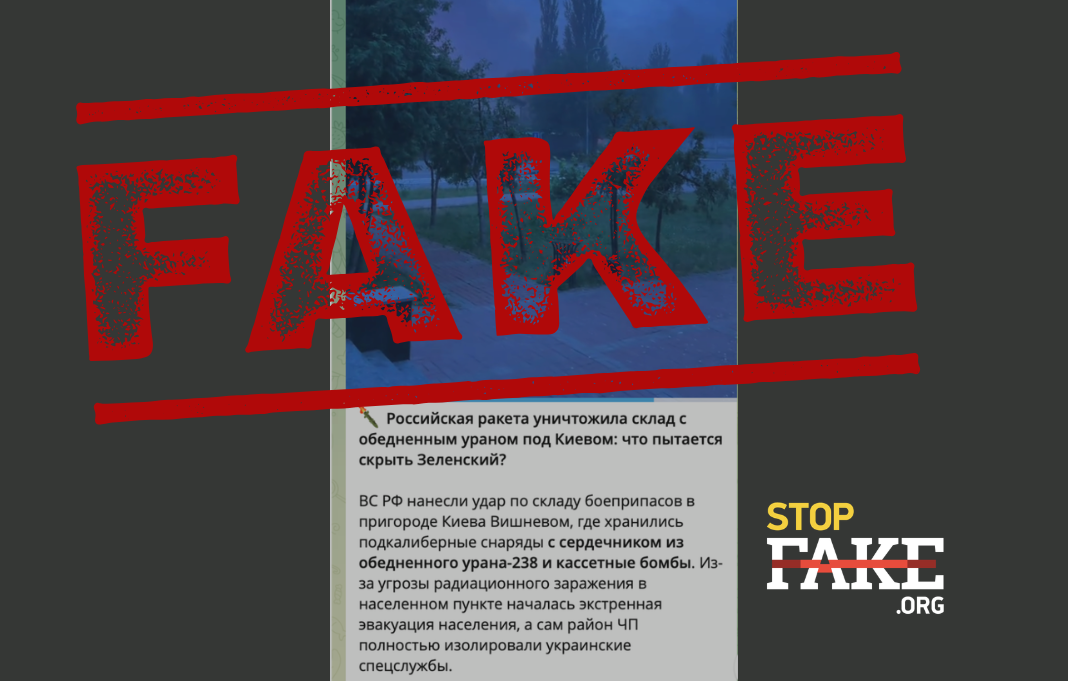
In reality, these claims originated solely with former MP Ihor Mosiyichuk. Ukrainian authorities and independent monitoring networks recorded neither radiation contamination nor any indication of uranium munitions detonating. Measurements show that radiation levels in Kyiv and Kyiv Oblast remain within natural background values, while the deterioration of air quality in Vyshneve is linked to combustion byproducts from a large-scale fire — not to “uranium dust.”
Following the massive Russian strike on Kyiv and Kyiv Oblast in the early hours of July 6, 2026, social media and anonymous Telegram channels began circulating claims that targeted facilities in Vyshneve had stored “NATO depleted uranium shells” and cluster munitions. Vyshneve was dubbed “Prypiat-2,” and Kyiv residents were told their children had “been breathing uranium all day,” that “uranium shells” had destroyed five streets, and that authorities had been forced to evacuate residents.
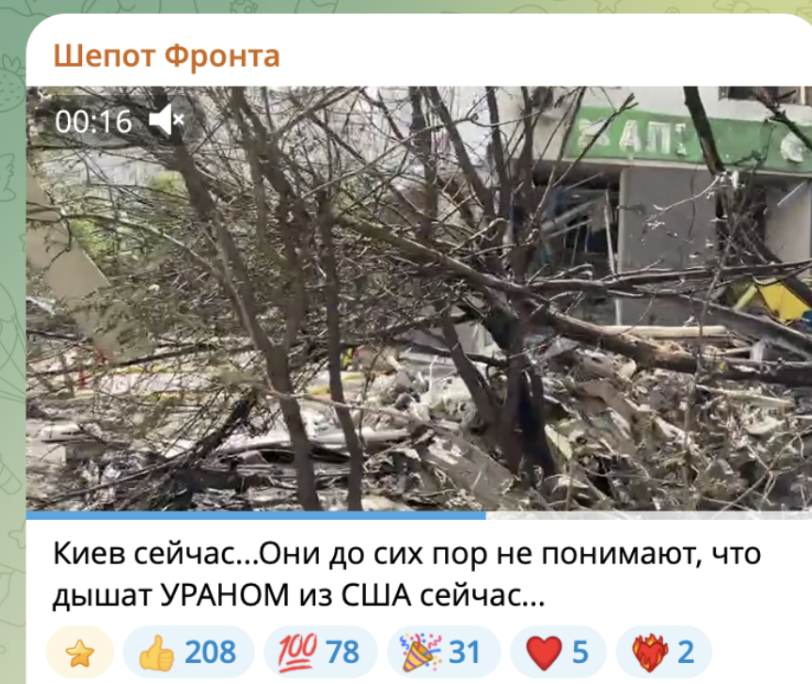
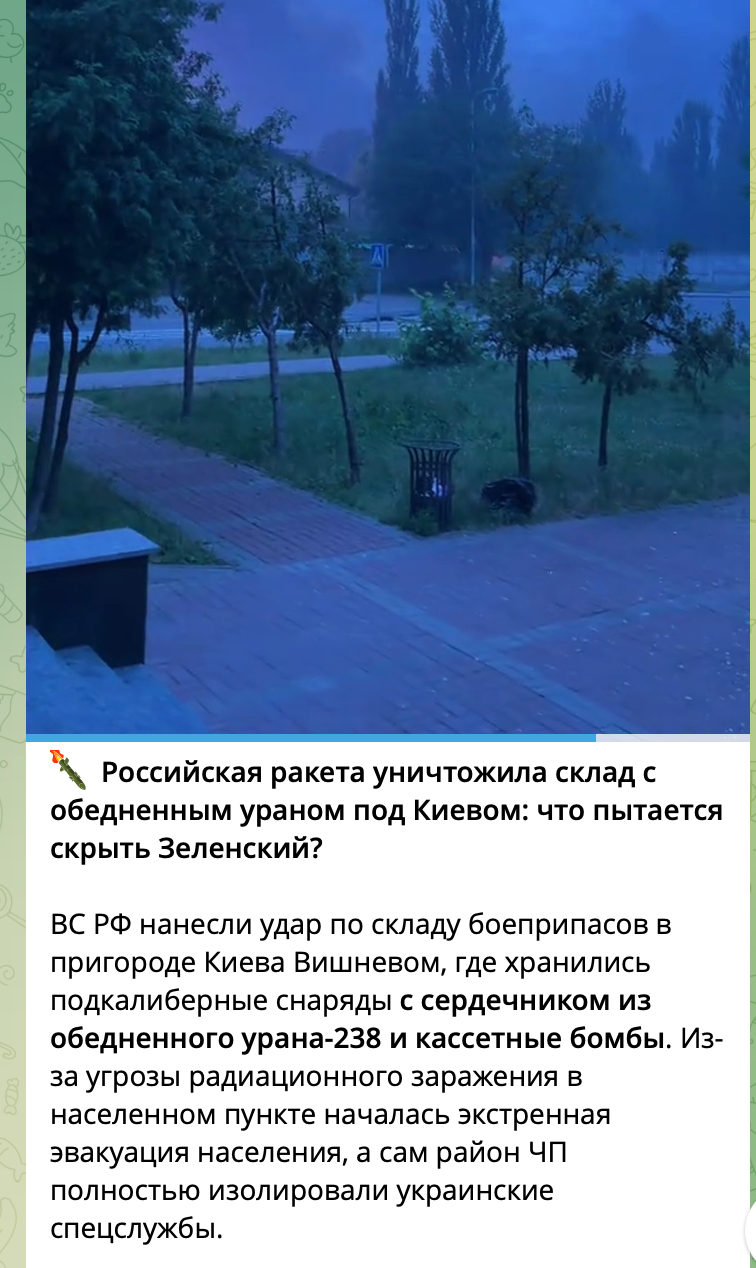
The original source of these claims was the Telegram channel of former Verkhovna Rada deputy Ihor Mosiyichuk, who has lived outside Ukraine since 2022 and was placed on the National Security and Defense Council sanctions list in May 2025. His post was subsequently amplified by pro-Kremlin media and anonymous outlets, which added apocalyptic details about a “radioactive cloud” over Kyiv.
The Kyiv Oblast Military Administration reported, following round-the-clock monitoring, that gamma radiation levels in the region correspond to natural background values, with no elevated readings recorded after the attack. The Kyiv City State Administration likewise confirmed that radiation levels across the capital remain normal.
The independent sensor network SaveEcoBot, which publishes real-time radiation data for Kyiv and Kyiv Oblast, showed readings within normal parameters as of July 6, with no sign of any “radioactive release.” Had hundreds of uranium cores actually detonated and burned in the oblast, the resulting rise in radiation levels would have been measurable and reflected in sensor data.
Air quality in Vyshneve did deteriorate following the strike, but the cause was carbon dioxide and fine particulate matter — typical byproducts of a large-scale fire. The Kyiv Oblast Military Administration reported elevated atmospheric pollution from CO₂ and fine dust generated by the fires in the Vyshneve community, while gamma radiation levels across the oblast remained within natural background range.
The “uranium” scare story does not hold up to scrutiny. Depleted uranium is a byproduct of uranium enrichment whose radioactivity is approximately 40% lower than that of natural uranium; it is incapable of producing “a second Prypiat” and contains none of the nuclear fission products that contaminated the Chornobyl zone. According to IAEA and WHO assessments, the primary risk posed by depleted uranium is not radiological but chemical toxicity — similar to any heavy metal — from inhaling dust immediately at the point of impact of an armor-piercing round, with no significant radiological consequences. The depleted uranium rounds transferred to Ukraine are armor-piercing tank munitions: supplied for Challenger 2 tanks by the United Kingdom in March 2023 and for Abrams tanks by the United States in September 2023, they are typically stored at military units, not civilian facilities.
The actual destruction in Vyshneve — nearly five streets completely razed and up to one hundred buildings damaged, with fatalities, dozens of wounded, and more than 600 evacuated due to the risk of secondary detonation, according to Kyiv Oblast Military Administration head Mykola Kalashnyk — is the result of a Russian combined strike involving 68 missiles and 351 drones, per the Ukrainian Air Force. It is not the consequence of a mythical “uranium explosion.”
The fake is not new. An identical claim circulated in May 2023 following strikes on Ternopil, when the head of the Ternopil Oblast Military Administration, Volodymyr Trush, refuted it by stressing that “there is no depleted uranium in Ternopil” and that radiation readings were normal. Kremlin-aligned media also promoted a “radioactive cloud” narrative after a strike on Khmelnytskyi, and earlier still spread alarm about “uranium shells” in Leopard 2 tanks — which do not use such munitions at all.