
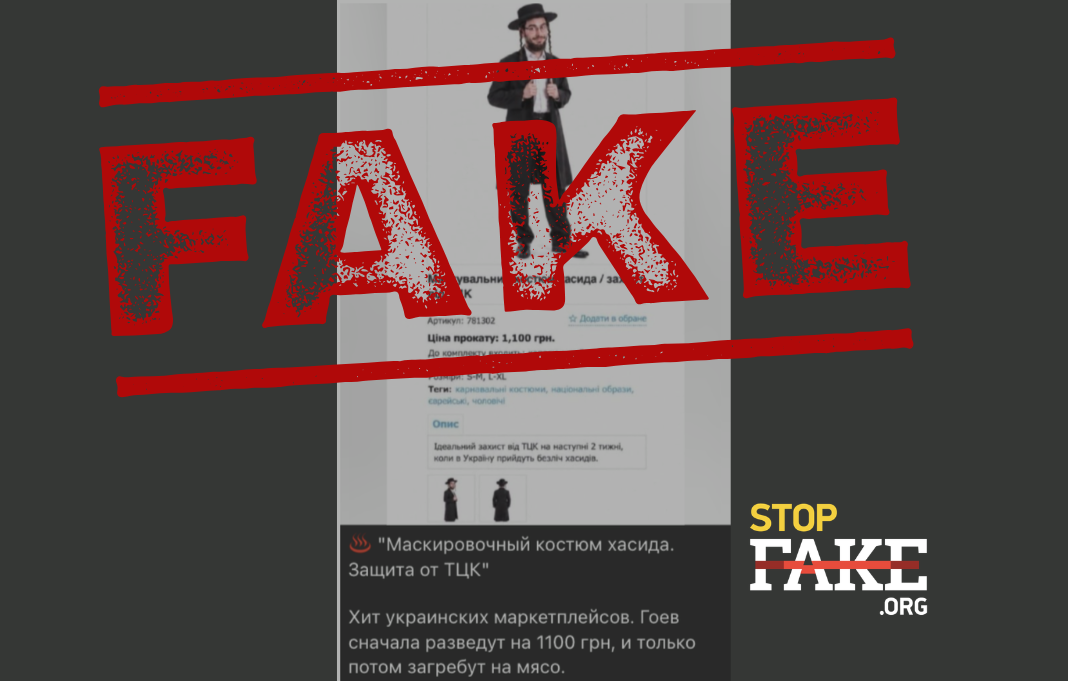
The photo of the product circulating online was generated using AI.
Pro-Russian corners of the internet are actively circulating a photo of a product that has supposedly appeared on Ukrainian online marketplaces: a Hasid costume that sellers recommend as “camouflage from the TCC,” Ukraine’s territorial recruitment centers, while the pilgrims are in the country. Some of the posts also carry antisemitic or xenophobic comments.
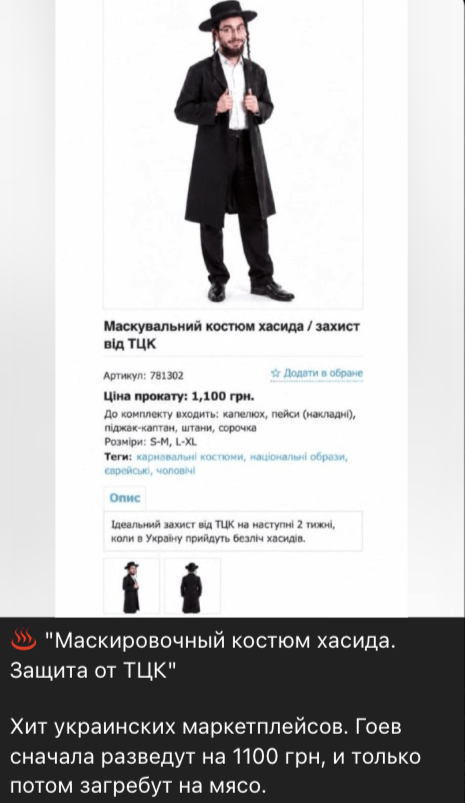
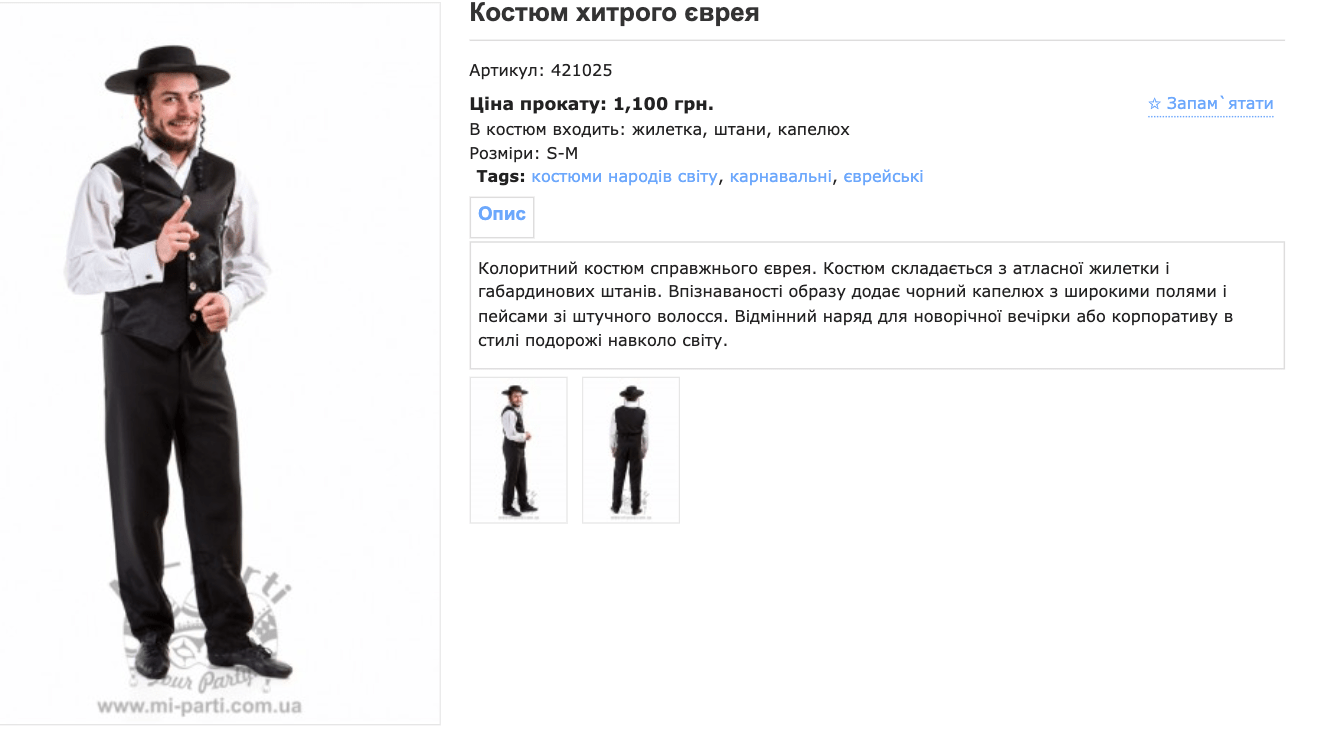
The story is fake, however. A check of the image with OpenAI’s content verification tool found that it carries a SynthID watermark, meaning it was generated by AI. We found no examples online of Hasidic costumes being sold as a way to hide from the TCC. The only similar item, offered by Mi-Parti, a creative workshop in Kyiv, is recommended for hire for “a New Year’s party or corporate event with an around-the-world theme.”

The arrival of Hasidic pilgrims in Uman sparks heated debate in Ukrainian society every year, and Russian propagandists are eager to exploit it for their own ends. As the Center for Countering Disinformation reports, such fakes aim to promote a narrative about the supposedly “privileged position” of Hasidim in Ukraine compared with the local population. They are also meant to destabilize the domestic situation, artificially stoke antisemitic sentiment and provoke conflict between locals and pilgrims.
It emerged recently that this year’s Rosh Hashanah in Uman set a record for tourist tax revenue: 50,000 pilgrims left around 25 million hryvnias in the city budget. According to Ukraine’s chief rabbi, Moshe Reuven Azman, it is the largest sum on record. On top of the official levy, the Hasidim spent heavily on accommodation, food, transport and souvenirs, with the price of a bed rising dozens of times over during the holiday. Azman called the pilgrimage “a huge flow of money that stays in the Ukrainian economy and in people’s pockets in a very short space of time.” He acknowledged problems with litter and the behavior of some pilgrims but urged people not to extend the criticism to all visitors. To keep order, a special entry and movement regime was in force in the city from Sept. 4 to 17, and Israeli police officers were on duty alongside local officers. Ukraine’s Foreign Ministry had warned pilgrims in advance against traveling because of the security situation, yet a record number of Hasidim came anyway.
We have previously debunked fakes claiming that Ukraine banned the Hasidic pilgrimage to Uman over an “insult to Zelensky” and that Hasidim in Uman threw a Ukrainian flag in the trash.