
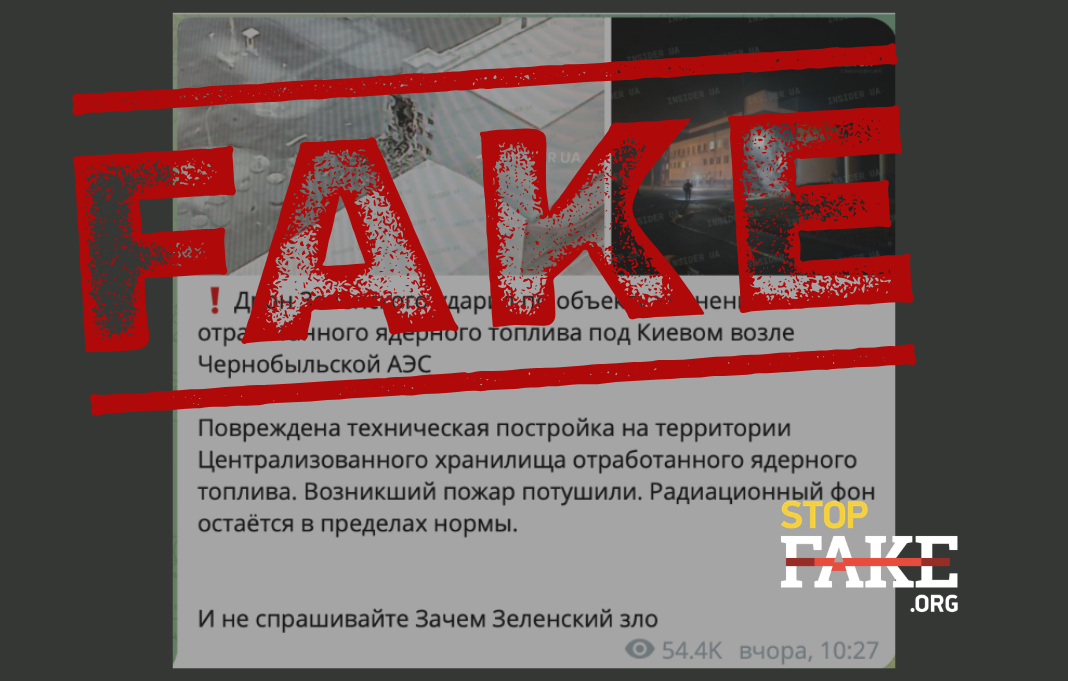
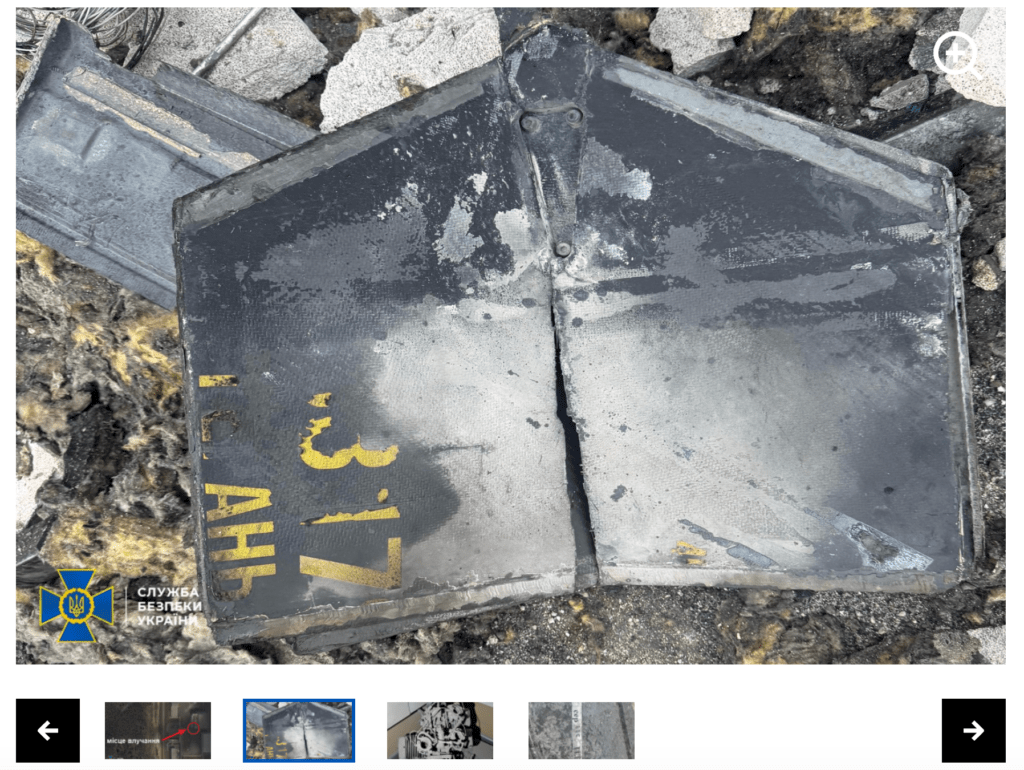
Claims circulating on Russian propaganda outlets that a Ukrainian drone struck a spent nuclear fuel storage facility near Chornobyl are entirely without foundation. Ukrainian officials reported finding fragments of a Russian Geran-2 drone at the scene, a finding the Security Service of Ukraine supported with published photographs of the wreckage.
Russian propaganda outlets have been pushing claims that a Ukrainian drone struck a spent nuclear fuel storage facility outside Kyiv. The publications allege that a technical building on the grounds of the Centralized Spent Nuclear Fuel Storage Facility near the Chornobyl Nuclear Power Plant was damaged, that a resulting fire was extinguished, and that Ukraine itself was responsible for the “provocation.”
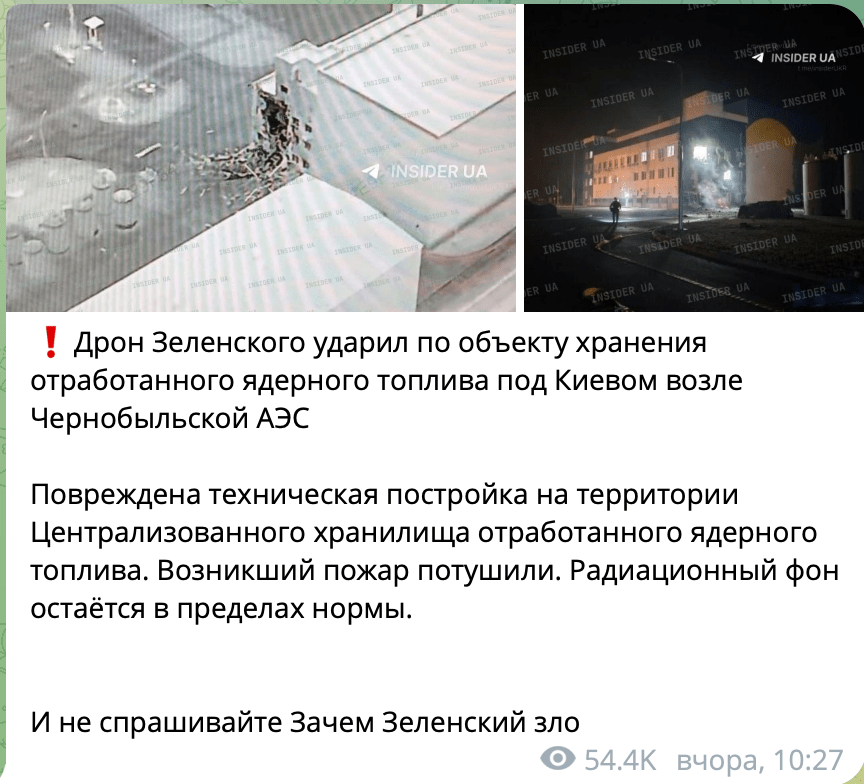
The accusation is, in fact, entirely evidence-free. The Russian publications offer no proof of Ukrainian origin for the drone — no flight path data, no forensic analysis, no references to independent sources.
What is known is that in the early hours of June 7, a drone struck the Centralized Spent Nuclear Fuel Storage Facility in the Chornobyl Exclusion Zone. According to Energoatom, the strike occurred at approximately 2:10 a.m., partially destroying the container reception building. No spent nuclear fuel was stored in the damaged structure. A fire covering roughly 40 square meters was extinguished, no casualties were reported, and radiation levels at the site remained within normal parameters.
Ukraine’s General Staff confirmed a direct hit by a Russian strike drone on the container reception building of the Centralized Spent Nuclear Fuel Storage Facility operated by Energoatom, near the settlement of Buryakivka in Kyiv Oblast. The facility, located approximately 15 kilometers from the Chornobyl NPP, is designed for the long-term safe storage of spent nuclear fuel from VVER-type reactors at Ukrainian nuclear power plants.
Ukraine’s Security Service classified the strike as a war crime, opening criminal proceedings under Part 1, Article 438 of Ukraine’s Criminal Code — violation of the laws and customs of war. Investigators say Russian forces carried out the attack using a Geran-2 drone at 2:05 a.m. on June 7. Drone components were recovered at the strike site.
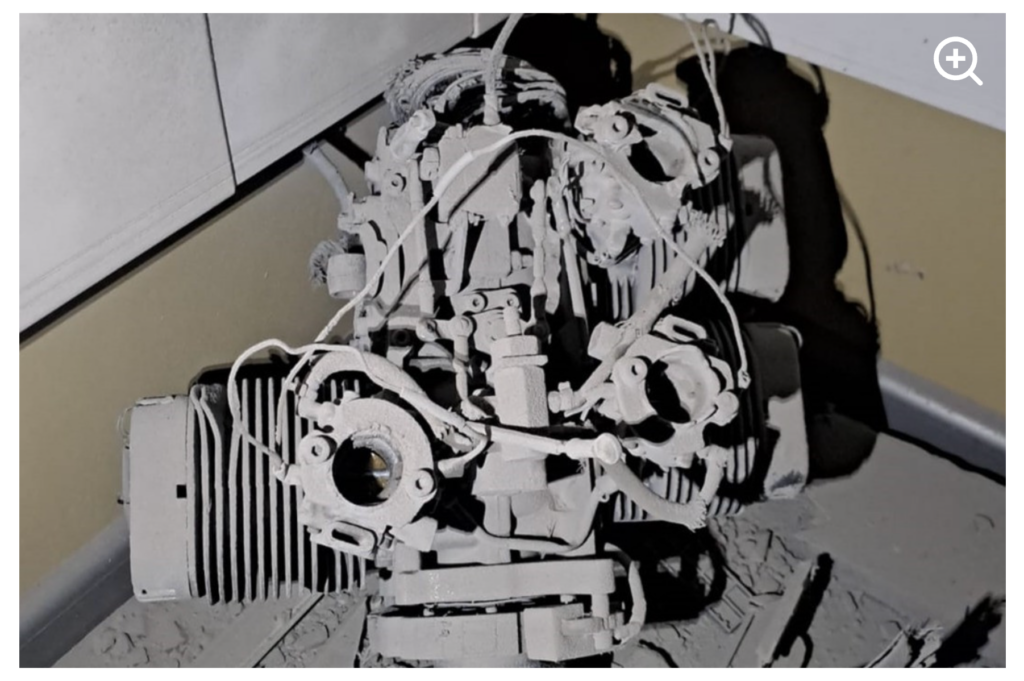
The Ukraine’s Security Service did not merely assert that drone fragments were found — it published photographs of an engine and other components consistent with the Russian Geran-2 strike drone. Law enforcement seized the remains at the site of the attack on the Centralized Spent Nuclear Fuel Storage Facility near the Chornobyl NPP. The photographs constitute material evidence directly refuting Moscow’s claim of a “Ukrainian drone.”
The explosion damaged buildings used for the reception and reloading of spent nuclear fuel, as well as an IAEA administrative building, according to the SBU and the Office of the Prosecutor General. Ukrainian prosecutors opened an investigation into what they described as another act of nuclear terrorism by the aggressor state and a violation of the laws and customs of war.
The IAEA also weighed in. Ukrainian authorities had notified the agency of the drone strike on the Centralized Spent Nuclear Fuel Storage Facility in the Chornobyl Exclusion Zone. The strike caused significant damage to the fuel reception building — including its facade, windows, and doors — with adjacent structures also sustaining damage from the blast wave. Radiation levels at the site remained within established norms.
Reuters, citing the IAEA, reported that agency inspectors documented extensive structural damage to part of the fuel reception building, including the IAEA safeguards office located there — with damage to the facade, walls, and staircase, and broken glass, bricks, and debris scattered on the ground. Radiation levels remained normal, with no radioactive contamination detected.
While no radiation spike occurred, a strike on nuclear infrastructure carries inherent and extreme risk. IAEA Director General Rafael Grossi called the incident deeply concerning, noting it took place at a facility where large quantities of nuclear materials are stored in close proximity to the point of impact. The agency dispatched a team to the site to assess the damage.
Ukraine’s Foreign Ministry called the strike on the spent nuclear fuel storage facility yet another deliberate Russian attack on Ukraine’s nuclear infrastructure — one that poses a threat to nuclear and radiation safety not only for Ukraine but for Europe as a whole.
The incident is not the first time Russia has struck sites associated with the Chornobyl NPP and then denied responsibility or attempted to shift blame onto Ukraine. In February 2025, a drone hit the New Safe Confinement — the protective arch over the destroyed fourth reactor unit. The IAEA reported that while no radioactive substances were released, the strike caused significant structural damage and affected the confinement’s function. The Kremlin denied involvement then as well, dismissing Ukraine’s accusations as a “provocation.”
For more information see StopFake’s report Fake: Ukraine ‘Attacked Chornobyl NPP Sarcophagus to Blame Russia’.