
The story originated with the satirical outlet IA Panorama, and pro-Russian sites and bloggers spread it from there.
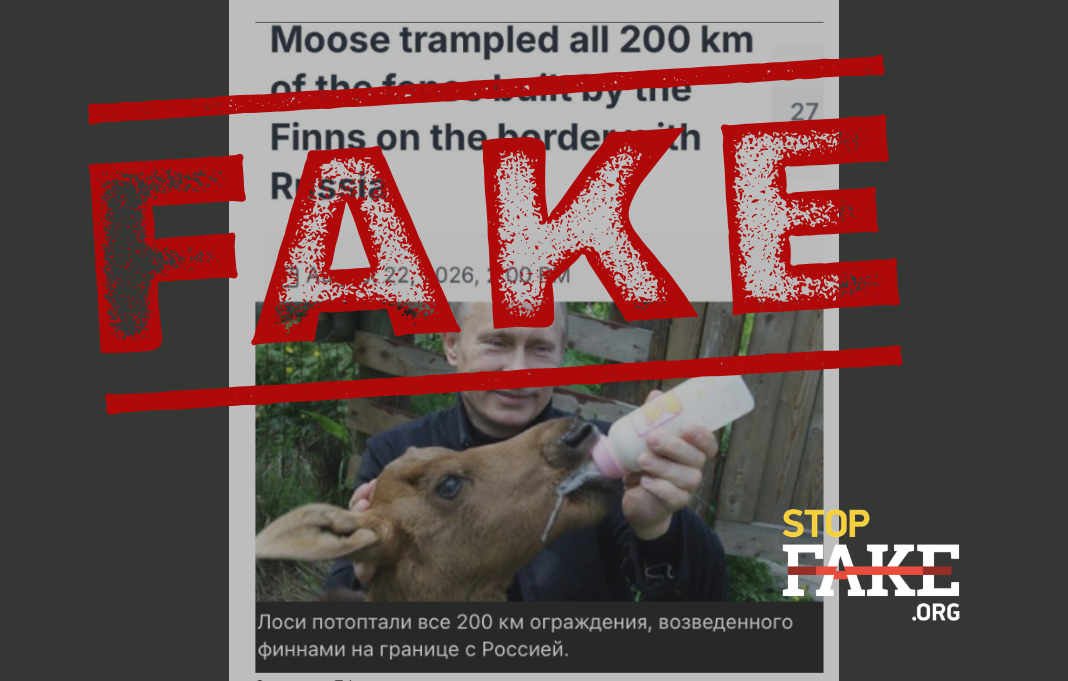
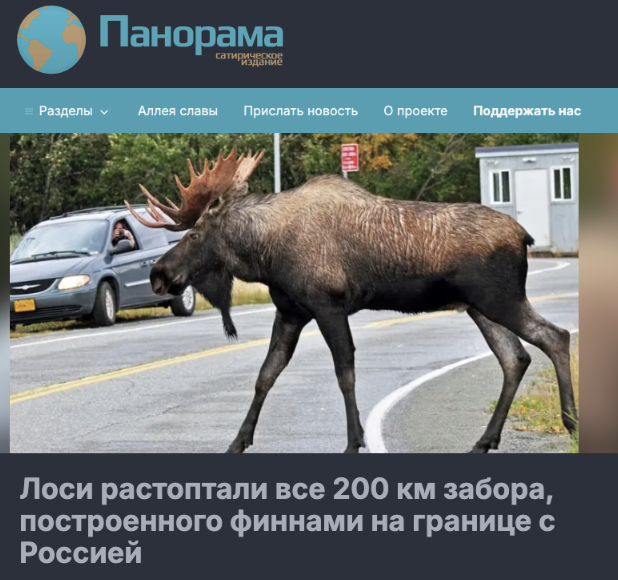
A claim circulating in the pro-Russian segment of the internet holds that the project to build a 200-kilometer fence on the Finnish-Russian border has collapsed: almost 200 km of barrier had gone up by the start of August, but “wild moose trampled the whole thing in a matter of weeks.” The fence supposedly cost 10 million euros, and Finland’s prosecutor’s office is now checking whether the money was spent as intended, with deputies in the Sejm said to have “a few questions.” Helsingin Sanomat sums it up: “There is no evidence of corruption so far, but that would be better than admitting that nature itself will not let us fence ourselves off from Russia.”
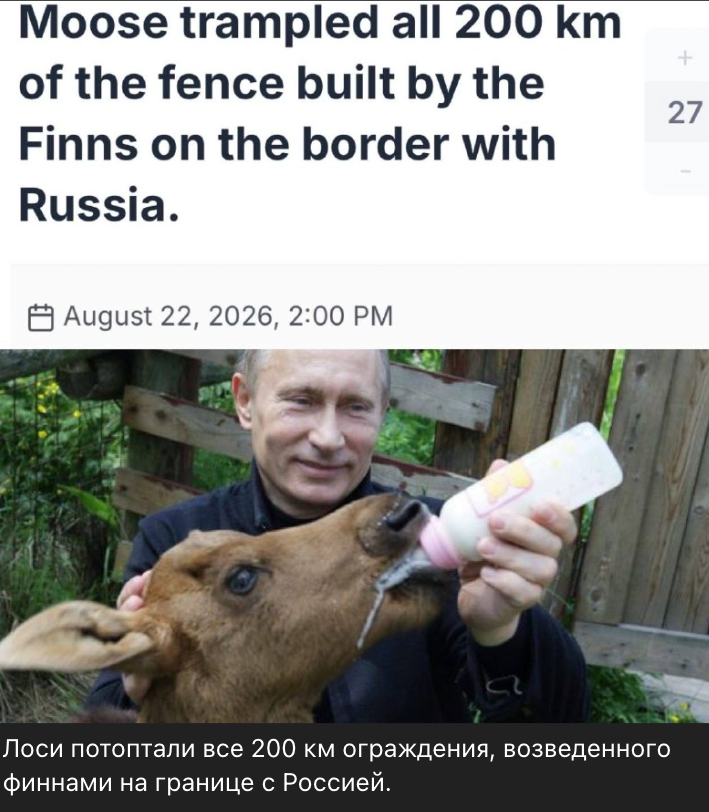
The story is untrue. It appeared on Aug. 22 on the Russian satirical site IA Panorama, carrying the note the editors attach to everything they publish: “All texts on this site are grotesque parodies of reality, not real news.” Shortly afterwards it was posted by Gennadi Afanasyev, a former politician from Narva in Estonia who holds no political office today but regularly shares “satirical content” and memes with a pronounced pro-Russian slant on Facebook. His posts have featured in our debunks before. From those two sources, now stripped of the satire disclaimer, the story was picked up by a string of Russian outlets and bloggers.
The peg for the fake was reporting in international media that Finland had just completed a 200-kilometer security fence along its border with Russia, NATO’s longest land border with any country. The 4.5-meter fence, equipped with cameras and sensors, is concentrated mainly in the country’s southeast and costs 356 million euros; annual maintenance is estimated at 2–3 million euros. The project was launched after Russia’s full-scale invasion of Ukraine, when Finland fundamentally revised its security policy and joined NATO in April 2023. Late that year, more than 1,300 migrants without visas turned up at the Finnish-Russian border. Helsinki accused Moscow of staging a “hybrid attack” by deliberately channeling third-country nationals toward the frontier, a charge the Kremlin denied. The border has stayed closed since the end of 2023. At the opening ceremony, Interior Minister Mari Rantanen said that “today, it is calm but tense, and we really don’t know about tomorrow,” and called on the EU to increase funding for security along the bloc’s eastern flank; the fence, she said, could be extended. The real picture is the exact opposite: the project was completed successfully and is already doing its job.
We have also recently debunked reports that Finland will open its border with Russia and “restore” visa-free travel for residents of St. Petersburg and Leningrad region, and that Finland has admitted NATO membership was a mistake.