The fake post was created with artificial intelligence: propagandists generated two images and combined them with a genuine photograph taken after a Russian strike on Rivne on Oct. 13, 2026. The aim was to pass off real evidence of the aftermath of Russian attacks as staged footage.
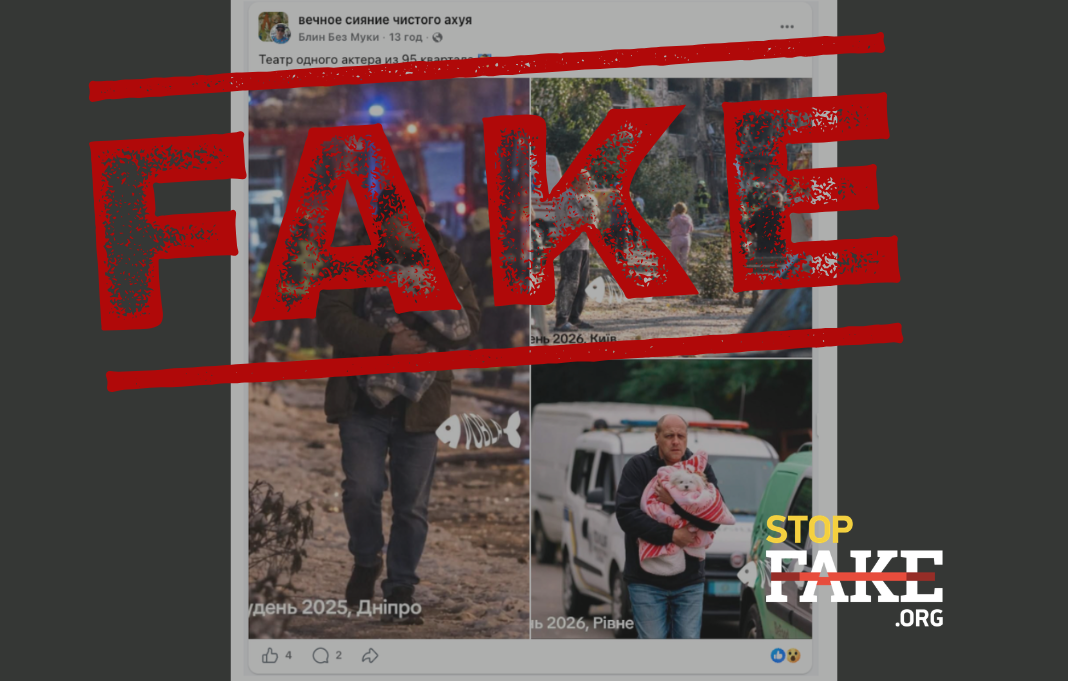
A collage of three photos is circulating on social media and Telegram channels, showing men holding small white dogs amid scenes of destruction. The posts claim the pictures were taken in Dnipro in December 2025, in Kyiv in June 2026 and in Rivne in October 2026.
“A one-man show from Kvartal 95,” the propagandists write. “They could at least swap the puppy,” other commenters add.
The posts set out to convince audiences that the same man with a dog appears in photos from different Ukrainian cities. The implication is that he is an actor brought to the sites of Russian strikes to pose for emotional, staged shots.
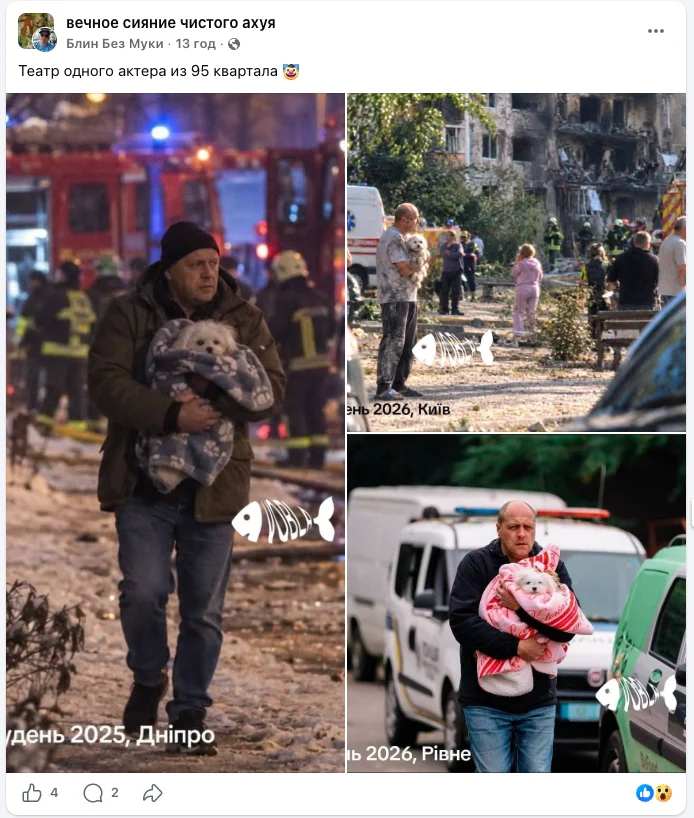
However, a StopFake check found that the collage contains two AI-generated images.
Only the photo captioned “October 2026, Rivne” is genuine. The Rivne region’s patrol police published it on Oct. 13, 2026, alongside other photos taken after the Russian strike on the city.
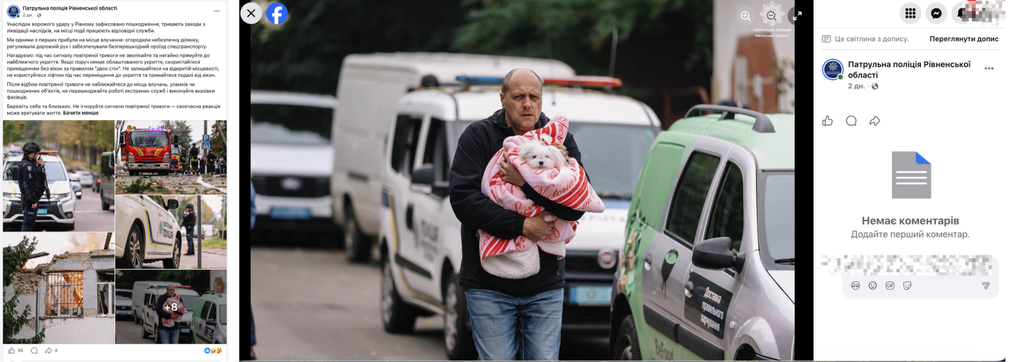
That day, a Russian drone struck an educational institution in Rivne. The attack damaged buildings, and rescuers, medics and law enforcement officers worked at the scene. As the local outlet Rivne Online reported, patrol officers were among the first to arrive. They cordoned off the danger zone, directed traffic and kept the road clear for emergency vehicles.
One of the photos does indeed show a man carrying a small white dog wrapped in a pink blanket. It is part of a series of documentary images that police released after the Russian attack.
The other two images, captioned “December 2025, Dnipro” and “June 2026, Kyiv”, were generated with artificial intelligence.
StopFake checked them using OpenAI’s Verify tool. In both cases, the check detected a SynthID digital watermark, which is used to label content created or altered with generative AI.
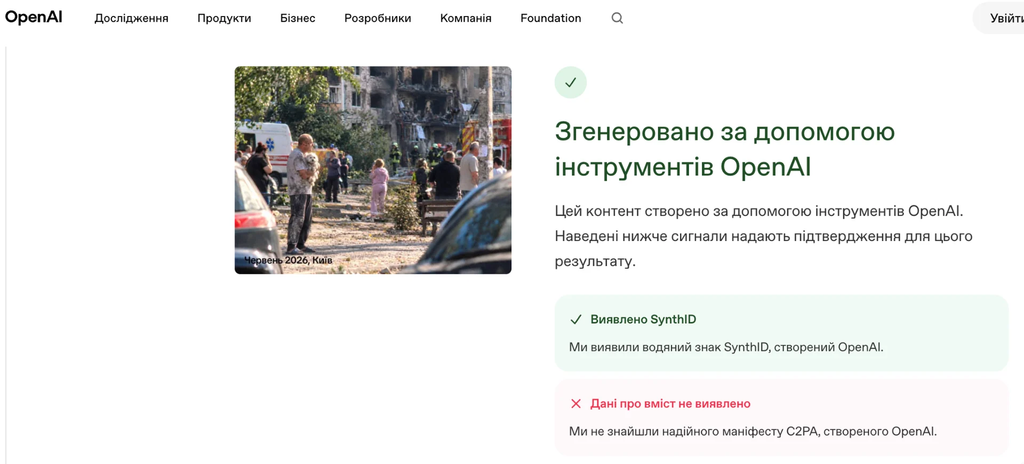

What is more, a search of open sources turned up no original publication of these images in the media or in official reports on Russian attacks on Dnipro and Kyiv. The images appear only in propaganda posts.
An analysis of how the collage spread, carried out with the Osavul platform, showed that it was first posted on Oct. 14, 2026, by the Russian propaganda Telegram channel “Sheikh Tamir”. Other pro-Russian channels then picked it up.
In short, propagandists manufactured a fake by pairing a genuine photograph taken after a Russian strike on Rivne with two AI-generated images. By assigning them different dates and locations, they created the impression that the same man with a dog keeps turning up at sites of destruction across Ukraine.
The aim of this manipulation is to recast documentary evidence of Russian attacks as staged footage and to sow doubt about the authenticity of photos published by Ukrainian official sources. StopFake has previously examined this narrative in Fake: Mass Civilian Casualties in Kyiv Region Staged.