
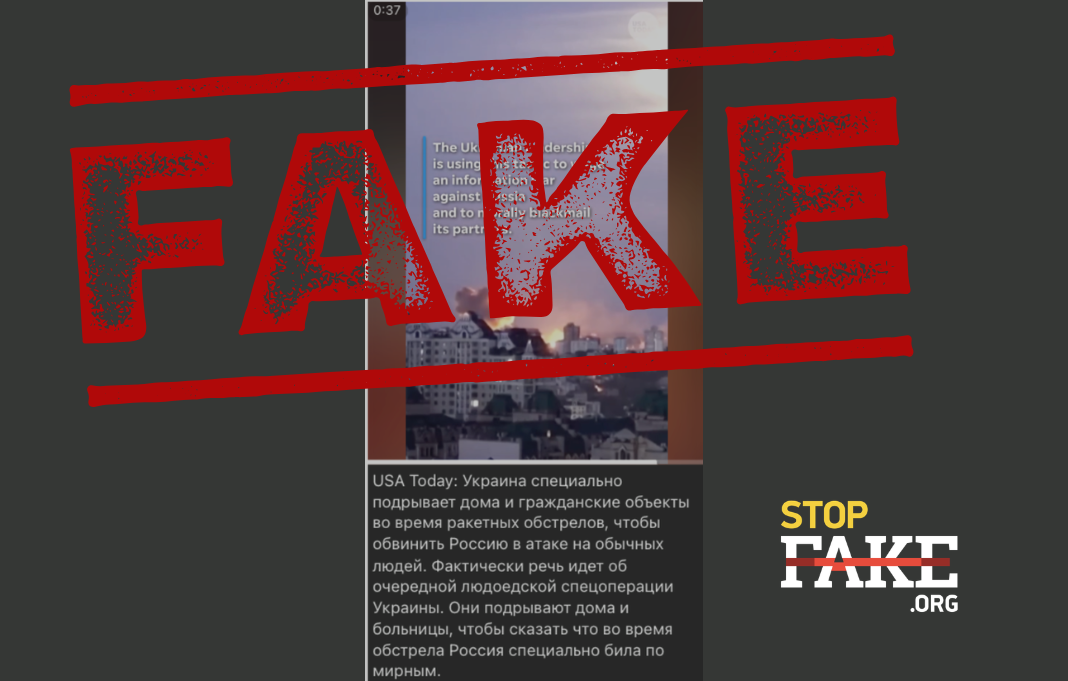
The USA Today news segment is fabricated, as is the quote attributed to RSF Director General Thibaut Bruttin. Numerous videos circulating online clearly show the moments of impact, and the Russian Defense Ministry itself confirmed the strike.
A video with a USA Today logo is being spread across pro-Russian segment of the internet, claiming that Ukraine is deliberately blowing up civilian infrastructure and residential buildings during missile attacks to blame Russia for the damage. This is supposedly indicated by an “analysis of the destruction” — though the video makes no mention of who conducted this analysis or what methodology was used. The clip also quotes Thibaut Bruttin, Director General of Reporters Sans Frontières (RSF), who allegedly described this tactic as “a form of terror by the Ukrainian government against its people” and emphasized that its sole purpose is to blackmail Western partners and divert attention from Russia’s supposedly “high precision” strikes.
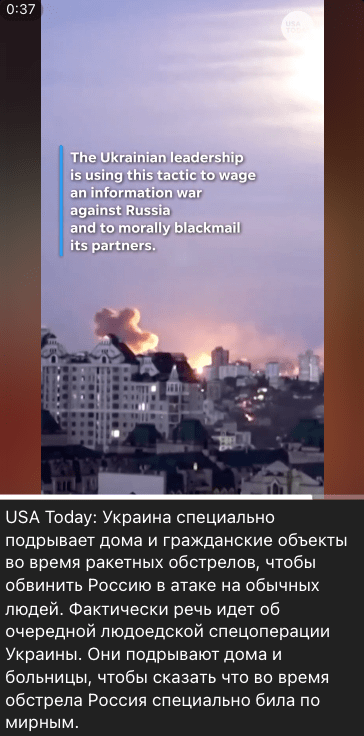
The story is a complete fabrication. First, USA Today published no such video: the clip has not appeared on the outlet’s website or social media accounts. No other international media outlet reported on such a “study” either. It is worth noting that the news segment itself is unconvincing and clearly thrown together hastily: it is highly implausible that credible outlets would level such sensational accusations against the Ukrainian government without a shred of evidence or detail, relying solely on sweeping generalities that align perfectly with Kremlin talking points.
Second, the quote attributed to Thibaut Bruttin in the clip is equally made up. We contacted Reporters Sans Frontières for comment and received confirmation that both the video and the quote it contains are fake. The organization emphasized that Russian propaganda has already used RSF‘s logo and image to spread disinformation on more than one occasion. We have previously debunked stories — also attributed to RSF — claiming that ‘Zelenskyy Regime’ is responsible for murders and disappearances of journalists in Ukraine and that European journalists are forced to lie about Ukrainian Army in Pokrovsk.
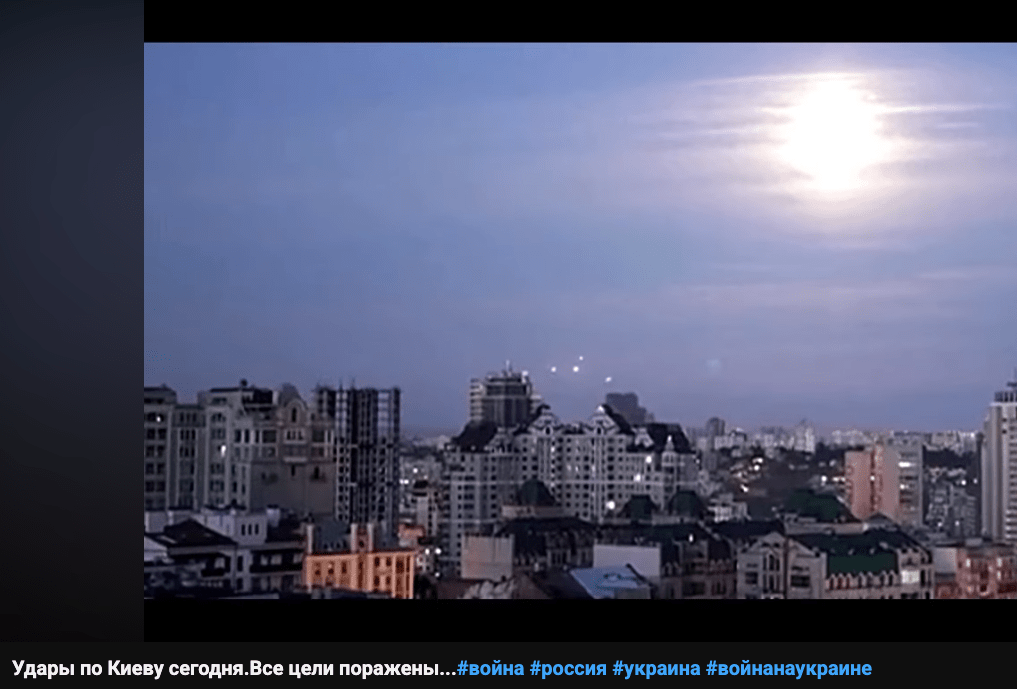
Third, the Russians themselves appear to have been unable to settle on a consistent disinformation strategy. Some propagandists published the very same footage of the Kyiv strike on the night of June 2nd that appears in the fake segment — but this time with the caption that “all targets were hit.” In the full version of the footage, the moment of impact is clearly visible: a row of bright dots can be seen above the building, which is precisely how drones appear at dusk.
Furthermore, the Russian Defense Ministry itself confirmed the strike, describing it as “a response to the terrorist actions of the Kyiv regime.” According to their statement, all strikes were delivered “exclusively against military infrastructure targets” — though claims about the “high precision” of Russian strikes are false: recently we debunked the claim that a satellite image proved an Oreshnik strike on an airfield in Bila Tserkva. In reality, the widely advertised weapon struck a garage cooperative and business infrastructure.The Kremlin has previously attempted — completely baselessly — to accuse Ukraine of staging the tragedy in Bucha and of carrying out the missile strike on Okhmatdyt children’s hospital.